
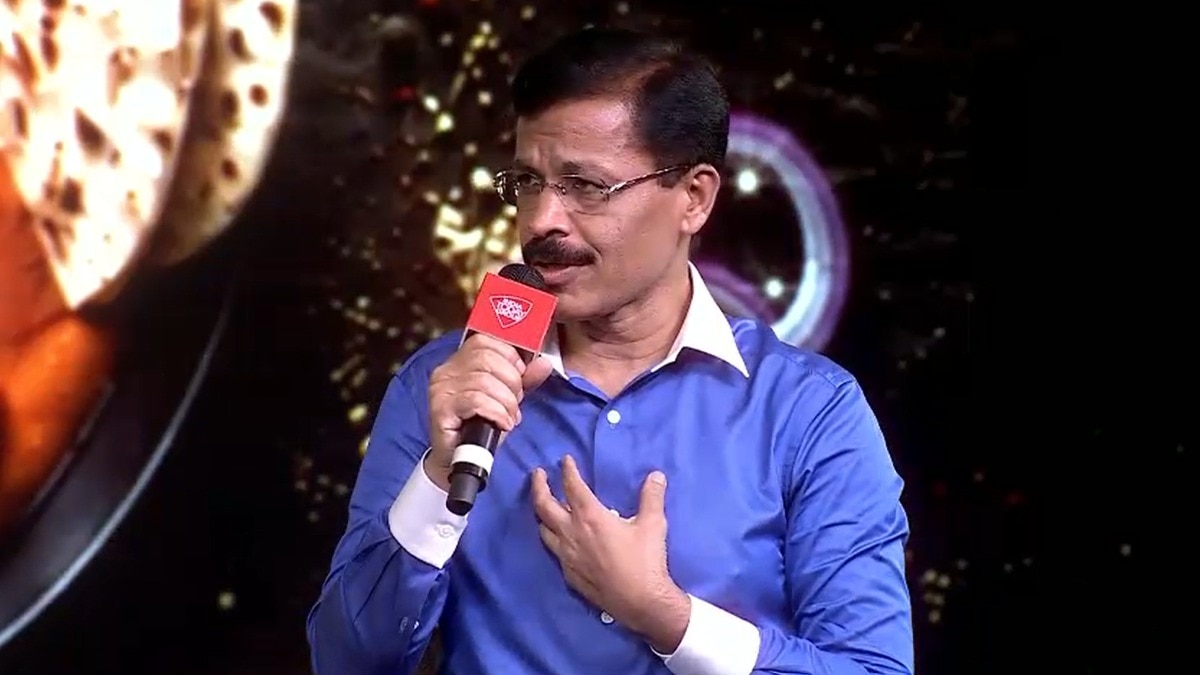
Maharashtra Food and Drug Administration (FDA) Commissioner Tukaram Munde has defended notices issued to actors Shah Rukh Khan, Ajay Devgn and Tiger Shroff over alleged surrogate promotion of prohibited tobacco-related products, warning that anyone violating the law will face action and that more enforcement measures are in the pipeline.Speaking at the India Today Conclave, Munde said the action was within the FDA's legal mandate and was not intended to generate publicity. He cited provisions of the Food Safety and Standards Act, 2006, and the 2018 food safety advertising regulations to argue that celebrities endorsing products must exercise due diligence and ensure their promotions comply with the law.“Whoever violates the law, they have to face the law,” Munde said, adding that the celebrities had responded to the notices and sought another hearing. The department would grant them another opportunity to be heard before proceeding according to the law, he said.“This is the Act and regulations laid there under. It is not something I have created. I am just trying to implement it and will implement it,” Munde said, adding that the advertising regulations applied to food products more broadly and not only to prohibited items. WHY FDA ISSUED NOTICES TO SRK, AJAY DEVGN, TIGER SHROFFResponding to questions from India Today journalist Rajdeep Sardesai on whether the notices amounted to overreach by a food regulator, Munde referred to Section 24 of the Food Safety and Standards Act, 2006.He said the provision required endorsers to exercise due diligence and ensure that the products they advertised or promoted complied with the law. He also cited the 2018 advertising regulations, which he said prohibited the activity in question. Munde rejected the suggestion that action against prominent celebrities was intended to secure headlines, arguing that the FDA was simply enforcing existing legal provisions.Asked whether the department would act if the celebrities continued with the alleged surrogate advertisements, he replied, “Absolutely.”He said the department had received their responses and that they had sought another hearing. The hearing would be conducted by the assistant commissioner concerned, after which the matter would proceed in accordance with the law.Munde also stressed that the regulations were not confined to advertisements for prohibited tobacco-related products. They applied to food advertising more generally, making endorsers accountable wherever the rules were violated.‘NO POLITICIAN HAS ASKED ME TO GO SLOW’Munde said no politician had contacted him to ask him to ease the crackdown on food safety and pharmaceutical violations since he took charge in his current posting.“Believe me, Rajdeep, this posting has not been called once by anybody to go slow on this,” he said.The commissioner has drawn attention for enforcement action against restaurants, hotels, pubs and other establishments over alleged food safety violations. Discussing the public attention around his work, he said the focus should remain on the issues rather than on him personally.“The media attention is not about me. The media attention is about the issue of food safety. It is about drug efficacy. It is about safety of the people,” he said.Munde argued that unsafe food and medicines affected everyone and needed to be treated as public health concerns. He said the issue also had implications for the economy, GDP growth and farmers.He acknowledged that some establishments might currently be complying with food safety rules out of fear of inspections but said the larger objective was to make compliance a routine practice.“I think right now it is a fear factor and it is also self-motivation. Both the things are there,” he said.He added that the aim was to build a system that did not depend on the actions of a particular officer, establishment or industry.MUNDE SAYS FOOD SAFETY MUST BECOME A PUBLIC MOVEMENTMunde said lasting improvements would require consumers to demand safe and standard food, businesses to follow the rules and regulators to ensure compliance.He said the movement could not be restricted to kitchens or restaurants, as it needed to involve schools, parents, food producers, processors and the wider supply chain.The FDA has started an ‘Eat Right School’ campaign to encourage schools to provide safe, nutritious food and discourage junk food. Munde said the initiative had received support from parents, some of whom had written to him about their children becoming more receptive to messages on healthy eating.He said the department was expanding its work across age groups, including children aged two years and above and infant milk products for children aged zero to two years. Nutraceuticals are also among the areas the FDA plans to address.Munde announced plans to launch an ‘Eat Right’ movement in Maharashtra, with public information and awareness activities on food safety, storage, labelling and eating habits.He cited the example of refrigerators, saying that incorrect storage of food and vegetables could lead to contamination and cross-contamination. The campaign would also cover food served at places of worship, including offerings or bhog, and use digital media to reach more people.“I want it to be a public movement,” he said, urging consumers to participate and offer suggestions.He also called on people to raise concerns when they encountered unsafe food rather than leaving enforcement entirely to the FDA.“My request to all of them is, raise hand when it matters. Not just in the hall, which they are sitting here,” he said.FDA PLANS DIGITAL SYSTEM TO TRACE MILK ADULTERATIONMunde said the department had begun inspecting hundreds of milk collection centres in Maharashtra to identify adulteration, unsafe practices and failures to comply with manufacturing, collection and hygiene standards.He said milk adulteration could be tackled more effectively if every drop of milk could be traced back to the animal that produced it.“The ultimate goal of, say, milk adulteration or substandard has to begin, we can tackle, only when we are able to trace each drop of milk to the animal,” he said.Munde explained that a milk collection centre handling 10,000 litres a day could be sourcing milk from 500 to 1,000 farmers. The FDA intends to compare collection data with information held by the animal husbandry department to determine whether the number of animals at the source can account for the milk supplied.He said a digital system could be introduced over the next six months to one year, using identification details from animals' ear tags to match milk production with the quantity collected.“If we match those details with the milk produced, I think the adulteration and unsafe milk will go down,” he said.Munde added that inspections had already prompted several milk collection centres, chilling centres and dairies to improve compliance. He said the department had stepped up its action against establishments failing to meet the required standards.“The cost of non-compliance will be much more higher than the compliance,” he said.He also cited changes among street food vendors, including the use of food-grade paper to serve items such as vada pav and sandwiches. The use of reused cooking oil had declined by an estimated 5 to 10 per cent, he said, although he acknowledged that improvements were still under way.FDA EXPANDS PHARMACEUTICAL CRACKDOWNMunde said the FDA was widening its pharmaceutical enforcement drive to cover the entire supply chain, from pharmacies to manufacturers, rather than limiting investigations to individual retail outlets.The department is examining medicines, blood-related products, medical consumables, equipment, devices and cosmetics. Its enforcement measures include licence cancellations, police complaints, search operations and seizures.Maharashtra has more than 2,000 drug manufacturing units, he said, adding that the FDA was strengthening surveillance and monitoring across the sector.Munde also said the department had begun examining manufacturers of active pharmaceutical ingredients (APIs), which form the base of many medicines. He said some manufacturing equipment found during inspections was in a severely deteriorated condition.“Some of the equipments which found were absolutely rusty,” he said.He added that the FDA was tracking non-compliant manufacturers and strengthening checks on the ingredients used in pharmaceutical production.During the discussion, Sardesai cited figures showing drug seizures worth Rs 11.41 crore in Maharashtra between June and August 2026, compared with Rs 13.64 crore over the entire previous financial year.Munde said the department had started working across the sector but acknowledged that improving the quality and safety of medicines reaching patients remained a challenge.MUNDE RESPONDS TO COURT CHALLENGESAsked whether court rulings could restrict the FDA's enforcement actions, Munde said the department took judicial orders seriously and would correct mistakes if they were found in its procedures or interpretation of the law.He referred to a case in which the Bombay High Court had penalised the FDA, but the Supreme Court subsequently set aside the penalty. Munde maintained that the department had followed due process in that matter.“If we find that, yes, we have erred, my officers have erred, either in the process or in interpretation or implementation, we will rectify. There is no question about it,” he said.However, he added that the FDA would pursue available legal remedies if it believed a court's interpretation did not take the facts into account or was incorrect.He said the department would comply with judicial directions while continuing to enforce the law within its authority.‘PEOPLE LIKE ME WILL COME AND GO’Munde said the crackdown would have a lasting impact only if enforcement mechanisms became part of the institution instead of depending on one officer.Asked what would happen to the initiatives if he were transferred, he said the system needed to be strengthened and institutionalised so it could continue after his tenure.“Institutions are of paramount importance. Manning those are temporary,” he said. “So people like me will come and go.”He acknowledged that building and stabilising such a system would require time, planning and sustained effort. Its success would also depend on public participation, he said.Referring to Maharashtra's population of around 13 crore, Munde argued that people had to demand safe food and hold businesses and authorities accountable if the changes were to last.‘POLITICS IS NOT MY CUP OF TEA’Munde also rejected suggestions that his growing public profile could lead to a political career.Asked whether he planned to enter politics after attracting attention for the FDA's enforcement drive and gaining a substantial social media following, he said his focus remained on his role as a civil servant.“Politics is not my cup of tea. I am a public servant. I am a civil servant,” he said.Munde said he preferred to concentrate on his present responsibilities rather than worry about past transfers or speculate about future postings.“If I worry about the future, I'll not be able to take care of the present. So I'm trying to take care of the present,” he said.He also declined to speculate about a possible biopic, saying his priority was to perform his current role.“I have a big, big job to do. Big, big role to perform. Let me perform that role,” he said.20% OF TESTED FOOD SAMPLES FOUND UNSAFE OR SUBSTANDARDDuring a further discussion at the conclave, Munde said around 20 per cent of food samples collected for testing in the period he referred to had been found either unsafe or substandard.He cautioned against interpreting the figure as the overall prevalence of unsafe food, explaining that inspections and sample collection were focused on high-risk establishments.“It's an incident. Because when samples are taken, investigations are done, inspections are done, we do it on high risk, we identify high risk,” he said.Munde said the FDA had inspected around 15,000 to 16,000 establishments, with nearly half found to have major compliance deficiencies. Around 600 establishments had been suspended, while another 5,200 had received improvement notices, he said.He said the figures reflected the results of targeted inspections and should not be treated as representative of the entire food sector.MUNDE SAYS FOOD LABELS MUST BE AUTHENTICResponding to a question about why some packaged foods sold in India list more ingredients than similar products sold internationally, Munde said the priority should be accurate labelling rather than reducing the number of ingredients.“It's not about reducing ingredients or increasing ingredients. It is whatever ingredients are there, they have to be printed honestly and authentically on it,” he said.He argued that a long ingredient list did not automatically make a product unhealthy, just as a shorter list did not necessarily make it healthy. Consumers needed to be able to read the information and make informed choices.Munde also raised concerns about nutritional claims that could mislead consumers when other information on the packaging was difficult to read.On front-of-pack labelling, which could make nutritional information easier to identify, he said the matter fell outside his department's regulatory remit and declined to comment further.He said the broader objective of the ‘Eat Right’ movement was to help consumers understand ingredients, identify appropriate food choices and develop healthier eating habits.- Ends
Tukaram Munde defends action against celebrity ads, says more action to follow
Full Article
Original Source
Read the full article at Indiatoday →KhanList aggregates and links to publicly available news content. We do not host full articles from third-party sources. Always verify important information with original sources.