
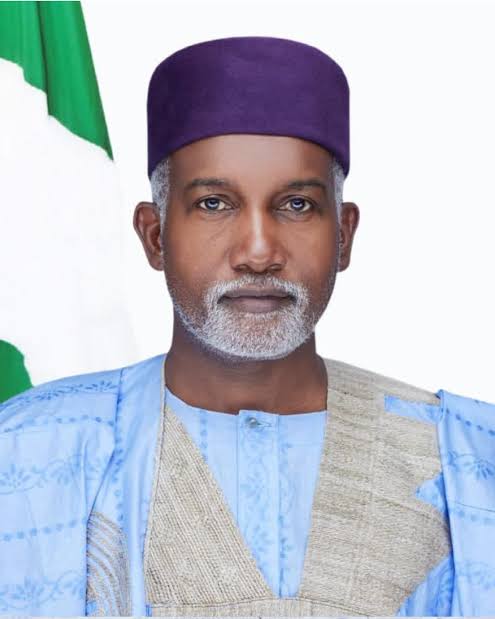
Former Minister of Foreign Affairs, Yusuf Maitama Tuggar, has called for stronger African unity and greater tolerance among citizens of the continent, condemning discrimination against fellow Africans as a betrayal of the ideals of Pan-Africanism. Tuggar made the call yesterday at the 2026 end-of-year event of The Bridge Club in Lagos, which focused on the theme, ‘Xenophobia Contradicts Pan-Africanism’. The event featured renowned Kenyan scholar and Pan-African advocate, Professor P.L.O. Lumumba, as the keynote speaker. Speaking as chairman of the occasion, Tuggar commended the club for providing a platform for experienced public office holders to continue contributing to national and continental development after leaving government. He lamented that African societies often failed to utilise the wealth of experience of former public officials, noting that other countries had developed institutional frameworks through which former office holders contributed to policy development and implementation. He also described the theme of the event as timely and critical to Africa’s political, economic and social future. Recalling Nigeria’s historical contributions to the liberation of Southern Africa, particularly its support for victims of apartheid and liberation movements in South Africa, Namibia and Angola, Tuggar condemned the targeting of Nigerians and other black Africans in South Africa. He described the development as Afrophobia, arguing that the term better captured the discrimination against black Africans. “Call it Afrophobia, which may be a better description than xenophobia, as non-black Africans appear to be exempted, or the more euphemistic framing of anti-migration protests, it is wrong and must be condemned,” he said. The former minister maintained that Africa’s unity would remain incomplete without economic integration, industrial development and the free movement of people across national borders. He identified the African Continental Free Trade Area (AfCFTA) as a critical instrument for advancing Pan-Africanism, urging African countries to strengthen manufacturing and regional economic cooperation. Tuggar also called for stronger relations between Nigeria and South Africa, describing the partnership as essential to the continent’s future. He warned against allowing historical divisions and external influences to undermine African solidarity. In his remarks, President of The Bridge Club, Abdulhakeem Mustapha (SAN), said the theme was particularly relevant at a time when Africa continued to pursue continental integration, economic cooperation and regional solidarity despite persistent incidents of hostility against fellow Africans. Mustapha said the continent must move beyond political declarations and diplomatic agreements to demonstrate genuine commitment to African unity through the treatment of its citizens. “Pan-Africanism must mean more than political declarations, diplomatic conferences and economic treaties. It must be reflected in our attitudes, our conduct, our institutions and, above all, in how we treat one another,” he said. The senior lawyer questioned the rationale behind the mistreatment of Africans in other African countries on account of their nationality, ethnicity or place of origin. He argued that the prosperity, security and dignity of one African nation could not be sustainably achieved at the expense of another. Describing The Bridge Club as more than a social association, Mustapha said it had evolved into a community of accomplished individuals from diverse professional, cultural and social backgrounds, united by friendship, fellowship and a shared commitment to societal development. He explained that the club’s name reflected its philosophy of building bridges across differences, connecting people and creating opportunities for meaningful engagement. “Our diversity is our strength. Our friendships are our bonds. Our collective aspirations are what give us purpose,” he said. Reflecting on his nine-year tenure as president, Mustapha expressed gratitude to members, officers and committees whose contributions had helped strengthen the organisation. He said leadership should not be measured by the length of one’s tenure or positions occupied, but by the relationships built, institutions strengthened, values preserved and opportunities created for others. “Leadership, I have come to appreciate, is not measured merely by the length of one’s tenure or the positions one occupies. It is measured by the relationships one builds, the institutions one strengthens, the values one preserves and the opportunities one creates for others to carry the vision forward,” he said. Mustapha expressed satisfaction that the club had grown beyond an association into a family bound by shared values and mutual support. He urged members to preserve the spirit of camaraderie, tolerance, generosity and mutual respect that had defined the organisation. “The greatest legacy we can leave behind is not simply an association that has endured, but a family that remains united, a community that continues to grow, and a platform that makes a meaningful contribution to society,” he added. The event attracted members of the diplomatic community, captains of industry, legal practitioners, public servants, professionals and other friends of the club.
Tuggar Calls for Stronger African Unity, Condemns Xenophobia
Full Article
Original Source
Read the full article at Thisdaylive →KhanList aggregates and links to publicly available news content. We do not host full articles from third-party sources. Always verify important information with original sources.