
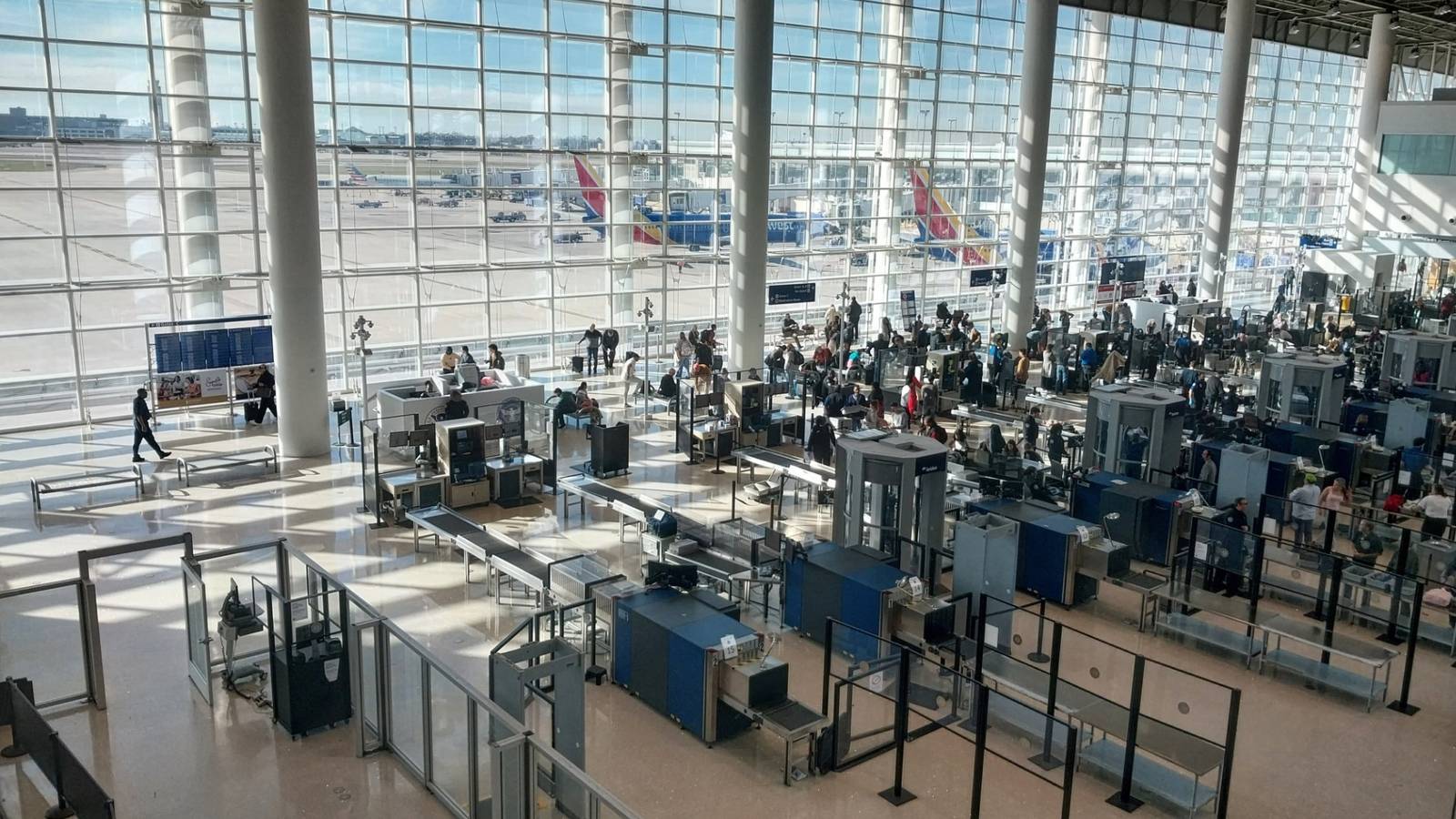
Published Sep 8, 2026, 6:32 PM EDT Experienced ICAO English Language Proficiency Instructor for pilots and ATCOs and conference interpreter who is passionate about facilitating effective communication within aviation-related businesses. Possess a deep understanding of the aviation industry, including aviation regulations, terminology, and industry-specific communication protocols. Has been working at numerous airshows across Europe since 2014. Being an ultralight pilot in her free time, she also promotes safety and efficiency in aviation operations. Based in Italy and Malta TSA PreCheck has traditionally been associated with travelers who already have a boarding pass, but that is changing with the launch of Gateside by TSA PreCheck, and this is very good news for aviation enthusiasts and frequent travelers across the US. The new program allows eligible TSA PreCheck members to pass through airport security and enter the airside terminal even when they are not traveling, as it was before the September 11 attacks. Gateside is initially available at 13 US airports, with the Transportation Security Administration ( TSA) expecting the program to expand to additional locations. The idea gives PreCheck members a new reason to visit an airport without flying, whether to accompany a family member to the gate, welcome an arriving passenger, access restaurants and shops beyond security, or do some planespotting. It also offers an interesting workaround for travelers who want to reach airport lounges without flying or upon arrival. However, Gateside is not simply an open invitation to enter any US airport terminal: travelers must apply in advance, receive approval, and use the program only at participating airports. TSA PreCheck Gets A New Way Through Airport Security Credit: Elliott Cowand Jr | Shutterstock Gateside by TSA PreCheck is available exclusively to TSA PreCheck members, who must apply through the program between one and three days before their planned airport visit. Applicants must provide their Known Traveler Number (KTN), while children without TSA PreCheck can also accompany an approved adult if they are registered as part of the same application. Once approved, the Gateside pass is valid for one calendar day and can be used for multiple entries during that period. The program is currently available at Mesa Gateway Airport (AZA), John Glenn Columbus International Airport (CMH), Dallas/Fort Worth International Airport (DFW), Detroit Metropolitan Wayne County Airport (DTW), Wichita Dwight D. Eisenhower National Airport (ICT), Indianapolis International Airport (IND), Harry Reid International Airport (LAS), Los Angeles International Airport (LAX), Bill and Hillary Clinton National Airport (LIT), Will Rogers International Airport (OKC), Eppley Airfield (OMA), San Diego International Airport (SAN), and Salt Lake City International Airport (SLC). At the checkpoint, users must show identification and may need to display their approved Gateside status through the program's mobile portal; screenshots and printed copies are not accepted. TSA PreCheck members using Gateside can also use the dedicated PreCheck screening lanes, distinguishing the initiative from some previous airport programs that allowed non-ticketed visitors to access terminals but did not necessarily provide access to PreCheck screening. How Gateside Works For Non-Flying Passengers Credit: Videophilia | Shutterstock Allowing non-travelers beyond airport security is not entirely new in the United States. TSA experimented with a similar myPITpass program at Pittsburgh International Airport (PIT) in 2017, as reported by ABC News, while some individual airports have subsequently introduced their own schemes allowing visitors to obtain gate passes under certain circumstances. Gateside stands out because it creates a more centralized, TSA-backed framework that might eventually cover more airports. For most people, the program will probably remain a niche benefit. One obvious use is for family members who want to accompany children, elderly travelers, or other passengers in need to the gate. But the most intriguing application involves airport lounges. A traveler arriving internationally may need to clear immigration and customs, then pass through security again to reach an airside lounge, depending on the airport's layout and the lounge's access rules. Gateside could make that process easier for eligible PreCheck members, particularly at airports where lounge access upon arrival is otherwise difficult. Why TSA Is Letting Travelers Go Airside Without A Flight Credit: Leonard Zhukovsky | Shutterstock The launch also highlights how the role of airport security checkpoints has evolved since the restrictions introduced following the September 11 attacks. For many years, the standard assumption at US airports was that only ticketed passengers could pass through security, although exceptions such as airline-issued gate passes have existed. Gateside represents a controlled move toward giving some non-travelers airside access while still keeping them within TSA's established screening framework. The TSA PreCheck program itself has also grown substantially, giving Gateside a potentially large pool of eligible users. More than 20 million people are directly enrolled in TSA PreCheck, while more than 40 million travelers can access PreCheck lanes when other Trusted Traveler programs such as Global Entry are included. For now, the program's limited airport footprint makes it unlikely to transform how most Americans use airports. However, TSA's expectation that it will add more airports could make Gateside more significant over time, particularly if airports find practical uses for controlled airside access by non-ticketed visitors. For frequent travelers, the program is another TSA PreCheck benefit worth knowing about—even when there is no flight on the itinerary.
TSA’s New Gatecheck Program Lets PreCheck Members Pass Security Without Flying
Full Article
Original Source
Read the full article at Simpleflying →KhanList aggregates and links to publicly available news content. We do not host full articles from third-party sources. Always verify important information with original sources.