
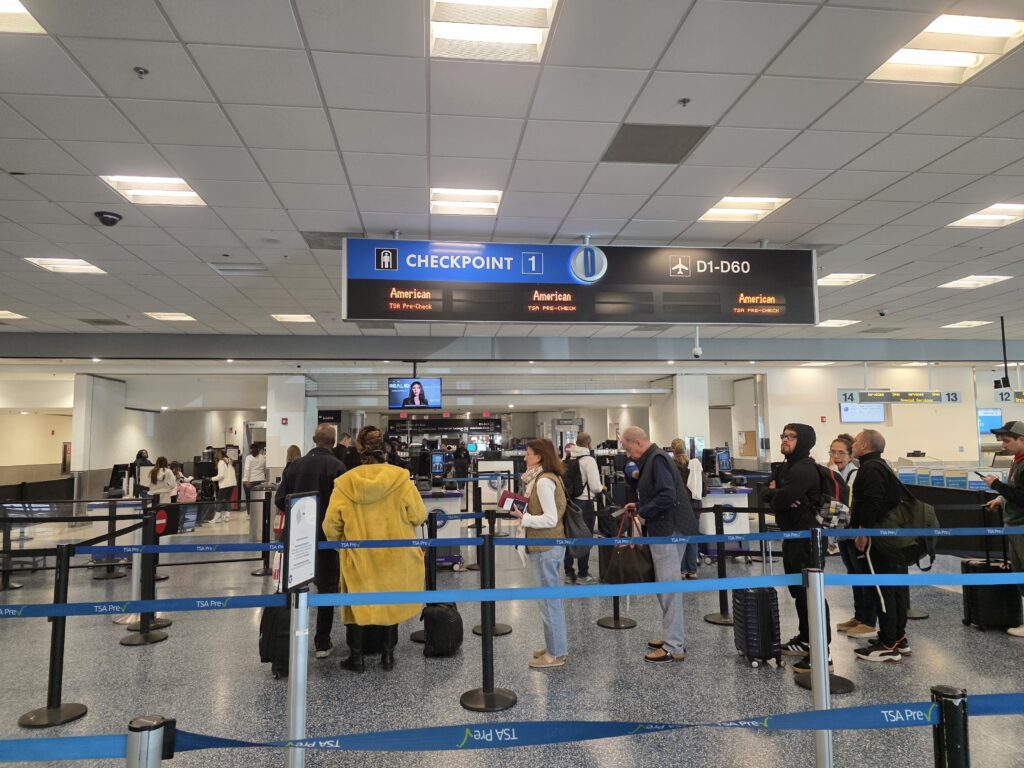
TSA has pulled back its Gateside program, which lets PreCheck members escort friends and family to the gate or meet their arriving flights. The expansion to 300 airports has been suspended indefinitely, leaving the original 13 location pilot in place. That’s a reversal from the broad program I covered two weeks ago, and it takes away something useful. TSA has told airports, “the Gateside by TSA PreCheck program is on hold indefinitely aside from the 13 airports in the pilot program” TSA didn’t explain the reason for the change or any timetable for bringing back the effort. Gateside Had Expanded To Most Large Commercial Airports Gateside launched in September with 13 airports. By October 2, the airport selection menu inside the application listed hundreds, even though TSA’s public page still showed a much shorter list. The original 13 airports were Dallas–Fort Worth, Detroit, Omaha, Las Vegas, Indianapolis, Columbus, Los Angeles, Little Rock, Phoenix-Mesa Gateway, Salt Lake City, San Diego, Wichita and Oklahoma City. Under the program, PreCheck-eligible people could request access through TSA. They’d apply one to three days before a visit using Login.gov and their Known Traveler Number, confirm approval, and bring ID to a PreCheck checkpoint for screening. So What Happened? Either there was bureaucratic infighting, with the expansion happening without full agency buy-in causing it to get shut down, or the agency simply hadn’t done the training and coordination at the airport-level that was needed. 300 airports showed up one day online without fanfare. There were already reports of approved visitors being turned away at Dallas–Fort Worth because checkpoint staff and supervisors said they hadn’t been trained on the program or couldn’t find the approval in their system. One visitor staying at the Grand Hyatt DFW described getting approval online and being refused at the checkpoint. Extra visitors mean more identification checks, bags to screen and exceptions to resolve. Even a small number can create delays if the approval process doesn’t work properly since each person through the checkpoint then takes additional time. But initial volume was reportedly very low. It wasn’t well-publicized that the program had gone wide. It seems unlikely that the rollout discovered any actual problem with allowing vetted visitors through security. TSA continues to allow the practice at the original 13 airports in the program. If Lines Are The Problem, Limit Visits When Lines Are Long The only real argument for limiting gate access is managing the number of people TSA has to process. Everyone gets screened when they go through. Buying a ticket for a flight doesn’t make someone less of a threat. It’s just capacity management. TSA’s Gateside guidance says availability can be limited during peak times. Airports with existing non-PreCheck programs remain in place with those, and generally capacity capped use. It seems simple to offer a limited number of entry slots during quieter periods. There’s Certainly No Reason To Keep Vetted People Away We spend way too much time screening people deemed not a threat, and that trades off with focus on people who might be or whose threat status is uncertain. On March 5, 2013, I wrote about TSA’s plan to allow small pocketknives. The proposal covered blades no longer than six centimeters, or 2.36 inches, with restrictions on blade width and design. It didn’t allow every knife, and it didn’t lift the ban on box cutters. Then-administrator John Pistole argued that reinforced cockpit doors and other security changes had altered the threat. Screeners needed to concentrate on explosives and other things that could bring down an aircraft. Finding a small prohibited object, searching the bag and resolving it all consumed time and attention. In his April 2013 letter to Congress, Pistole said TSA needed to: “focus our efforts on mitigating risk, rather than trying to eliminate it.” He also reported that frontline screeners overwhelmingly told him allowing small pocketknives would improve their ability to identify components of explosive devices. Scissors were an earlier version of the same argument. TSA, which had become known as (T)aking (S)cissors (A)way, had allowed small scissors and certain tools beginning in December 2005. A subsequent Government Accountability Office review found no reported security incidents involving the newly permitted items. The knife proposal ran into opposition from flight attendant unions, airlines and lawmakers. The strongest objection was that a knife could still be used against passengers or cabin crew even if it couldn’t get someone through a reinforced cockpit door. But that required comparing the extra risk with objects already permitted onboard, and with the security focus displaced by searching for small knives. TSA abandoned the change on June 5, 2013. Congress subsequently restricted TSA’s authority in the 2018 aviation law: apart from plastic or round bladed butter knives, the agency couldn’t amend its rule to permit knives in the airport’s screened area or aircraft cabin. I returned to this last month when TSA celebrated discovering a small pocketknife hidden inside a toothpaste tube. The agency was promoting its success at catching the sort of item its own leadership had wanted to stop spending so much time on. PreCheck is supposed to identify people who warrant less intensive screening, freeing resources for people who haven’t undergone comparable vetting and for more consequential threats. We still spend too much effort on the passengers the government has already checked. As I argued when covering TSA’s proposed new PreCheck lanes last week, enrollment should be free. Charging discourages some occasional travelers from getting vetted, leaving TSA to put them through a more labor-intensive process every time they fly. The agency collects an enrollment fee from one family while paying to do more screening work on another. And getting vetted should mean there’s really no issue, at times where lanes aren’t at capacity, in proceeding through security whether flying or not. Topics on this page
TSA Pulls Back Free Passes To Meet Family At The Gate—300-Airport Expansion Halted Without Explanation
Full Article
Original Source
Read the full article at Viewfromthewing →KhanList aggregates and links to publicly available news content. We do not host full articles from third-party sources. Always verify important information with original sources.