
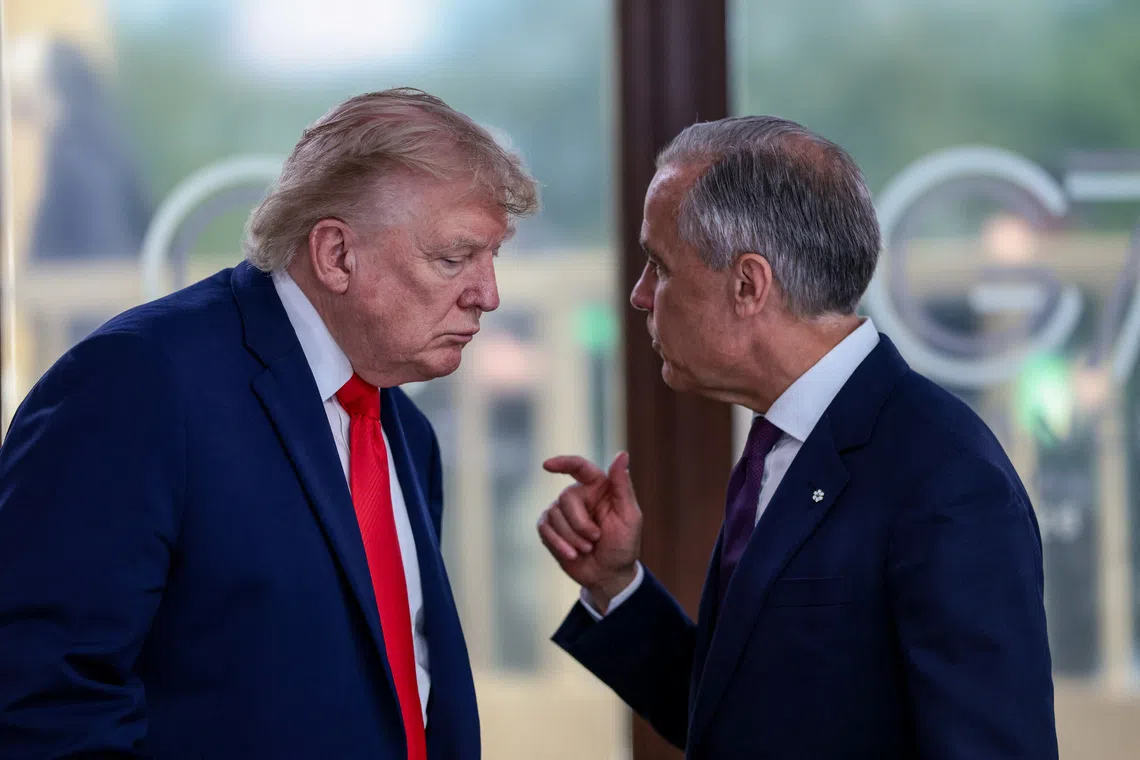
WASHINGTON – The United States had offered to reduce its tariffs on steel, aluminium and autos, and eliminate a recently imposed tariff on Canadian lumber, before negotiations suddenly collapsed on Aug 21, Jamieson Greer, the US trade representative, said on Aug 22.In an interview with The New York Times, Greer detailed previously confidential and unreported elements of the US trade offer to Canada, saying those measures would have given Canada the most preferential treatment of any trading partner.Trade talks between the countries suddenly soured late on the night of Aug 21, following a week of talks in which negotiators appeared hopeful for an agreement.US President Donald Trump had abruptly threatened Canada with a 50 per cent tariff on about US$20 billion (S$25.4 billion) of its exports in July, in an effort to push the country into making trade concessions and removing certain practices the United States had deemed unfair.Those tariffs were set to go into effect on the morning of Aug 19. But on the night before, Trump delayed the tariffs until Aug 22, saying that the countries had a deal, “subject to the finalisation of documents”.But over the following days, and particularly late into the night on Aug 21, that consensus crumbled. It fell apart over a series of issues that, individually, may have seemed small but collectively represented a big division over issues of importance to both sides.Greer said that the Trump administration had pledged to eliminate the 10 per cent tariff on softwood lumber that Trump imposed in 2025 using a provision known as Section 232.The United States had also offered to reduce a 25 per cent tariff that Trump put in place in 2025. But because Canada qualifies for a further reduction when the cars contain any amount of US-made content, the automotive tariffs could have gone as low as 7 per cent, he said.The United States also offered to lower tariffs on metals, one of Canada’s most important priorities.US officials offered to cut tariffs on steel to 25 per cent from 50 per cent for the majority of steel Canada sends to the United States, under what’s known as a tariff-rate quota system. On aluminium, the United States would reduce its tariffs to 25 per cent from 50 per cent without such a quota limitation, Greer said.For downstream products that are made with steel and aluminium, the United States offered to cut those tariffs by anywhere from 10 to 25 percentage points, with the lowest tariffs set at 15 per cent.The Trump administration would also have suspended the 50 per cent tariffs that it brought into effect early on the morning of Aug 22 on Canadian dairy, wine, hockey sticks and other goods, while cooperating on other issues like critical minerals and the transshipment of goods, he said.The Canadian government did not immediately respond to a request to comment on Greer’s description of what Canada had left on the table when it suspended talks on the evening of Aug 21.In a televised briefing earlier on Aug 22, Canada’s prime minister, Mark Carney, slammed the US proposal as a “bad deal”. He added, “we cannot accept what they offered and we will not give what they asked”.Carney said that Canada had walked away from negotiations not just because it assessed that what was being offered by the United States negotiating team was insufficient, but also because US officials were asking for concessions that Canada was not prepared to make.He said Canada had equally agreed to meet many US demands, including pulling all its retaliatory tariffs on American steel, aluminium and cars, as well as convince its provinces to restore the sale of American liquor, which most of them have banned.But, he said, the United States refused to include certain tariff exemptions for heavier trucks. Carney said the United States also asked for concessions that would affect Canada’s culture and maintenance of protections for the French language and demanded that Canada take out tariffs against non-US trading partners, without offering sufficient benefits for Canada to do so.“In short, they asked too much and offered too little,” Carney said in his address on Aug 22.Greer has argued with that assessment. In the interview, he said that the United States offer would “continue their best access and improve it”. NYTIMESThis article originally appeared in The New York Times.
Trump’s top trade representative details offer that Canada refused
Full Article
Original Source
Read the full article at Straitstimes →KhanList aggregates and links to publicly available news content. We do not host full articles from third-party sources. Always verify important information with original sources.