
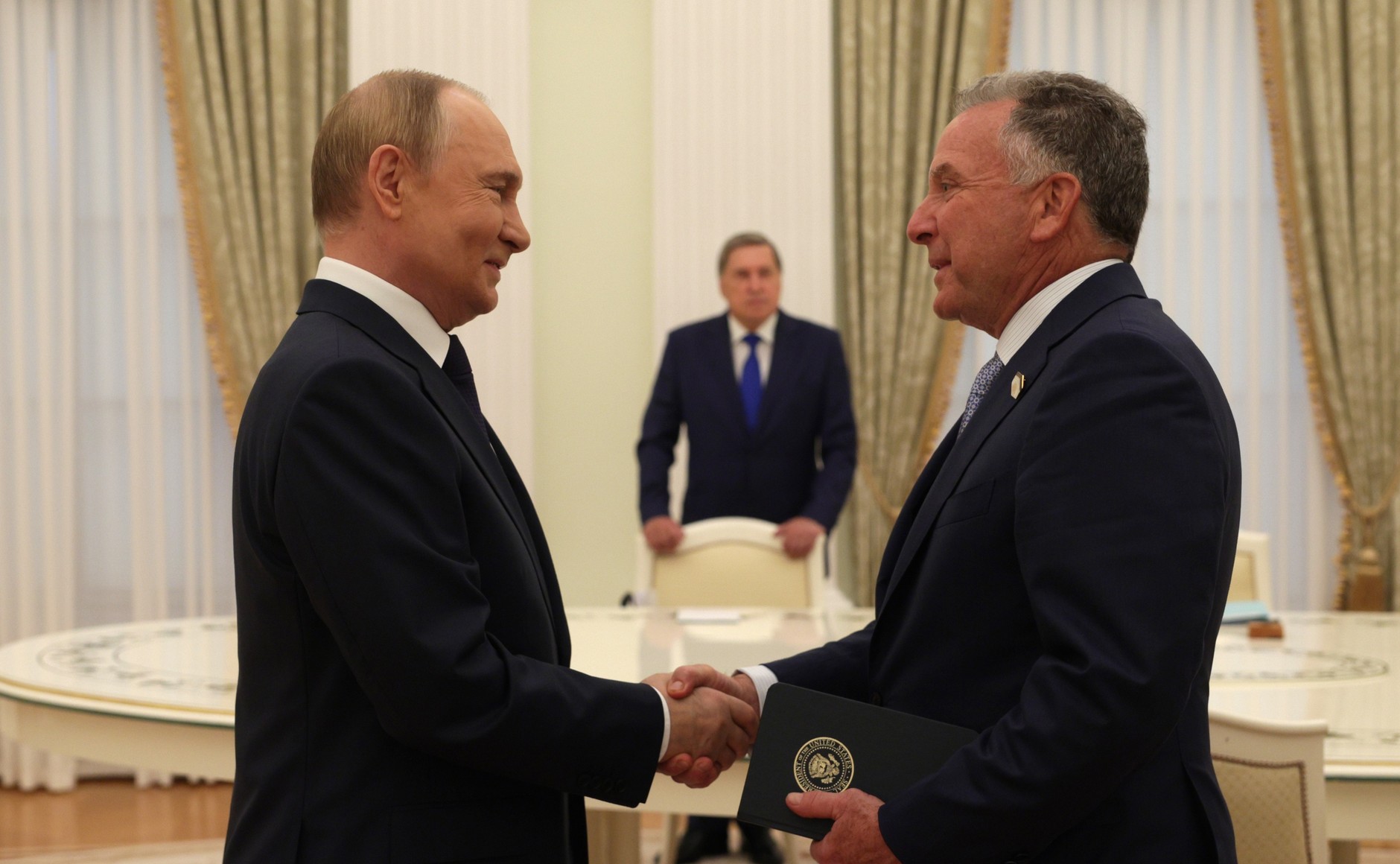
The nauseating sight of the American envoy Steve Witkoff fawning on Vladimir Putin this weekend should have been a shock. Also shocking: Witkoff and his similarly unimpressive sidekick, Donald Trump’s son-in-law Jared Kushner, travelled in a Russian government motorcade and used a Kremlin interpreter for their Moscow meeting. But so many other events are shocking too. Like Russia’s relentless drone strikes on Kyiv and other Ukrainian cities, the impact of horrible words and repulsive deeds from Washington has become routine. Who now remembers the dates, or the details, of the outrageously unfair US-Ukrainian investment deal? The threats to annex Greenland? The bizarre pantomime of the Alaska summit? Like the daily presidential rants on social media, these episodes hold our attention for a moment, before being displaced by the next piece of ghastliness. Two new books try to turn the torrent of news into a coherent picture. Betrayal: Trump, Putin and The New Age of Conquest by The Guardian journalist Luke Harding gives vivid accounts of these and other events. It also explores the underlying question of Donald Trump’s curiously one-sided and deferential relationship with the Kremlin. Harding does not come to a firm conclusion. But the British security pundit Keir Giles goes further in American Overthrow: Moscow’s Endgame in Its Long War with Washington, arguing that the Trump presidency represents a Kremlin victory at the heart of power in the United States. This involves not just the president’s personal subservience to Putin. Naked greed and phoney patriotism His administration has adopted key elements of the Russian approach to power, abroad and at home. The greed-driven fusion of personal and political interests, the erosion of institutions and phoney patriotism are all too familiar to those who have plotted Russia’s descent in the past quarter-century. The comparison is certainly striking, though some may find it fanciful. Optimists believe that the mid-term elections, if conducted constitutionally, will show that the guardrails of the American system are holding. Others, including Giles, fear that the administration, even if it loses the elections, will continue regardless to its greater goal: holding on to power after the four-year presidential term expires in 2028. Perhaps.
Trump’s self-sabotaging America is leaving Europe with a weaker ally against Putin
Full Article
Original Source
Read the full article at Euobserver →KhanList aggregates and links to publicly available news content. We do not host full articles from third-party sources. Always verify important information with original sources.