
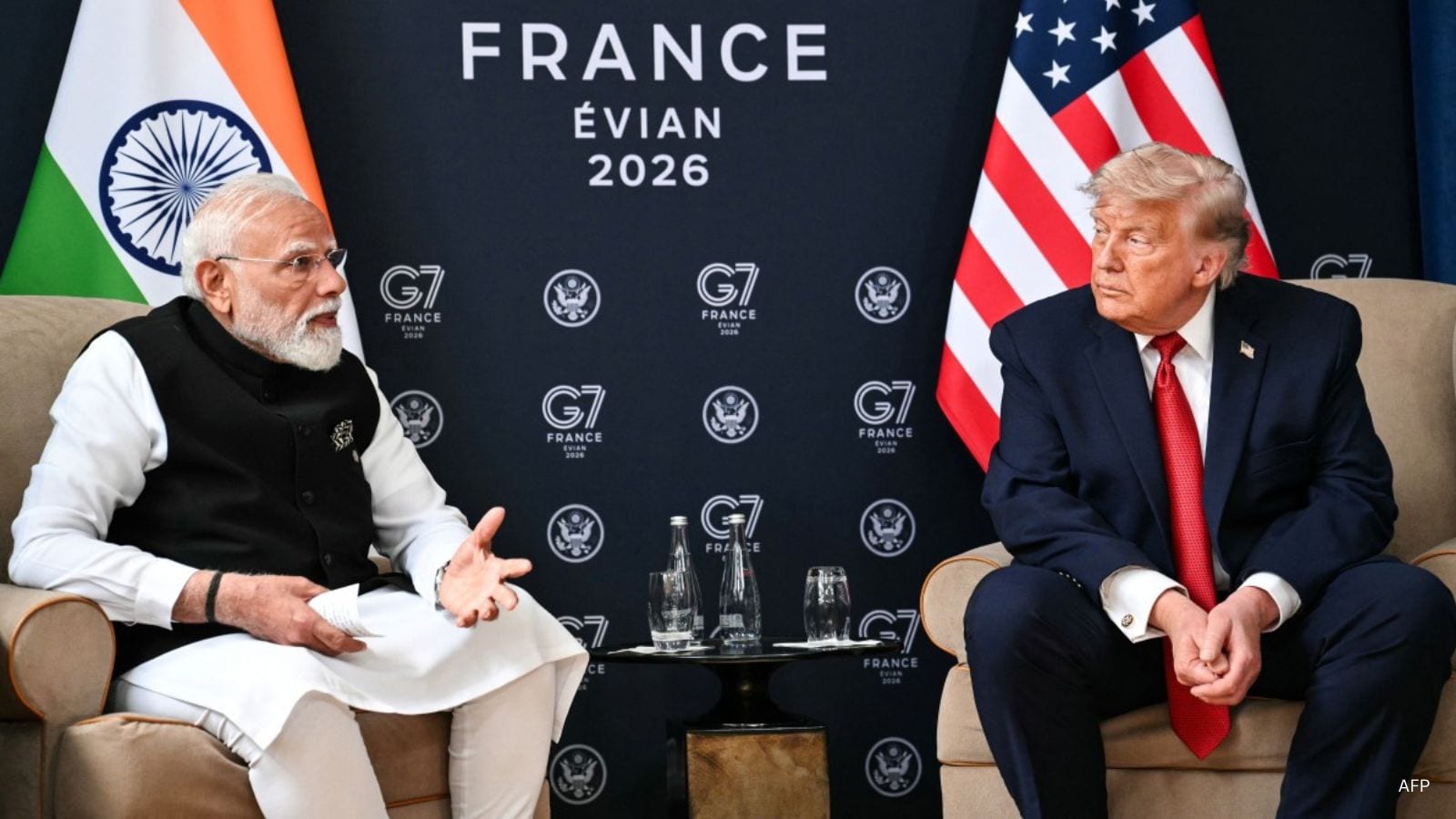
Washington: The US has added a new aspect to its trade negotiations with India. The US Trade Representative (USTR) has proposed a 25 per cent tariff on Indian imports but has indicated that this would be reduced to 17 per cent if a trade agreement is signed between New Delhi and Washington. Despite numerous rounds of talks on how to form a trade 'bridge' agreement, no deal has been signed. Hence, this announcement is both a tariff proposal and a negotiating tool.What Has The US Said?The USTR has proposed higher tariffs as a result of the Section 301 investigation, which claims that India is contributing to global over-capacity in industry. The plan is to impose a 25 per cent tariff on Indian exports, although some items are excluded from the ambit of levies. Following this, US Trade Representative Jamieson Greer specified that if a deal is signed, then the tariff would be limited to 17 per cent. If no deal is reached by the time tariffs come into force, then it will remain at 25 per cent.Why India?Washington has claimed that Indian industrial policy is contributing to global overcapacity and is also disadvantaging American firms. The US has highlighted Indian industrial capacity building, labour laws, banking rules, trade barriers, and sourcing from non-market economies. Furthermore, it has raised issues relating to economic security in relation to India's pharmaceuticals, medical equipment, steel, solar, and information technology industries.India denies these allegations. It has informed Washington that it does not suffer from structural over-capacity in any industry. Rather than conducting trade discussions through the Section 301 process, India has called for these to be dealt with within bilateral trade negotiations.How We Reached HereAfter months of trade uncertainty, in August 2025 the US slapped retaliatory tariffs on Delhi's exports, which increased the duty payable on many Indian goods to up to 50 per cent. The action came after talks collapsed as Washington was angered by New Delhi's decision to import oil from Russia.In February 2026, an outline of a bridge agreement was published. Retaliatory tariffs on the majority of Indian goods were reduced to 18 per cent. However, no full trade deal was subsequently signed.Subsequently, the US Supreme Court ruled that President Trump had improperly exercised his emergency provision under IEEPA to implement broad sector-specific tariffs. Washington then set a 10 per cent basic tariff and initiated Section 301 investigations in order to establish a new legal foundation upon which to justify further tariffs. The November 25 proposal falls within this new process.The ImpactWhilst there is potential for the extra one per cent to affect the competitiveness of Indian exports to the US, it is not additive to current tariffs. The USTR has indicated that whichever is greater --the new or existing Section 301 tariffs--will be what importers must pay. Consequently, for relevant goods, the supplementary tariff will increase to either 25 per cent or 17 per cent (depending on whether or not a deal is signed) from the existing 10 per cent.However, not all Indian exports will be affected. Around 45 per cent of India's exports to the US reportedly fall outside the present 10 per cent duty. Specific goods include some drugs and mobile phones. Items subject to national security tariffs are handled distinctly.Will India Benefit From US Deal?To a limited extent, compared to other Asian countries, India benefits from the American proposal. Should a deal be signed, India's 17 per cent will be just below the rates of Bangladesh, Cambodia, Indonesia, Malaysia and Thailand (all 18 per cent) and Vietnam (20 per cent). Nevertheless, the EU, Japan and South Korea will all have lower tariffs (15 per cent). Although a one per cent difference can be significant within price-sensitive industries, factors such as cost, distribution, productivity, and supply chains will also influence where US companies source goods.Which Industries Are Vulnerable?Depending on the finalised goods list, textiles, clothing, chemicals, electronics, and solar and electrical goods may all be more challenged. As the US is India's largest export destination, this will be important for highly export-dependent firms. Within pharmaceuticals, although India is a leading producer of generic drugs, the USTR has criticised New Delhi's dependence on imported drug 'actives,' particularly from China.What Is The US Seeking?The tariff reduction is connected to a broader trade deal. The bridge agreement outline set out in February included plans for India to reduce or eliminate tariffs on American-manufactured and agricultural produce such as nuts, fruit, and animal feed. It also sought to open Indian markets to US medical and information technology goods. Further, India has declared that it aims to import $500 billion worth of American energy, aerospace, precious metals, technology, and coking coal over the course of five years.Of the aforementioned areas, agriculture is the most delicate. Issues include those relating to farmers, dairy imports, and genetically modified produce.What Now?Although the 25 per cent tariff has not yet been implemented, the USTR is currently accepting public feedback until January 5, 2027. It has arranged for a hearing on January 25 and will thereafter determine what, if any, further steps are to be taken. The Commerce Ministry has stated that it is reviewing the notice.An opportunity for negotiation therefore remains. For Indian exporters, the difference between 17 per cent and 25 per cent may well determine their continued competitiveness. Meanwhile, the Indian government must consider what it is prepared to compromise on in order to achieve the lower tariff. For the US, the proposal provides a bargaining tool. Moreover, defence, technology, energy, and the Indo-Pacific relationship are also of importance within the wider bilateral context.
Trump's New Tariff Threat To India Comes With Relief Clause, But At A Cost
Full Article
Original Source
Read the full article at Ndtv →KhanList aggregates and links to publicly available news content. We do not host full articles from third-party sources. Always verify important information with original sources.