
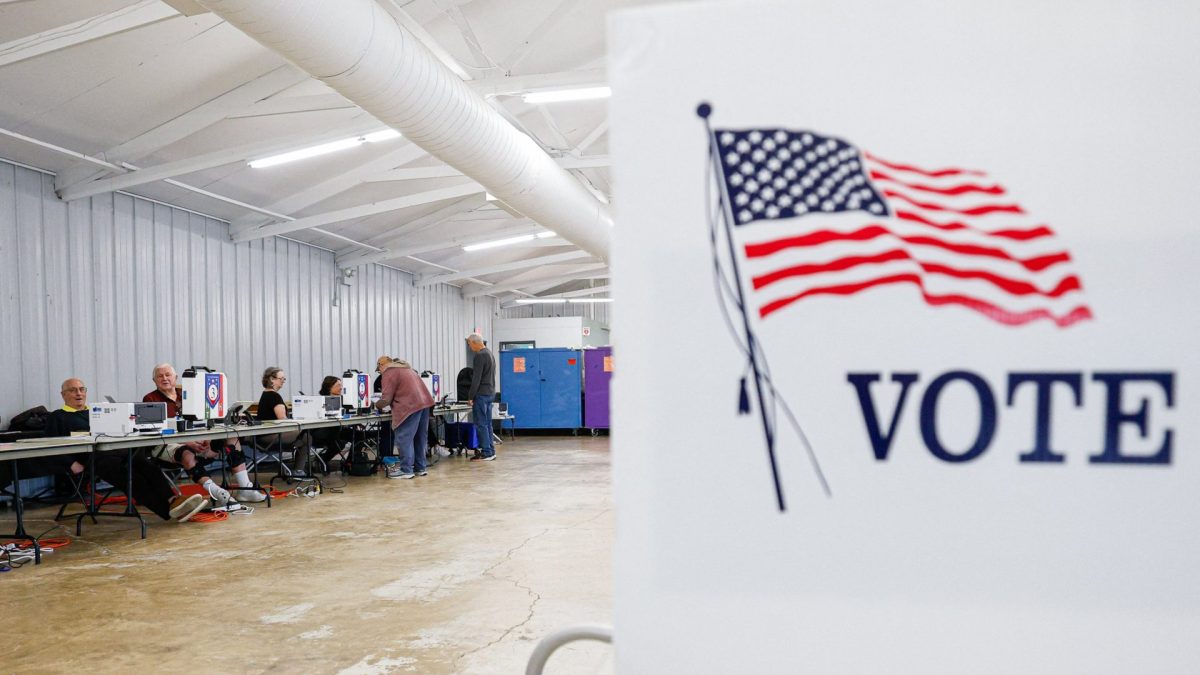
Donald Trump’s efforts to alter how US citizens cast their votes have been given a major boost ahead of the midterm elections. The United States Supreme Court has ruled a controversial database can be used by states and the Trump administration to asses the eligibility of voters, in a decision which risks disenfranchising some hoping to visit the ballot box in November. Under an expanded Department of Homeland Security (DHS) programme, states are able to use the database to asses the citizenship status of anyone on their voter roles and deregister those deemed to be non-citizens. While use of the database is voluntary, limiting the impact at the midterms, the ruling could still result in chaos where legitimate voters are wrongly purged due to flaws with the DHS system. Shorts What is the database and why is it controversial? The database is part of a DHS programme called Systematic Alien Verification for Entitlements, also known as SAVE, which was originally designed to help states determine eligibility for certain federal services. While SAVE has existed since 1986, the Trump administration has significantly expanded the programme over the past 18 months as part of the President’s efforts to crack down on what he claims are widespread instances of non-citizen voting in US elections. SAVE now allows states to search for Social Security information and other federal records tied to voters, which critics have argued is an invasion of privacy. Beyond privacy concerns, the database has drawn criticism for incorrectly identifying US citizens as ineligible. In Texas, one of the states which has embraced the SAVE programme, officials in Travis County launched an investigation after 97 voters were flagged as noncitizens. However, the officials ultimately determined at least 10 per cent, and as many of 21 per cent, of those flagged were, in fact, US citizens. Travis County filed a brief urging the Supreme Court to prevent the Trump administration using the database. The state of Texas submitted its own brief in support of Trump’s plans. Even supporters of the programme have acknowledged issues around misidentification. The Republican former top election official for Arizona’s largest county, Stephen Richer, welcomed the Supreme Court’s ruling, even as he urged caution when using SAVE. “The SAVE program has been shown time after time to be a highly-imperfect tool, so election administrators should only use it as a starting point, not as a definitive indicator of citizenship,” he wrote in a social media post. What did the Supreme Court say? In a split decision, the Supreme Court overturned a previous federal ruling prohibiting DHS from allowing SAVE to be used in checking voter roles and said states could make use of the programme. The court’s three liberal justices dissented. Outlining their decision, the majority wrote: “The Federal Government has an obligation to respond to requests from state and local election officials seeking to verify the citizenship of voters”. “The order below prevents the Federal Government from using the program it believes is best suited to the task,” they added. The Supreme Court ruled SAVE can be used by states and the Trump administration to asses the eligibility of voters (Photo: Reuters / Nathan Howard) Further justifying the ruling, the majority found a 1996 law explicitly allows DHS to obtain information on citizenship and immigration from other federal agencies. Justice Ketanji Brown Jackson, who penned a dissent on behalf of the three liberal justices, questioned those arguments, highlighting the database had long been accepted to fall under federal privacy law and noted the decision could result in voters being wrongfully removed from rolls. “The harm caused by burdening or disenfranchising even a few lawful voters outweighs the nonexistent harm that the Government experiences when it is prevented from taking an action that it likely lacks the authority to take,” she wrote. Could the decision help Trump win the midterms for Republicans? The impact of the decision on November’s midterm elections is uncertain. While the Supreme Court opened the doors for any states willing to make use of SAVE to assess voter eligibility, engaging with the programme is voluntary and most, if not all, Democrat-run jurisdictions are likely to avoid it. Existing laws also prohibit the majority of states from enacting major purges of voter rolls within 90 days of an election – there are just 38 days until the November ballot. However, it is possible some states could nonetheless seek to remove small numbers of voters so as not to fall foul of those rules while also attempting to appease Trump. Cumulatively, such an effort could result in hundreds, or even thousands, of voters being disenfranchised. If the error rate seen in Travis County is replicated, that could result in many US citizens being wrongly denied the right to vote. It is unlikely such an effort would have a significant overall impact on November’s elections as the likelihood of large numbers of voters from any single district being removed remains low, although it is possible disenfranchisement could swing exceptionally tight races, such as the Senate contest in Texas. However, the impact of the ruling could be much more pronounced over the long-term, especially if Trump continues to push unsubstantiated claims of mass voting by non-citizens. Widespread purging of voters could effectively act as a form of suppression, with those wrongfully removed potentially facing challenging and costly legal fights to regain their right to vote.
Trump’s efforts to reshape voting just got a major boost – here’s how
Full Article
Original Source
Read the full article at Inews →KhanList aggregates and links to publicly available news content. We do not host full articles from third-party sources. Always verify important information with original sources.