
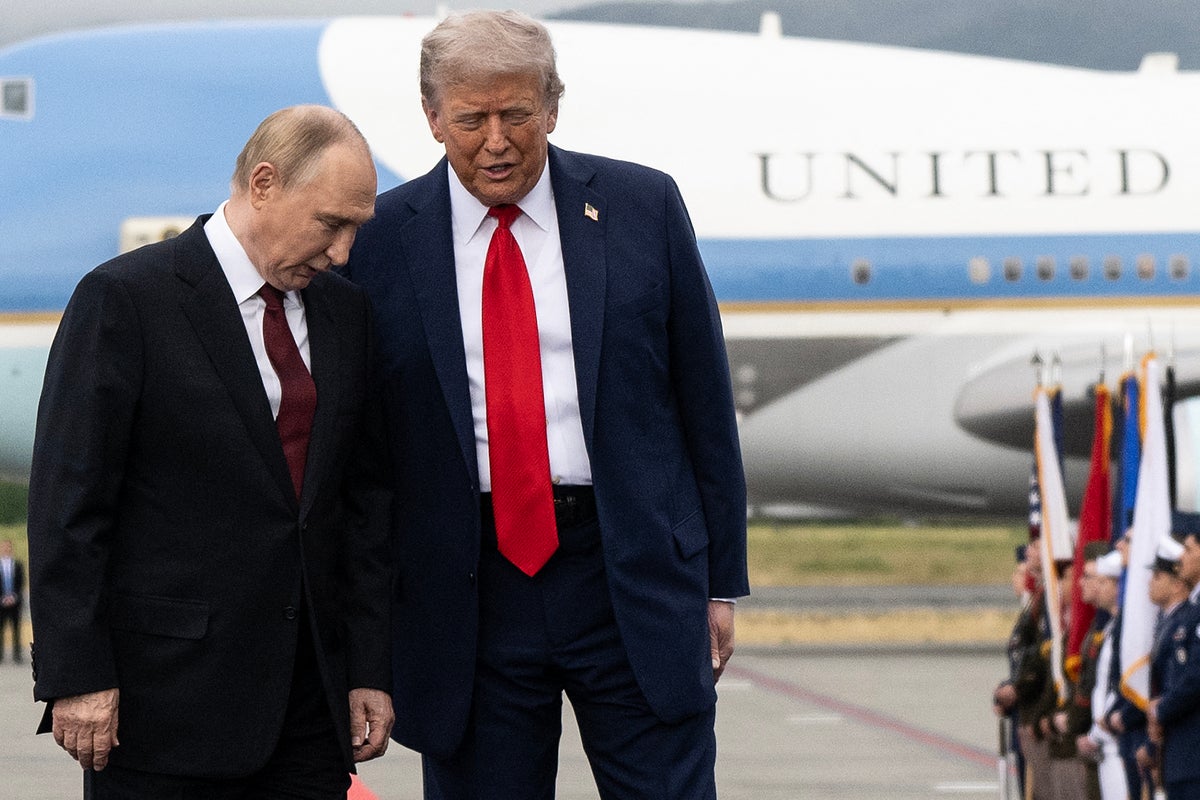
It was late one Friday afternoon in October when Donald Trump unveiled what he thought would be a bold new plan to rescue America from the fuel crisis. “I have just concluded a highly successful discussion with President Vladimir Putin, of Russia, wherein it was agreed that Russia will immediately supply over 300,000 Tons of Diesel Fuel to the American and Global Marketplace,” he wrote on Truth Social. The controversial diesel accord with Russia blindsided Washington’s allies in Europe and threatened to undermine years of layered sanctions on the economy fuelling Moscow’s war machine.But for president Trump, the priority had shifted to taming energy prices at home ahead of the November midterm elections. Strikes on energy infrastructure in Russia and Ukraine were contributing to shortages, which pushed prices up - but so too was his war on Iran.A gallon of diesel that cost $6.19 on October 5 still cost $6.29 a month later, on November 2; the midterms were a rout for Trump’s humiliated Republican party; and an emboldened Russia is still vying to force through its maximum demands in Ukraine peace talks, according to the EU.US President Donald Trump (R) and Russian President Vladimir Putin together in Alaska last year (AFP/Getty)A month on, it appears even the tankers that were supposed to bring the Russian diesel to the US are yet to arrive, with three since diverted to other destinations, according to shipping data.Analysts say it would still take much more diesel to have any meaningful impact on prices. And Trump still has to navigate the political sensitivity, as prospective buyers in the US still appear hesitant to purchase Russian fuel.What did the deal involve?The original deal announced in October was supposed to waive parts of a new sanctions law on Moscow. In return, Russia would immediately export 300,000 tons (around 2.25m barrels) to the US and global markets, followed by 500,000 tons (3.75m barrels) in November, and one million tons (7.5m barrels) “immediately thereafter”.The temporary license only allowed Russia to export diesel to the US until April 7 next year.Russia appears to have ramped up production of diesel to foreign nations, but the US is yet to receive any.The Agioi Fanendes tanker, a Malta-flagged tanker, was carrying approximately 300,000 barrels, or 40,000 metric tons, of Russian diesel when it reversed course (Reuters)The first cargo of Russian diesel came to a halt off the US east coast on Tuesday, shipping data showed, following warnings by a US governor and lawmakers about the legality of the ship's landing in the US.The Agioi Fanendes tanker, a Malta-flagged tanker, was carrying approximately 300,000 barrels, or 40,000 metric tons, of Russian diesel when it reversed course some 400 nautical miles away from New York, according to Bloomberg and the Kyiv Post.Earlier, the Russian tanker Talisman and the Sierra Leone-flagged Leruo appeared to divert from the US. Talisman turned from the Atlantic Ocean and into the Mediterranean Sea on Monday, while Leruo changed its signal to Brazil.Why was it destined to fail?First, the scale. The deal with Russia amounts to 1.8 million tons of diesel exports, filling around 13.5m barrels. But Americans consume around 3.6 million barrels per day.US refineries produced around 1.76bn barrels of ultra-low sulfur distillate - the diesel most consumed in the US - in 2025 alone, according to the US Energy Information Administration. But it only imported around 60m barrels of ULSD from abroad, and around 84 per cent of those were from Canada.Last year, those imports were equivalent to around four per cent of total consumption in the US. And the Russian 13.5m released to both the US and the wider global market is equivalent to around a quarter of that.Gas prices, including diesel at $7.69 per gallon, are displayed at a gas station outside Taft, in Kern County, California, on October 21, 2026 (AFP/Getty)Russian exports were therefore unlikely to impact the supply of diesel enough to bring down fuel prices in the US. The deal also emerged only a month before the November 3 midterms, leaving little time to move the needle.Crucially, too, the deal did nothing to resolve the global conflicts squeezing the energy trade. Ukraine has intensified its strikes on Russia’s energy industry over the last 18 months, but the impact had been “minimal” until the Iran war broke out in February, James Henderson, a researcher at the Oxford Institute for Energy Studies, told AFP.Prior to the Middle East crisis, a gallon of diesel cost around $3.75, according to the American Automobile Association - 40% less than today.Furthermore, there is little appetite in the US to receive Russian diesel. New Jersey’s Democratic Governor Mikie Sherrill this month warned local port officials and terminal operators against accepting Russian diesel, saying those shipments would break federal law.Sherrill said importing Russian diesel could expose businesses and individuals using New Jersey ports to harsh civil and criminal penalties. Senators from both parties said last month that US law bars imports of energy from Russia until it ends aggression against Ukraine.How has it backfired?As of November 13, no Russian diesel has been registered entering the US. And yet, Russian foreign minister Sergei Lavrov insisted this week that the accord was already working and lowering global fuel prices.“An important contribution to energy security was the agreement between the Russian and US leaders to suspend restrictions on the export of Russian diesel. We have already started implementing it, which immediately brought prices down,” he wrote in Moscow daily Kommersant.The US-Israeli war with Iran has seen strikes on tankers around the Strait of Hormuz, contributing to inflated energy prices (Royal Thai Navy)The US may not be receiving the diesel, but the terms have galvanised Moscow’s ailing industry to resume exports to other nations. Russia shipped out 271,000 barrels of diesel a day in October, more than double the 135,000 recorded the month before, according to data provider Kpler.At the pump in the US, meanwhile, diesel prices were at a record high last week when Americans voted in the midterm elections, which proved a disaster for Trump, handing control of both the Senate and the House of Representatives to the Democrats.And the deal has further undermined confidence among Ukraine and Washington’s European allies. Stephen Sestanovich, a senior fellow for Russian and Eurasian studies at CFR, said the deal ”showed the US was willing to start dismantling sanctions unilaterally, even when doing so violated its own laws”.The outcome of the diesel deal so far, then, is that Russia has been able to ramp up exports ahead of peace talks with Ukraine, a new precedent has been set whereby the US can lift sanctions, undermining allies, and US voters have seen little to no benefit.
Trump’s diesel deal with Putin is a shambles. Here’s why it was always destined to fail
Full Article
Original Source
Read the full article at Independent →KhanList aggregates and links to publicly available news content. We do not host full articles from third-party sources. Always verify important information with original sources.