
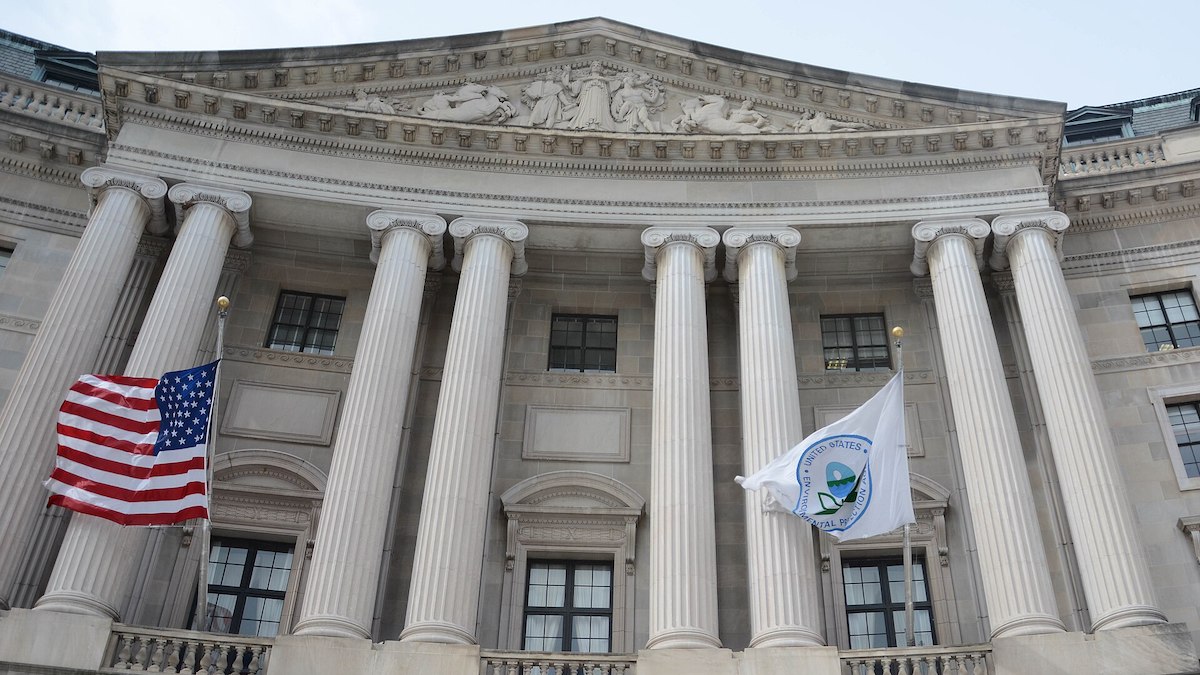
On 27 October, President Donald Trump announced that the Environmental Protection Agency was proposing rollbacks to existing methane emissions rules for oil and gas drilling. Credit: Wikimedia Commons/AFGE, CC BY 2.0 Research & Developments is a blog for brief updates that provide context for the flurry of news regarding law and policy changes that impact science and scientists today. The Trump administration has announced plans to terminate some methane emissions restrictions for oil and gas companies, rolling back rules set by the Biden administration in 2024. The announcement was made at a 27 October campaign rally in Lubbock, Texas. At the rally, Trump said the looser restrictions would release 210 million barrels of oil (about 10 days of U.S. consumption) and 1.41 trillion cubic feet of natural gas (about 15 days of U.S. consumption). Methane is a potent greenhouse gas with a short-term warming potential that is about 30 times that of carbon dioxide. According to the United Nations, a rapid reduction of methane emissions is required to slow global warming, especially in the near term. Natural gas is made up of mostly methane. It also leaks from oil and gas drilling equipment and is a waste product of oil drilling. The plan announced by Trump includes a series of changes to existing emissions restrictions drawn mainly from the 2024 Methane Rule. Those proposed changes include: Easing restrictions on marginal wells, which are small wells that account for about 5% of the U.S. oil and gas supply but produce most of the country’s methane emissions. Relaxing restrictions on flaring (the practice of burning excess natural gas), rather than requiring all natural gas to eventually reach a pipeline. Eliminating the Methane Super Emitter Program, an EPA initiative to identify large methane leaks. Allowing oil and gas companies more flexibility in which technologies they use to monitor and control methane flaring. EPA Administrator Lee Zeldin had previewed the changes at the annual meeting of the New Mexico Oil and Gas Association in Santa Fe, N.M., on 7 October. In a press release about the announcement, the EPA called the 2024 restrictions a “monumental threat” to the oil and gas industry. “This proposal takes on many of the problems American producers and operators have raised with us,” Zeldin said in the press release. According to watchdog organization Fieldnotes, the oil and gas industry has worked closely with the Trump administration to dismantle methane rules. Their investigation, based on Freedom of Information Act records and internal trade association materials, revealed that members of the Trump administration met with oil and gas interests at least 36 times during the first year of Trump’s second term. In a statement, Jon Goldstein, associate vice president for energy transition at the Environmental Defense Fund, said that the planned changes “would create huge loopholes for low-producing, high-polluting well sites” and would “weaken safeguards that cut waste and pollution from oil and gas operations.” “Rolling back these safeguards would mean more wasted energy, more methane pollution and greater health risks for communities living near oil and gas operations,” Goldstein said. One Environmental Defense Fund analysis estimated that in 2023, oil and gas flaring was responsible for $5.6 billion in health and climate costs. —Grace van Deelen (@gvd.bsky.social), Staff Writer These updates are made possible through information from the scientific community. Do you have a story about how changes in law or policy are affecting scientists or research? Send us a tip at [email protected]. Text © 2026. AGU. CC BY-NC-ND 3.0Except where otherwise noted, images are subject to copyright. Any reuse without express permission from the copyright owner is prohibited.
Trump to Ease Methane Rules for Oil and Gas Wells
Full Article
Original Source
Read the full article at Eos →KhanList aggregates and links to publicly available news content. We do not host full articles from third-party sources. Always verify important information with original sources.