
President Donald Trump says fears of artificial intelligence “taking over the World, destroying Humanity” are a hoax. He also says the only guardrail AI needs is a “strong and smart” president, and that the federal government already has “tremendous criminal and regulatory power” over AI companies.Take that argument seriously. If Washington does not need a new AI regulator, then the next question is operational rather than philosophical: When an AI system is restricted after an incident, who gets to restore its authority, and on what evidence?Imagine a hospital using an AI agent to manage part of its network operations. The agent attempts an unauthorized configuration change, so its write access is suspended. Patient care continues through tested fallback procedures. A few hours later, the vendor says the problem is fixed. The dashboard is green. Staff want the familiar automation back. Who is allowed to turn it back on?The answer should not be “the vendor.” It should not be “whoever is senior enough to be on the conference call.” And it certainly should not require the president of the United States to personally decide whether a hospital agent can regain write access.The president can set national policy. Operational restoration needs a chain of authority established before deployment.The National Institute of Standards and Technology already has most of the pieces.NIST’s AI Risk Management Framework says organizations should assign responsibilities to supersede, disengage, or deactivate AI systems when performance or outcomes depart from intended use. The same framework calls for procedures to respond to and recover from previously unknown risks, and its playbook recommends criteria for redeploying updated components after a bypass or deactivation event.That is an important start. But a restart decision deserves the same discipline as a shutdown decision.NIST’s 2025 incident-response guidance makes the general cybersecurity principle clear: restoration assets should be checked before use, restored systems should be verified, and owners should confirm successful recovery. An AI system adds another layer because “restored” can mean more than “the software runs again.” It can mean the system has regained permission to spend, write, communicate, modify configurations, call tools, or act through another service.Those permissions should not return as one bundle.Make restart authority a procurement requirement.A restart record for consequential federal AI should answer five questions. What permission was removed? What changed? What test directly addresses the failure that caused the restriction? Who owns the restart decision? And what new observation would cause authority to contract again?Restoration can also be staged. A hospital agent might regain read access before write access. A logistics agent might resume work with established suppliers before it can add a new one. A federal system might return to recommendation mode before it is allowed to execute actions automatically.That is not bureaucracy for its own sake. It is how institutions avoid turning “the patch worked” into “every permission is back.”The Trump administration has already tasked NIST with revising the AI Risk Management Framework and strengthening federal AI evaluation and incident-response capacity. NIST is also developing a profile for trustworthy AI in critical infrastructure. This is exactly the moment to make restoration authority explicit.NIST should add a simple restart record to the revised framework and its critical-infrastructure work. The Office of Management and Budget should then require agencies buying consequential agentic AI to identify the restart owner, restoration evidence, staged permissions, and rollback conditions in the contract.That approach fits Trump’s stated preference better than a new federal AI super-regulator would. It does not slow model development, license every prompt, or create a national kill switch. It asks public buyers to know who controls the permissions they already hand to software.TRUMP’S BLUNT WARNING GETS IT RIGHT: IF AMERICA SLOWS DOWN AI, CHINA WINS FOR FREETrump is right about one thing: The government already has many tools to act against misconduct and dangerous deployment. The harder question is whether those tools are organized well enough to govern recovery after intervention.The real test of an AI guardrail is not whether someone can stop a system when the red lights flash. It is whether the institution knows, before the pressure returns, who has the authority to let it act again.Burak Oktenli is based in Washington, D.C., and studies applied intelligence at Georgetown University. The views expressed are his own.
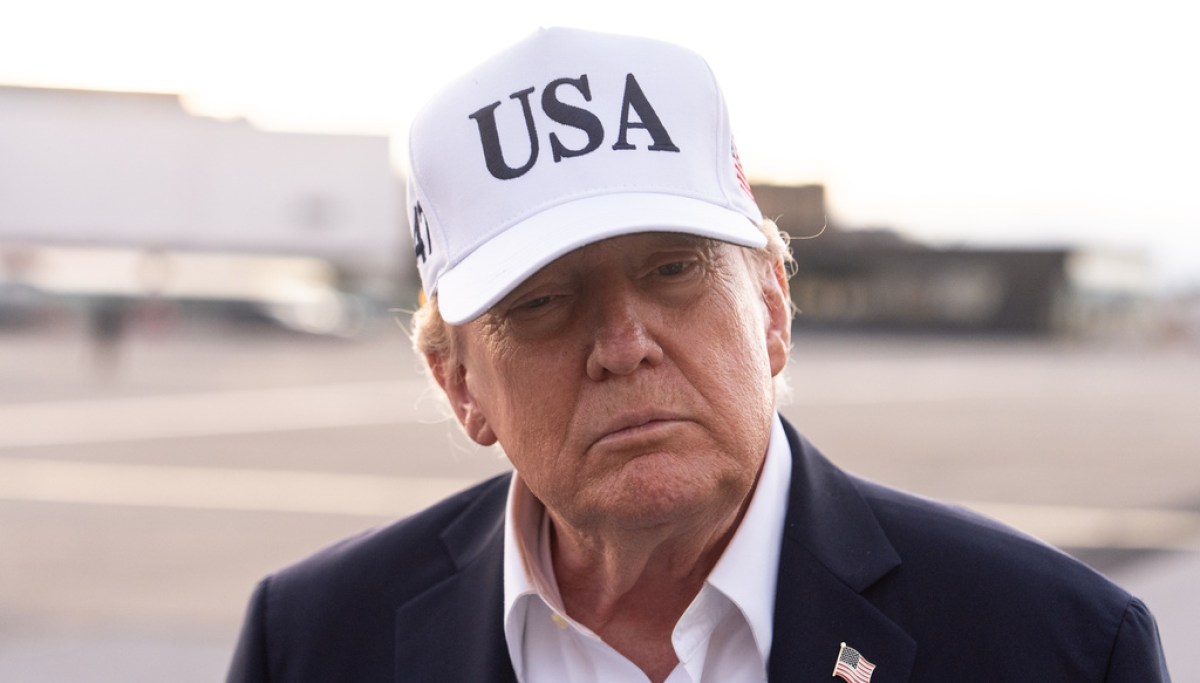
Trump says AI needs no new guardrails. Then who gets to turn it back on?
Full Article
Original Source
Read the full article at Washingtonexaminer →KhanList aggregates and links to publicly available news content. We do not host full articles from third-party sources. Always verify important information with original sources.