
Washington — President Trump ordered the Justice Department not to appeal a court ruling that loosened restrictions on firearms known as "gangster weapons," sources familiar with the matter told CBS News, a move that will let some Americans possess or sell short-barreled rifles, short-barreled shotguns and silencers with less government oversight.For more than 90 years, those types of arms have been among the most heavily regulated because they are generally considered to be particularly dangerous and easily concealable.Under the National Firearms Act, first enacted in 1934, anyone wishing to sell, possess or make a firearm or device covered by the law has had to submit a detailed written application to the Bureau of Alcohol, Tobacco, Firearms and Explosives. They have also had to be fingerprinted and were required to register the weapons, which must be engraved with serial numbers, with the ATF.But in August, U.S. District Judge James Wesley Hendrix, a Trump appointee in the Northern District of Texas, ruled that most of the restrictions on all but two categories of specialized firearms regulated under the National Firearms Act are unconstitutional.The president himself decided against appealing the ruling, several of the sources with knowledge of the matter said. Mr. Trump has also told some Republican members of Congress in a series of calls in recent weeks that he would ensure the Justice Department did not contest the decision, sources familiar with the discussions said.Letting the lower court ruling stand runs counter to the recommendations of some career and politically appointed lawyers at the Justice Department across multiple offices who disagree with the court's opinion, several of the sources said, adding that they have warned it is already beginning to adversely impact federal firearms prosecutions across the country.It also runs afoul of the Justice Department's "duty to defend," a longstanding legal principle that says the department has a constitutional duty to defend the laws enacted by Congress, as long as reasonable arguments can be made in support of those statutes, some of the sources said. CBS News has reached out to the Justice Department and the White House for comment.The judge's decision came in two consolidated cases brought against the government by 15 red states and a number of Second Amendment gun rights groups and individuals, including the Gun Owners of America and the Gun Owners Foundation. Although the ruling applies only to the parties to the lawsuit, any current or future members of the gun groups that sued over the rules are covered. An annual membership to the Gun Owners of America, for example, costs $25.The ruling does not apply to the country's most popular firearms, such as AR-15s and Glock pistols, which are standard weapons available for sale commercially and regulated largely under a different federal law. That law also blocks certain people from owning guns, such as convicted felons, a prohibition that would still apply to buyers of so-called "gangster weapons." It also does not apply to machine guns or explosive devices, which remain primarily regulated under the National Firearms Act, a statute passed in 1934 that created a federal oversight regime for the types of guns used by mobsters like Al Capone, such as sawed-off shotguns and Tommy guns.The Justice Department last month faced criticism from gun control groups after it failed to seek a stay of the judge's order, a decision that allowed the injunction to go into effect on Aug. 13.At the time, the Justice Department said it was still "assessing the impact of the court's ruling."The deadline to appeal the court's ruling is Oct. 5.Hendrix's opinion was based on a decision by Congress last year to include a provision in the One Big Beautiful Bill Act that eliminated a $200 tax imposed on firearms regulated under the National Firearms Act when they are transferred or made. By removing the government's taxing authority over the weapons, he wrote, the portions of the statute that were being challenged are rendered largely unconstitutional."Because today's NFA does not generate any revenue from untaxed firearms, its regulatory provisions cannot be upheld under the taxing power," the judge wrote. "And there is no sign in the NFA's text, structure, or statutory history that Congress invoked any other power in crafting the NFA provisions at issue. Thus, the regulatory provisions must be enjoined as unconstitutional because they exceed Congress's enumerated powers." Justice Department attorneys have argued that the government still has the legal authority to regulate the firearms at issue under the Commerce Clause of the U.S. Constitution, which gives Congress the power to regulate commerce across state lines. They also have argued that the One Big Beautiful Bill Act left intact a separate tax that is imposed on businesses that manufacture, distribute or deal in the types of weapons at issue in the lawsuit.One source familiar with the discussions believes that some Justice Department lawyers are more worried about their win-loss record than the president's gun policies, adding that it is merely a scare tactic to suggest that not appealing will allow people to possess or sell sawed-off shotguns and suppressors without government oversight.In his ruling, Hendrix imposed a permanent injunction on the Bureau of Alcohol, Tobacco, Firearms and Explosives that prevents the agency from enforcing the challenged provisions of the law.Although the injunction only applies to the parties in the lawsuit, the judge said that it would also be applied to the plaintiff gun groups' members and customers, "both current and future."His decision to cover "future" customers and members of the gun rights groups who are a party to the lawsuit has already started to cause problems for federal prosecutors.In one criminal prosecution in the Middle District of Alabama, for example, the Justice Department earlier this month dismissed an indictment against a man named Cameron Silmon on a charge he knowingly received a silencer without a serial number, after his defense lawyer claimed his client had joined some of the gun rights groups after the Texas judge issued the injunction. Bren McMaken, the assistant attorney general prosecuting the case, wrote that the government "disagrees with Silmon's position that a District Judge in the Northern District of Texas has the power to stop the United States Attorney in the Middle District of Alabama from enforcing the criminal laws of the United States."He added that while the government was dropping the charge, its ongoing investigation had since uncovered evidence of more crimes. Among the new charges that Silmon now faces is illegal possession of a machine gun — one of the categories of firearms not covered by the court's injunction. Historically, the types of firearms covered by the court's order are not commonly recovered at crime scenes because of the stringent regulations that govern them. Between 2017 and 2021, the NFA-covered firearms only accounted for about 5% of the closed gun-trafficking investigations, according to an ATF report.However, there have been a number of high-profile criminal cases over the years that have involved some of the firearms in question.Luigi Mangione, who pleaded guilty last month to shooting and killing UnitedHealthcare CEO Brian Thompson on a Manhattan sidewalk, used a silencer on his weapon.Emma Brown, the executive director of pro-gun control organization GIFFORDS, argued that deciding not to appeal would constitute a "failure to defend public safety.""The Trump Administration could bring us back to the days of Al Capone, where silencers and short-barreled shotguns were used to recklessly kill people," Brown told CBS News. If the Justice Department follows through on not appealing Hendrix's ruling, there is still a chance that other interested parties, like states or counties, could try to ask the court for permission to intervene and appeal it themselves.Congress could also reinstate the tax or pass a different law to regulate them, but doing so would likely require Democrats to regain a majority in the House and Senate."The 'Big Beautiful Bill' provision that quietly zeroed out the tax may ultimately do what no court, no Congress, and no administration has done in ninety years eliminate: the National Firearms Act, one of the primary American gun laws," said Jeffrey Cohen, former associate chief counsel at the ATF.
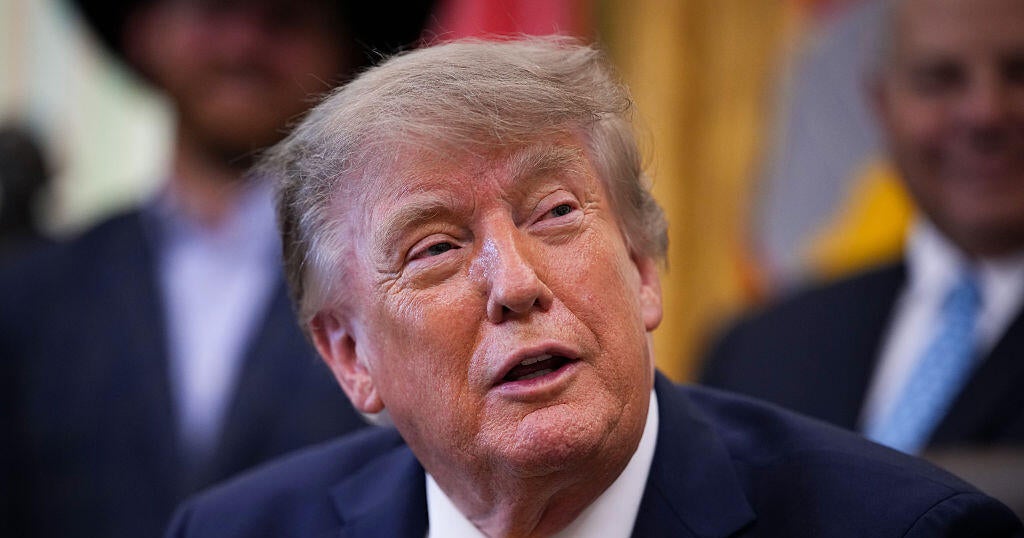
Trump ordered DOJ not to appeal ruling loosening gun limits, sources say
Full Article
Original Source
Read the full article at Cbsnews →KhanList aggregates and links to publicly available news content. We do not host full articles from third-party sources. Always verify important information with original sources.