
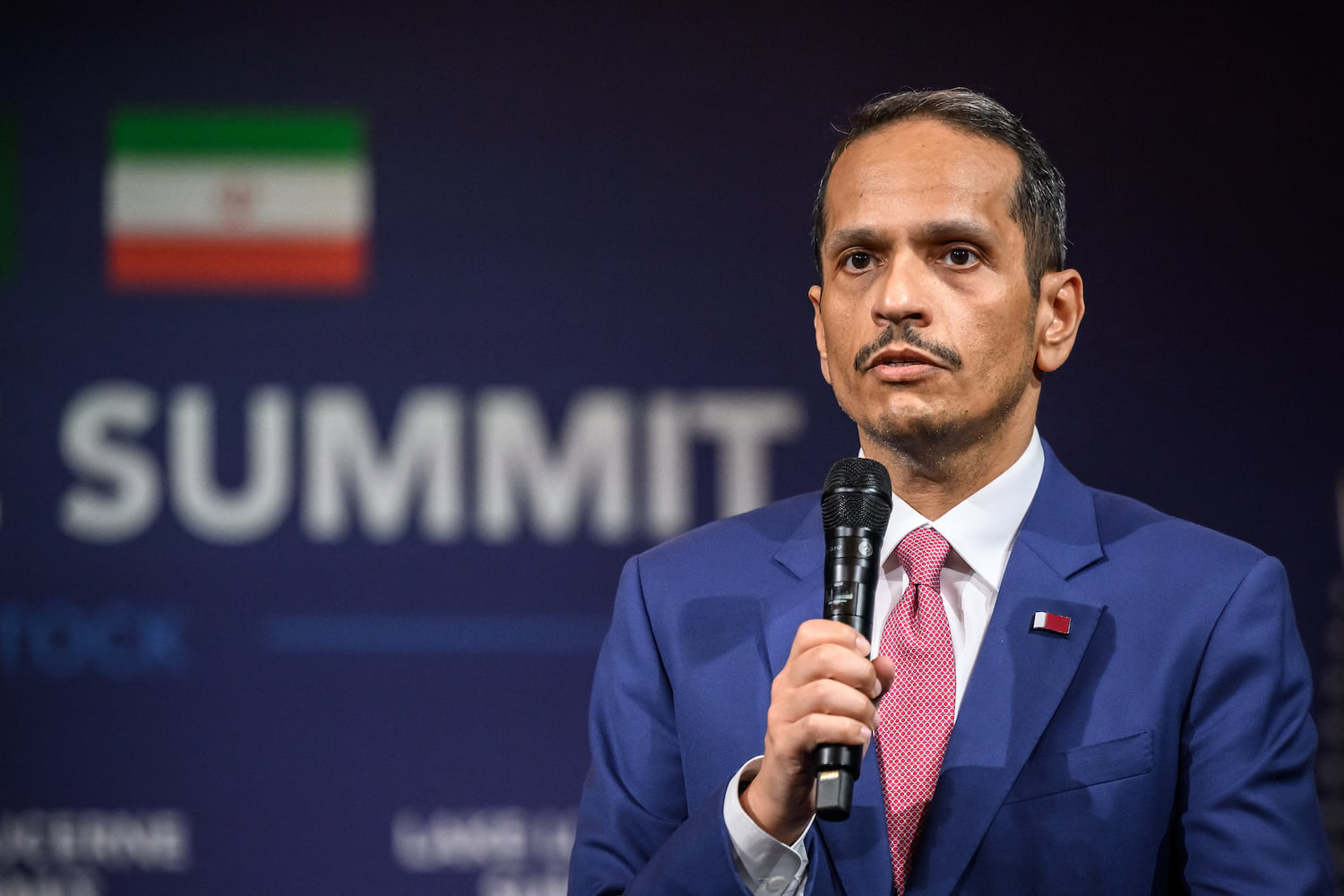
Welcome back to World Brief, where we’re looking at the chances of a U.S.-Iran peace deal, a suspected Chinese spy targeting Nvidia, and the elephant in the room at COP31. Tehran’s Two-Day Proposal U.S. President Donald Trump hosted Qatari Prime Minister Sheikh Mohammed bin Abdulrahman Al Thani at the White House on Monday as part of ongoing efforts to avoid a fresh round of U.S. strikes on Iran. But as Washington and Tehran remain unwilling to make concessions to end the war, senior officials appear to be pessimistic about the likelihood of an imminent peace deal. Welcome back to World Brief, where we’re looking at the chances of a U.S.-Iran peace deal, a suspected Chinese spy targeting Nvidia, and the elephant in the room at COP31. Tehran’s Two-Day Proposal U.S. President Donald Trump hosted Qatari Prime Minister Sheikh Mohammed bin Abdulrahman Al Thani at the White House on Monday as part of ongoing efforts to avoid a fresh round of U.S. strikes on Iran. But as Washington and Tehran remain unwilling to make concessions to end the war, senior officials appear to be pessimistic about the likelihood of an imminent peace deal. “I wouldn’t say we’re at the verge of a breakthrough,” U.S. Secretary of State Marco Rubio said ahead of Monday’s talks. Last week, Iranian officials announced, via Qatari mediators, a two-day plan to build mutual trust. Day one would have the U.S. military lift its naval blockade on Iranian ports and release some of Tehran’s frozen assets. In exchange, Iran would invite the International Atomic Energy Agency to send inspectors to its bombed nuclear sites. Day two would then see the Strait of Hormuz reopened, after which nuclear talks would resume. There is a caveat, though: Washington must first agree to Tehran’s seven conditions for ending the war, including canceling new U.S. sanctions on Iran and reinstating U.S. oil waivers. Speaking on Sunday, Rubio characterized Iran’s conditions as “not just unacceptable, but in some cases, outrageous and ridiculous and really not realistic.” The U.S. president told CNN on Sunday that it is “highly unlikely” that he will order the U.S. military to return to all-out war. “It depends on whether or not they sign a very strong agreement,” Trump said. Iranian state media accused the United States of firing “projectiles” at the strategic Qeshm Island in the Strait of Hormuz on Sunday. Tehran also issued a warning to the United States that same day. “Our 2-day proposal stands: meet the requirements, including end to war on all fronts, and you will see results,” Iranian Foreign Minister Abbas Araghchi wrote on X, adding, “Or choose war, and see our alert and battle-hardened Warriors rain down hell.” Such threats have made other Persian Gulf powers doubt the effectiveness of current peace talks. The region should “prepare for a long period of uncertainty in which neither a decisive resolution nor stable regional order can be taken for granted,” senior Emirati official Anwar Gargash told Reuters on Monday. Today’s Most Read The International Power Broker Trying to Normalize Hamas by Anchal Vohra Americans Care About Foreign Policy. Now Democrats Must Listen to Them. by Howard W. French The Post-Midterms AI Reckoning by Rishi Iyengar and Christina Lu The World This Week Tuesday, Nov. 10: The United Arab Emirates hosts two-day trilateral talks involving Russia, Ukraine, and the United States. European Commission President Ursula von der Leyen visits Bulgaria. Wednesday, Nov. 11: Spain’s largest unions hold a general strike. Russia hosts a leaders’ meeting of the Collective Security Treaty Organization. Thursday, Nov. 12: Danish lawmakers consider the joint defense agreement between Greenland and the United States. Sunday, Nov. 15: The Philippines kicks off a three-day Association of Southeast Asian Nations summit. Cape Verde holds a presidential election. What We’re Following Alleged China ties. Nvidia stocks plummeted as much as 8.8 percent during trading on Monday after CEO Jensen Huang admitted to having an affair with a woman who is suspected of being a Chinese spy. The company’s board stressed over the weekend that there is “no reason to believe that either national security or Nvidia secrets were compromised.” Still, the U.S.-based corporation plans to open an immediate investigation into the incident. Jensen will continue to lead the company during the inquiry. This past spring, Rubio drafted a classified memo warning top Trump administration officials that the Nvidia CEO was in a romantic relationship with a woman named Alice Huang whom U.S. intelligence sources believe had been recruited to spy by China’s State Security Ministry. Alice Huang was the CEO of a Singapore-based data center company, Megaspeed, that the U.S. Commerce Department had investigated on suspicion that it was helping China smuggle in Nvidia’s restricted artificial intelligence chips. It is unclear if she is still employed at Megaspeed. Jensen Huang is one of the world’s most consequential figures in the AI industry and an influential ally of Trump. Following news of Huang’s affair, Trump called Huang an “honorable guy” who has done “an amazing job for our country,” and he confirmed that he still plans to take Huang on his upcoming trip to China. On Monday, Beijing denied the espionage allegations. Missing from COP31. This year’s United Nations Climate Change Conference (COP31) kicked off in the Turkish city of Antalya on Monday against a global backdrop of deadly flooding, surging fuel costs, and record-setting temperatures. The 12-day event is expected to prioritize curbing greenhouse gas emissions and advancing climate legislation. “We want people to feel the results of climate talks in daily life: in buildings that use less energy, in clean public transport, in energy they can afford, and in new jobs,” Turkish COP31 President Murat Kurum said on Monday. However, with the leaders of world’s top three carbon dioxide emitters—China, the United States, and India—not attending the event, experts expect that this year’s summit could amount to little. Other notable absences include Russian President Vladimir Putin, French President Emmanuel Macron, German Chancellor Friedrich Merz, and Italian Prime Minister Giorgia Meloni. In fact, only a few of the 91 world leaders attending COP31 come from industrialized nations with significant carbon footprints. Heading home? Ousted Bangladeshi Prime Minister Sheikh Hasina requested new identity documents, including a passport, on Monday to enable her return from self-imposed exile in India, according to a letter seen by Reuters. “If death is my destiny, I would rather die on the soil of my own country, among my own people,” Hasina told The Associated Press last week. Dhaka, however, has rejected her request, saying that it will not give a “passport to a terrorist.” Bangladesh’s war crimes court sentenced Hasina to death in absentia in November 2025 for her deadly crackdown on student-led protests in the summer of 2024, during which as many as 1,400 people were killed, according to U.N. estimates. Hasina “is a fugitive criminal,” said Humaiun Kobir, Bangladesh’s state minister for foreign affairs. “We have an active extradition treaty with India. We want her handed over,” he added. New Delhi has yet to comment on Hasina’s request and Dhaka’s refusal. Previously, though, India has refused to surrender Hasina to Bangladeshi authorities, straining diplomatic ties between the neighboring nations. Odds and Ends On Sunday, a modern synagogue in Budapest transformed—for one night only—into a runway for Orthodox Jewish women hoping to challenge stereotypes about their modest dress code. Under that dress code, known as tzniut, Orthodox Jewish women are generally required to cover their collarbones, elbows, and knees; the rules also dictate that married women must cover their hair. Although some outsiders view these policies as restrictive, the organizers of the “Kosher & Chic” fashion show aimed to show that women can still dress to reflect their personalities while following modesty rules.
Trump Hosts Key Qatari Mediator to Discuss End to Iran War
Full Article
Original Source
Read the full article at Foreignpolicy →KhanList aggregates and links to publicly available news content. We do not host full articles from third-party sources. Always verify important information with original sources.