
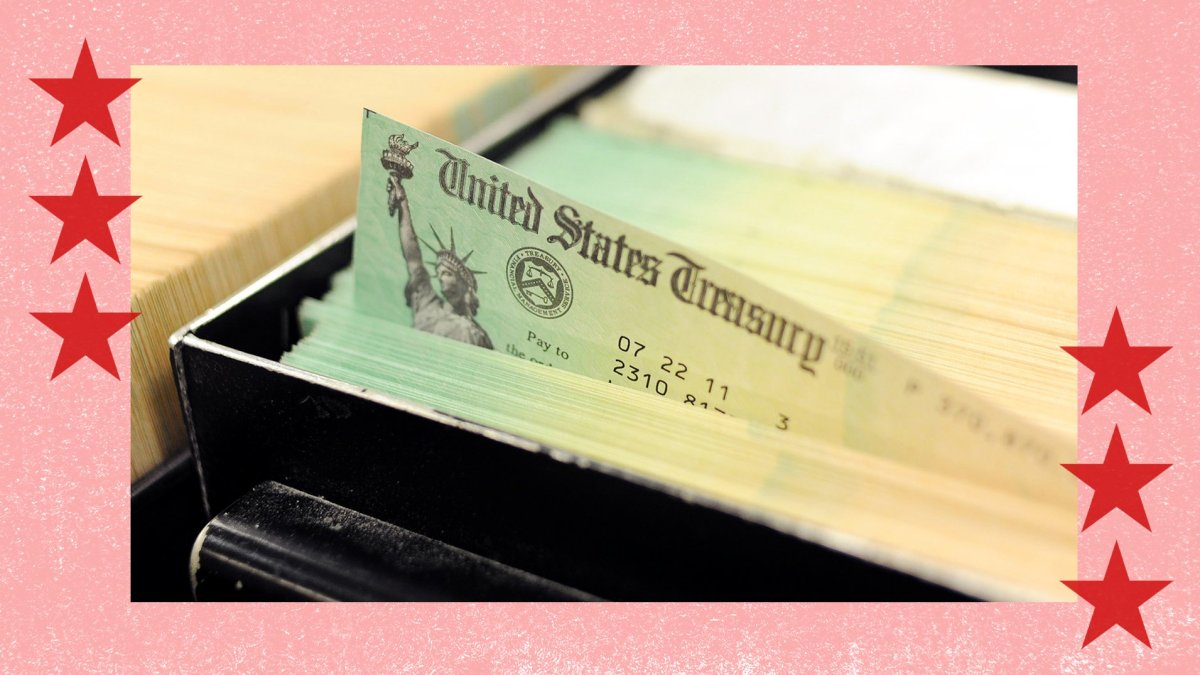
Welcome to Trump’s America, The i Paper’s World Insight series presenting the sharpest, deepest thinking on an era-defining shift in history and politics, investigating how Donald Trump and his administration have changed the US and the world – and where we go from here. • Why America keeps losing wars• The six groups of Americans who will decide the US midterms• All the signs Trump has worrying plans for the US midterms Donald Trump’s $500 cheque bought Naomi Anderson a tidier garage, but it has not bought her vote. The 32-year-old former US Department of Agriculture employee spent the unexpected payment on shelving, a metal cabinet, and a shovel organiser after moving to Ohio. “Thanks, Trump. Now my garage is looking a little bit more organised,” she jokes. Her verdict on its political purpose is less light-hearted: “It is very obviously bribery right before the midterm elections, but it is not doing anything to sway my vote. I’m a Democrat. I will still vote Democrat.” Naomi is one of around 950,000 Americans in 30 states sent $500 (£373) after buying 2026 insurance through the federal HealthCare.gov marketplace. The White House describes the payments as Obamacare refunds of excessive fees collected during Joe Biden’s presidency. They arrived with a letter signed by Trump taking personal credit and blaming his predecessor. The timing is politically conspicuous. Cheques began arriving in October, shortly before the 3 November midterms, while separate $90 Medicare payments were issued to about 20.8 million eligible beneficiaries of the governmental health insurance programme. Analysis by Reuters found that 71 per cent of the money was directed to 13 states holding competitive Senate or gubernatorial elections. Letters accompanied the cheques, signed by Trump (Photo: Naomi Anderson) Trump has also said he would give every adult American $5,000 (£3,739) if Republicans win both chambers of Congress this week, despite offering no detail on how a proposal costing more than $1trn would be funded. Richard Painter, a former chief White House ethics lawyer under President George W Bush and professor at the University of Minnesota Law School, says politicians have always made promises of financial benefits during election campaigns and sometimes delivered them, so the tactic itself is nothing new. “It’s all legal,” he says of the existing payments, noting that no court has stopped them. But the ethics are another question. “Treasury-issued cheques should not be presented as though they came personally from the president,” he says, while the accompanying letter raises further concerns by presenting an official payment in partisan terms. The description of each $500 cheque as a personal refund is difficult to reconcile with how the sum was calculated. Independent health policy organisation KFF found that the flat payment was not proportional to what each recipient contributed in user fees. Those contradictions troubled Lisa Driver, a 50-year-old small-business owner in Bennington, Nebraska, whose household (made up of her and her husband) unexpectedly received $1,000 on 7 October. Driver has a congenital heart condition. She had received subsidies throughout Biden’s presidency and became ineligible only this year because an inheritance following her father’s death lifted her income above the threshold. That made Trump’s accompanying claim that he was returning money Biden had overcharged her feel particularly illogical. Naomi (left) and Lisa (right) haven’t been persuaded to vote Republican “It felt dirty to me to take the money, and I donated every penny of it,” says Driver, who describes herself as a moderate Democrat with some centrist and right-leaning views. The cheque did not soften her politics. Instead, she says, it “solidified my commitment to vote for a change from the current administration at every level”. Republican recipients can look at the same envelope and see something entirely different. Sean Hughes, a software developer from Wisconsin, also pays the full cost of a HealthCare.gov policy without receiving a subsidy. When his $500 cheque arrived in early October, he initially suspected a scam but was pleased once he confirmed it had genuinely come from the US Treasury. He put the money towards his next insurance premium but says the principle matters more than its purchasing power. “Calling it a pre-election bribe is ridiculous,” he says. “This was not free money offered in exchange for a vote; it was a refund of money the government collected beyond what it needed to operate the marketplace.” Sean was already intending to vote Republican, so the payment did not alter his decision. Instead, it reinforced his belief that the Trump administration was willing to return excess money to those who had provided it. “I would have voted the same way without receiving it,” he says. Erik Nisbet, director of Northwestern University’s Center for Communication and Public Policy, says government payments can generate political goodwill but are “much more likely to reinforce people’s existing political views than persuade them to change their minds”. A cheque may buy shelves, cover part of an insurance premium or be redirected to charity. What it seems less capable of buying, at least among voters who have already made up their minds, is a different vote.
Trump gave these voters $500 before the midterms. They’re still voting Democrat
Full Article
Original Source
Read the full article at Inews →KhanList aggregates and links to publicly available news content. We do not host full articles from third-party sources. Always verify important information with original sources.