
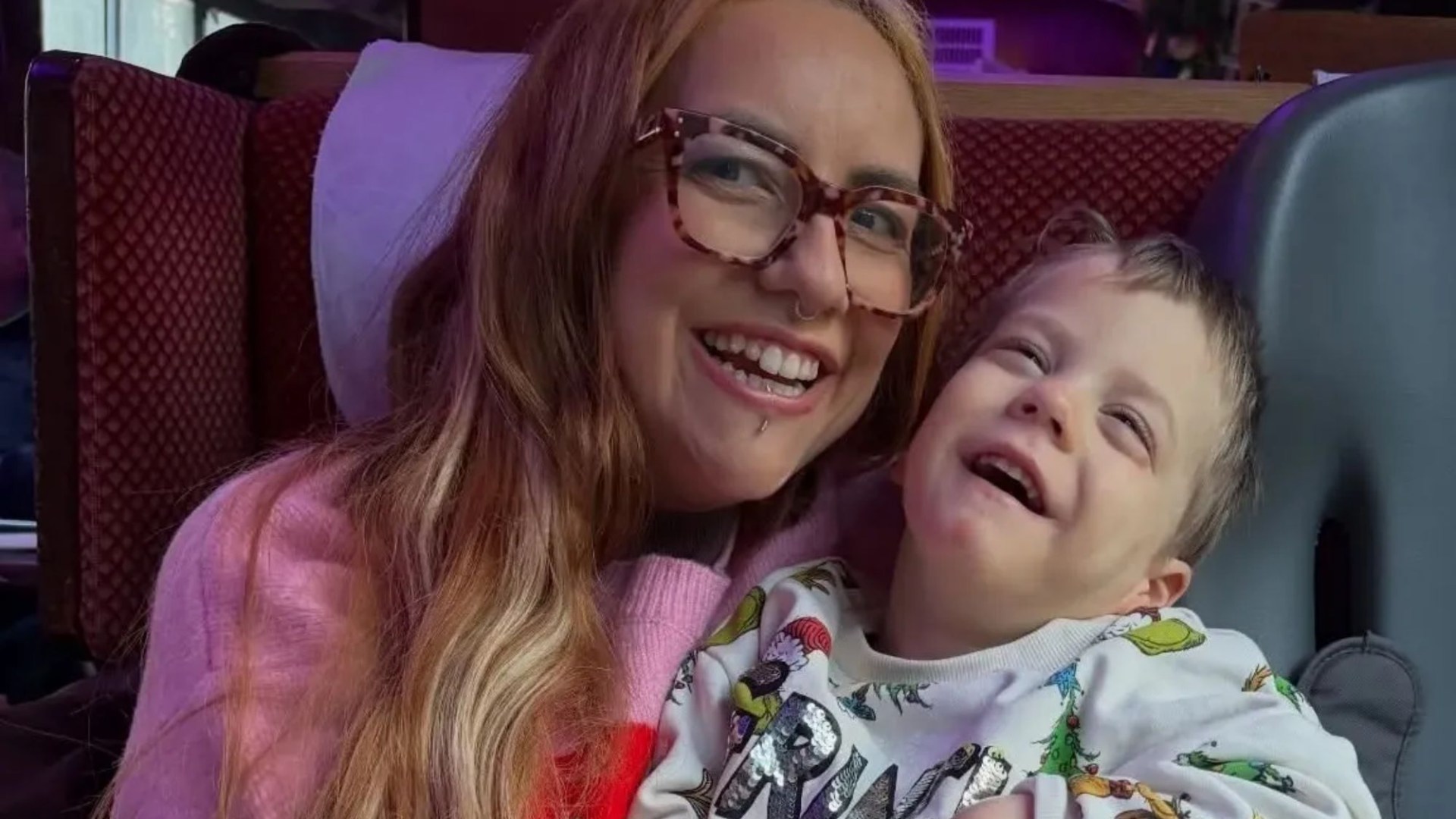
CUDDLING her disabled four-year-old son Lennie as he drinks from his bottle, Candice Clay films their morning routine for her followers. An astonishing 1.2 million people will view the video on TikTok, which also features her preparing his medicine and putting on a puppet show for him. Candice Clay and her son Lennie, who has cerebral palsy Credit: Supplied by Candice Baldwin Born prematurely in January 2022 at 27 weeks and weighing just 2lb 12oz, Lennie spent 10 weeks in the NICU before he was discharged Credit: Supplied by Candice Baldwin Candice, 33, is not naive, and knows the content will attract criticism, as well as support. “He’s way too old for a bottle,” someone comments. “You should have just left him to die,” writes another. After four years of opening up her and Lennie’s life to public consumption, Candice is no longer shocked. “I’ve had to delete so many awful comments about Lennie, who has cerebral palsy, including whether he even deserves to be alive and people accusing me of exploiting him,” she says. “I don’t let it deter me. When you’re creating content about a child with a disability, you need a thick skin.” Candice may have a thick skin, but her decision to share Lennie’s daily life and challenges with the internet raises the question, should she? Disability sharenting – where parents create social media content about their child’s disability or neurodiversity – is exploding. On Instagram, #Specialneedsparenting is tagged in 441k posts, #Autismparent at 347k and #Adhdparenting at 345k, with countless accounts dedicated to kids living with a range of conditions, run by their parents. On TikTok, author Lisa Lloyd @Asd.with.a.g.and.t, who is mum to two autistic children, has 191k followers. Meanwhile, @HaidynsHope, an account charting the life of 11-year-old Haidyn, who was born with Sanfilippo syndrome – a rare metabolic disorder often labelled “childhood dementia” – has 1.3 million followers. Candice didn’t set out to be a content creator, let alone one who posted Lennie’s life with cerebral palsy to 17.2k followers on her @TheCrazyClayFamily account. Born prematurely in January 2022 at 27 weeks and weighing just 2lb 12oz, Lennie spent 10 weeks in the NICU before he was discharged with a diagnosis of periventricular leukomalacia (PVL), a type of brain injury. Candice says she and husband William, 37, a bathroom fitter, were given little information or support at the time. “We weren’t directed to any resources or connected with any local services. It was frightening and isolating, and so we turned to the internet.” It was thanks to other parents sharing their stories on social media, that Candice learned more about Lennie’s condition. “That’s where we discovered that PVL was basically cerebral palsy, but that doctors don’t like to diagnose that until a child is older. We read about the importance of early and regular physiotherapy, which wasn’t available to us on the NHS. When Lennie was six months old, we began paying for him to have private physio sessions,” she says. Lennie made good progress, but with former social worker Candice now his carer and William the sole earner, the couple struggled to pay for the sessions and home equipment to help Lennie. Candice says: ‘Lennie’s now four, a cheeky, mischievous adrenalin junkie who loves music and Miss Rachel. He’s changed my life, and I’m proud to share his story’ Credit: Supplied by Candice Baldwin Mum-of-two Kelly Kemp has deleted all her sharenting posts Credit: Katie N Brand Photography “I decided to ask for help on my personal Facebook page, then in December 2022 I created a Just Giving page and posted about it on TikTok. I shared Lennie’s medical history and photos of him in the NICU, hoping people would donate. It was scary knowing there could well be nasty comments. But Lennie’s Disability Living Allowance wasn’t enough for what he needed, and I didn’t feel like I had a choice,” she says. Candice raised £1,500, but that came with new and unexpected pressure. “So many amazing people had supported us that I felt obligated to keep sharing Lennie’s life. I owed it to them to show the impact their generous donation was having.” Her posts continued, encompassing everything from Lennie’s milestones and joy at swimming to his struggles in therapy and tears when he came home from nursery. And as her follower numbers grew, there was both more support and more judgement. “Some of the comments were awful. They ranged from saying that Lennie didn’t deserve to live and should be put in care, to people furious that we were exploiting him. “William was really angry and suggested that I stop posting altogether. I did consider it, but then I’d think: ‘Why should I give in to this bullying?’ It took 18 months before I developed a thick enough skin that it wouldn’t make me cry. But it never stops hurting.” Candice says there were positive and inspiring reactions too, which kept her sharing. “Whenever I filmed Lennie’s private physiotherapy sessions and put them on TikTok, I had so many parents messaging me to say thank you. They explained that they couldn’t afford private sessions for their children, but could learn from what Lennie’s physio was doing. “Most people have no idea how isolating life can be when your child has a disability. Through this online community I was able to learn from other parents’ content and I could help them in return. None of us are getting enough support from the state, so we needed each other.” That sense of community is vital to understanding this trend, explains Kelly Jarvis from Sunshine Support, an independent consultancy and advocacy service for people with SEND. “Speaking out on social media, asking others what you can do about it, and getting help can be hugely empowering,” she says. But Kelly acknowledges opinions can be divided, adding: “Parents are polarised, either very much in favour of putting things on social media, or very much against it. We try to take the middle ground, to say that parents’ voices matter enormously, but advocacy should never come at the expense of the child’s dignity. “Children may also not fully understand or be able to consent to long-term implications of content being shared, particularly when it concerns meltdowns, medical information, personal care or behaviour. “Children have a right to privacy and a future digital identity they have some control over.” Kelly Jarvis says: ‘Speaking out on social media, asking others what you can do about it, and getting help can be hugely empowering’ Credit: Instagram/Kelly Jarvis Psychotherapist Alicia Eaton agrees that content creators in the disability sharenting space need to think about the future Credit: ©2023 Brigitte Bott Psychotherapist Alicia Eaton agrees that content creators in the disability sharenting space need to think about the future. “A child might seem happy to be the focus of social media content aged six, but by 13 that could be deeply embarrassing,” says Alicia. And while diagnoses can be helpful, she says sharing them so publicly can become problematic. “A label can define a child, constructing a public narrative about who they are before they’ve had the chance to decide that for themselves. Parents can also become ‘the mother of a child with X’. That can feel empowering, but can also make it a lot harder if they change their mind about creating content.” Kelly Kemp knows how it feels to make that choice. In July this year, with one click, years of content about her daughter’s autism vanished from public view. The overwhelming emotion of the website designer and mum of two from Birmingham? Relief. “I’ve always loved to write. Twenty years ago, I was blogging about my crafting hobbies. It felt like a fun way to share what was going on in my life,” she says. When her daughter, now 14, was diagnosed with autism aged three, it seemed natural to do the same with that. “I had so many feelings, thoughts and emotions and I needed to get them out. I created a new blog about it and began posting the next day.” There was no strategy or plan, and Kelly, 49, didn’t consider what it might mean for her daughter. “I included her photos, but decided to give her a nickname – Tink. Then I just began to write.” By the time Tink was four, Kelly had no choice but to give up work as a nursery nurse to be her full-time carer. “Posting became even more important. I’d write about Tink’s speech and physical developments, including her toilet training, and her food and sleep. I’d always post pictures of her and often videos, although never of her undressed, having a meltdown or being unhappy. “I didn’t think too much about any of it. I just went with my gut and wrote about what was happening.” That changed when Tink turned five and Kelly became involved in the SEND blogging community. “There, because everyone was focused on getting more followers, I became more strategic. In Autism Awareness Month, I made sure I posted every day and we’d all post about each other’s children to boost engagement. More and more parents are sharing their disabled or neurodiverse children’s lives on social media – but should they? Credit: Getty Images/Westend61 While diagnoses can be helpful, sharing them so publicly can become problematic Credit: Getty “I got caught up in it a lot more and got excited as my follower count on Facebook grew.” But more scrutiny brought more judgement. “I began getting critical comments from autistic adults, saying it wasn’t my story to tell. “I understood that children’s dignity needed to be protected, but I still felt I was in the right and writing about my child was my prerogative. As time went on, however, Kelly’s certainty began to falter. “In 2022, Tink was recognised a few times by strangers and that felt weird, planting a seed in my mind. “Soon after, my then-14-year-old son told me he no longer wanted to be in photos I was posting. I suddenly realised that he is a person in his own right with the ability to express how he feels. But my daughter can’t. She has no understanding of social media and maybe never will.” Kelly began to contemplate deleting all her content about Tink, but confesses it wasn’t an easy prospect. “It felt like I’d be making a public declaration that I’d made a mistake, and I wasn’t ready to do that,” she says. Instead, Kelly, who runs Your Tech Wingwoman, which supports neurodivergent business owners with their technology, stopped posting in late 2022, and in July this year she deleted all her content about her daughter. “It felt like the right thing to do. Content creation has changed so much, with the ever-changing algorithm and the worries about AI. I’m so glad my daughter’s story isn’t part of that any more. “I don’t regret it, because a lot of good did come from posting, from friendships to helping others, but I do wish I had protected her privacy better,” she says. For Candice, who continues to post about Lennie on TikTok and Instagram, the benefits still outweigh the downsides. “The £20,000 we’ve fund-raised for Lennie’s treatment and equipment has been incredible, and content creation has been a key part of that. But the positives go much further. “When my old friends all disappeared, content creation brought me an amazing community. My amazing friend Charlotte Baldwin and I even started a podcast, Just 2 CP Mums, about parenting children with cerebral palsy.” She accepts that the issue of Lennie’s consent is complicated. “I hope in the future he’ll be happy that I’ve shared his success stories, because we’re so proud of him, and understand why I also talk about my more challenging moments. I think it’s important to show that in parenting nothing is perfect. “Lennie’s now four, a cheeky, mischievous adrenalin junkie who loves music and Miss Rachel. He’s changed my life, and I’m proud to share his story.”
Trolls said my disabled son didn’t deserve to live & should be in care – but I refuse to stop posting about him online
Full Article
Original Source
Read the full article at Thesun →KhanList aggregates and links to publicly available news content. We do not host full articles from third-party sources. Always verify important information with original sources.