
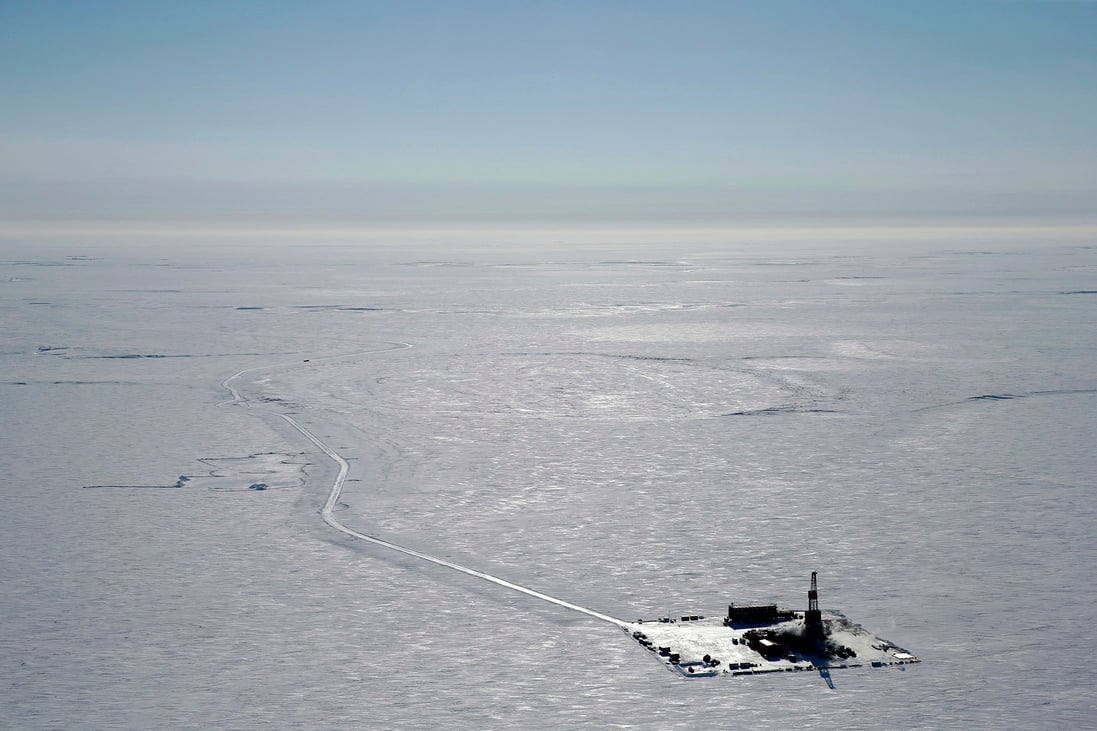
The Trump administration plans on opening up the 1.56 million acre Coastal Plain in Northern Alaska to oil and gas drilling.(CN) — A coalition of Indigenous tribes and environmental groups asked a federal judge Thursday to block the Trump administration’s plan to allow oil drilling across the Coastal Plain of the Arctic National Wildlife Refuge in Alaska.Plaintiffs’ attorney Brook Brisson said the U.S. Department of Interior, in its environmental analysis of the plan’s impacts, had “prioritized oil and gas at expense of other purposes.”Sometimes called “America’s Serengeti,” Northern Alaska’s 1.56 million-acre Coastal Plain serves as calving ground for some 120,000 caribou and a denning area for polar bears, which are protected as a threatened species under the Endangered Species Act. Energy groups estimate that the area also contains between 4 billion and 12 billion barrels of “technically recoverable oil.”The Trump administration plans to open the entire Coastal Plain to oil and gas leasing, a move authorized by Congress when it passed the so-called “Big Beautiful Bill.”In their motion for summary judgment, the plaintiffs wrote, “The Coastal Plain has sustained Indigenous peoples for generations and is the cultural cornerstone of the Gwich’in. Porcupine caribou are so central to the lives of the Gwich’in that they call themselves ‘caribou people,’ and call the Coastal Plain ‘Iizhik Gwats’an Gwandaii Goodlit’ — meaning ’the Sacred Place Where Life Begins.’”Hannah Foster, another attorney representing the plaintiffs with Earthjustice, said the federal government’s analysis of the plan “artificially inflated polar bears’ resiliency” and “ignored polar bears’ expected decline.”“Polar bears are in serious trouble,” she added.The leasing plan was first put into effect in 2020, during Trump’s first term. Nine tracts of the Coastal Plain were leased — seven of them to an Alaska state agency and two to private companies. In 2024, President Joe Biden paused the leasing program, citing a number of “alleged legal deficiencies," and suspended the leases. Trump then reinstated the leasing program in 2025, using the previous environmental analysis.Paul Turcke, a Department of Justice attorney representing the Department of the Interior, argued that it was too soon for the plaintiffs to sue.“There’s not a legal basis for the court to wade into this issue now,” Turcke told the judge. “It’s gonna be a long time before this issue comes up. And It may never come up.”U.S. District Judge Sharon Gleason, an appointee of former President Barack Obama, asked when the issue would come before the court.“It will be probably years,” Turcke said. All the federal government had done so far, Turcke explained, was to “authorize the program and provide analysis for a lease sale within the next five years. Subsequent to that, exploration is likely to occur.”Many of the major disruptions feared by environmentalists and tribes would stem from oil drilling operations and the infrastructure they require, including airstrips. Turcke said “additional analysis will occur” before those larger infrastructure projects move forward.Michelle Nesbett, an attorney for the Alaska Industrial Development and Export Authority, which leased the seven tracts in 2021, downplayed the potential impact of oil operations on polar bears.“The number one threat to polar bears is climate change,” she said. “The impact of this project is going to be tiny.”Judge Gleason took the plaintiffs’ motion for summary judgment under advisement.Subscribe to our free newslettersOur weekly newsletter Closing Arguments offers the latest about ongoing trials, major litigation and rulings in courthouses around the U.S. and the world, while the monthly Under the Lights dishes the legal dirt from Hollywood, sports, Big Tech and the arts.Additional Reads
Tribes and environmental groups ask judge to block Alaska oil leases
Full Article
Original Source
Read the full article at Courthousenews →KhanList aggregates and links to publicly available news content. We do not host full articles from third-party sources. Always verify important information with original sources.