
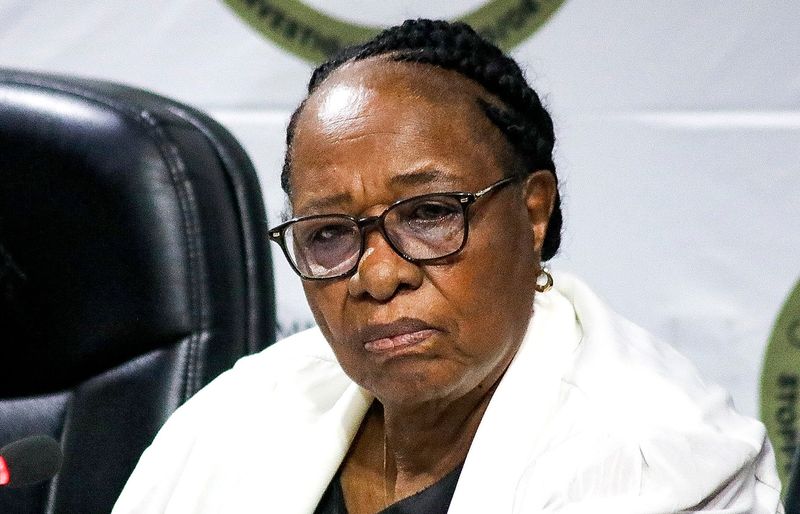
On Wednesday, 21 October 2026, former minister of justice Brigitte Mabandla told the Khampepe Commission of Inquiry that she had never made a phone call on 11 November 2004 to then special director of national public prosecutions Dr Silas Ramaite, calling for a moratorium on TRC prosecutions. Ramaite oversaw TRC prosecutions in the National Prosecuting Authority (NPA) and acted as its head after its inaugural head, Bulelani Ngcuka, resigned amid controversy that year.The senior prosecutor alleged that the call by the minister was made shortly before former apartheid minister of police Adriaan Vlok and police commissioner Johan van der Merwe were to be arrested, alongside others, for the attempted murder by poisoning of Reverend Frank Chikane in 1989.Testifying in February, Ramaite told the inquiry that he had been informed by Mabandla that an “outside mechanism”, the Amnesty Task Team, had been established to investigate post-TRC prosecutions and that a “moratorium” had been declared pending the declaration of guidelines.Later, Ramaite alleged that the “Chikane matter” had been “a red herring” to halt all cases. He said based on Mabandla’s instruction, he had, in turn, instructed advocate Anton Ackermann, head of the Priority Crimes Litigation Unit in the NPA, that investigations should be put on hold.‘No such instruction’Mabandla denied that she or any official in her ministry had made a call to Ramaite with this instruction. She said she had been so determined to get to the truth of the matter that she consulted with former NPA head Vusi Pikoli about it.“I wanted to recall the truth as to why I had not been certain about the question of a phone call because in my mind I knew all the time it could not have happened,” she told the panel.With former president Thabo Mbeki, who testified earlier this week, among those in the auditorium on Wednesday, Mabandla said that she had gone back with her legal team to check the dates of the alleged call to Ramaite and that she had in fact been in Bangui in the Central African Republic at the time.She said she was certain she did not make the call, but did not have the information to substantiate this.“Pikoli,” she told the inquiry, had “helped me to jack up my mind trying to help me settle the matter. I want to accept it if I did something wrong as this matter has been troubling me for some time”.Advocate Silas Ramaite during an interview at the Union Buildings in Pretoria for the position of National Director of Public Prosecutions on 14 November 2018. (Photo: Gallo Images / Phill Magakoe)‘Executive overreach’In his earlier testimony, Ramaite said former national police commissioner Jackie Selebi had interfered with the work of the NPA, accusing it of seeking to target ANC leaders for prosecution.About 400 TRC-related dockets that were being investigated were suddenly “dumped” at the office of the Directorate of Special Operations (also known as the Scorpions) on the instruction of Selebi, he said. These were later transferred to the National Director of Public Prosecutions.“My response was that the dockets were still under investigation and that once complete, we would take a decision whether to prosecute or not. I was not happy. It cut through prosecutorial independence,” said Ramaite.On Mabandla’s instruction to halt TRC investigations, Ramaite told evidence leader advocate Vas Soni, “I was surprised. I was not happy with the involvement of the executive.”Advocate Anton Ackermann, former head of the Priority Crimes Litigation Unit in the NPA, testifies remotely at the Khampepe Commission. (Photo: YFM / Wikipedia) Hand of the generalsPreviously, Ackermann testified that he had received a call from Jan Wagenaar, legal representative of former apartheid generals, on the morning of the Vlok and Van der Merwe arrests to inform him that Mabandla would be contacting him in this regard. Shortly thereafter, said Ackermann, he had received a call from an unknown official from “Mabandla’s office”, who had told him that a decision had been taken to put the Vlok and Van der Merwe matter “on hold”. Ackermann said he had responded to this official that the minister had no such powers. A short while later, Ramaite had summoned Ackermann and had instructed him to put all TRC cases on hold, the former Priority Crimes Litigation Unit head told the commission.Ackermann told the commission that Wagenaar had informed him that an agreement on a “political solution” had been achieved in a meeting between ANC leaders and former president FW de Klerk.The prosecutor suggested that this secret agreement allegedly involved the drafting of indemnity bills as early as 2002 to provide a “rerun” of the TRC amnesty process.Mbeki has denied this, pointing out that this was second-hand hearsay evidence by Ackerman. Testifying earlier this week, the former president vehemently denied meeting with the former apartheid president or generals to conclude any back-door agreements.He said that his 2003 speech to Parliament in which he announced a special post-TRC policy had been selectively quoted in court papers and papers to the commission. This, he said, had been “disingenuous”. DM
TRC Roulette : Former justice minister Brigitte Mabandla denies instruction to halt post-TRC prosecutions
Full Article
Original Source
Read the full article at Dailymaverick →KhanList aggregates and links to publicly available news content. We do not host full articles from third-party sources. Always verify important information with original sources.