
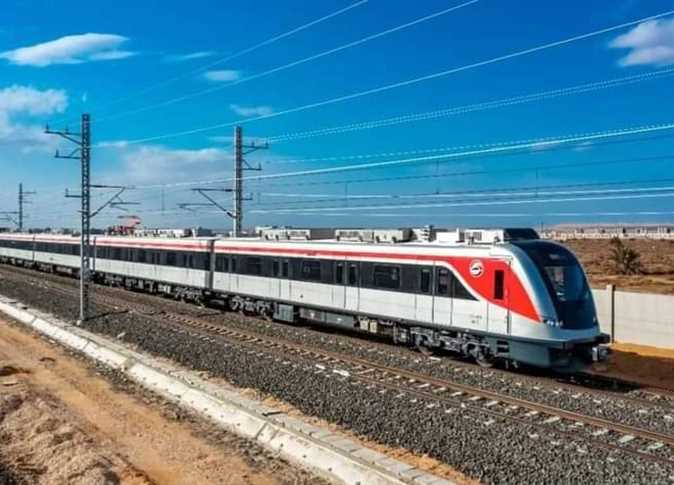
Transport Minister Kamel al-Wazir on Sunday, September 6, 2026, inspected final finishing and preparations at stations along the 660-km first line of Egypt’s high-speed electric rail network, running from Ain Sokhna through Alamein to Matrouh. The minister’s inspection tour covered the section from Hadayek October Station to Ahmed Omar Hashem Station, passing through Giza and Cairo stations. It comes in line with directives from President Abdel Fattah al-Sisi to the government, represented by the Transport Ministry, to complete mass-transit projects within their scheduled timeframes. al-Wazir began his tour by inspecting Hadayek October station, where passengers will be able to transfer between the first and second lines. The station has platforms for both lines at the same level, as well as five pedestrian bridges. He also inspected Giza interchange station for high-speed and diesel trains, one of the key stations on the first line. The station features an advanced and unique engineering design being implemented in Egypt for the first time, with high-speed trains running above existing diesel railway lines and all platforms elevated, while services are located underneath. The design will allow direct interchange between high-speed and diesel trains and enable passengers to transfer between the two modes without leaving the station. The station will serve southern Giza and the city of Badrashin. The minister also inspected Cairo station in the Helwan area, which will serve Helwan, 15 May City and areas of southern Cairo east of the Nile, as well as Ahmed Orabi station, which will serve Katameya, New Cairo and newly developed urban areas south of the Ain Sokhna Road. He also reviewed final finishing works and preparations at the main depot for the first line, built on an area of 578 feddans. The depot will operate all three lines of the network, carry out major and light overhauls, and store all types of trains, with a capacity of 50 trains and locomotives. During the tour, al-Wazir reviewed sections of the route handed over to the Siemens-Orascom-Arab Contractors consortium for ballast laying, rail installation, catenary poles and overhead electrical systems, as well as electromechanical works and various systems. The works are being carried out in preparation for the start of trial operations without passengers on one section of the first line in the coming period. Unmanned trial operations will subsequently be conducted on other sections according to the project timetable. The minister also inspected civil works, including the water-line crossing bridge, known as the Masar Bridge, which has been completed, and the 700-metre SUMED Bridge, where work is nearing completion. He also inspected the Nile Bridge complex, comprising the East Nile Bridge, which has been completed, the Nile Bridge, also completed, and the West Nile Bridge, which is nearing completion. The bridges have a combined length of 9 km. Other works inspected included the 500-metre Giza Station Bridge, which has been completed, and the 2.5-km bridge approach to Giza Station, where work is progressing. al-Wazir said the civil works represented a major achievement being carried out by skilled Egyptian engineers and workers. He described the construction of the high-speed rail network as a landmark project connecting different parts of Egypt. The first line, he said, will provide a land link between the Red Sea and the Mediterranean, effectively creating a “new Suez Canal on rails,” as part of the Ain Sokhna-Alexandria logistics corridor. The project will serve the industrial, tourism, urban development and agricultural sectors, attract domestic and foreign investments, create direct and indirect jobs, shorten travel times, reduce transport costs and connect new cities with existing ones. It will also strengthen Egypt’s position as a regional hub for transport, logistics and transit trade, he said, adding that the network has been designed to facilitate transfers between its stations and airports located near the routes, making it easier for passengers travelling to and from abroad. The network will also be integrated with other mass-transit systems, al-Wazir said, stressing that work is proceeding simultaneously across all project sections and that the project completion date will be determined by the completion of the final activity. Egypt’s electric high-speed rail network comprises four lines with a total length of 2,250 km. The first three lines, covering a total of 2,000 km, are currently under construction. The first line, Ain Sokhna-Alamein-Matrouh, stretches 660 km and includes 21 stations, a control and command center, 15 high-speed trains, 34 regional trains and 14 freight locomotives. The line will provide interchange with the light rail transit (LRT) at the Central Capital Station, Cairo Metro Line 6 at Ahmed Orabi Station, the Cairo-Aswan diesel railway at Giza Station, the West Nile Monorail at October Station, and the second high-speed rail line at Hadayek October Station. October Station will also be linked to the Bus Rapid Transit (BRT) project on the Ring Road by a planned shuttle-bus service connecting it to the Ring Road-Fayoum Road interchange station, known as San Capital Station. The first high-speed rail line will also connect with the Alexandria Metro at Borg El Arab and Alexandria stations.
Transport Minister inspects workflow on first high-speed electric train
Full Article
Original Source
Read the full article at Egyptindependent →KhanList aggregates and links to publicly available news content. We do not host full articles from third-party sources. Always verify important information with original sources.