
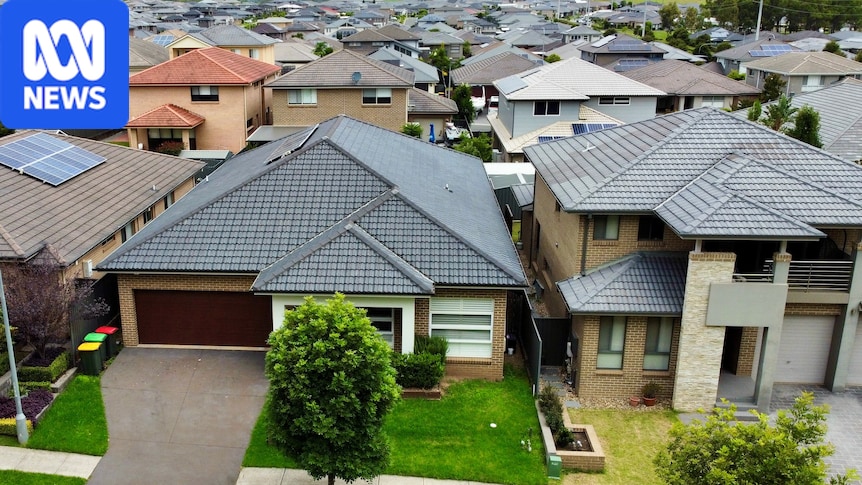
The Coalition wants to cut red tape for building what it calls "woke palaces" and instead construct more "basic" homes to solve Australia's housing crisis. "Get rid of red tape, get approvals through, make it easier," Opposition Leader Angus Taylor said late last month."We don't all need to live in woke palaces."Shadow Minister for Housing Andrew Bragg has spruiked drastically cutting back Australia's National Construction Code, suggesting some energy efficiency and accessibility measures would be "optional extras".Senator Bragg was forced to back-pedal after he initially agreed such homes would be "substandard". "They will not be substandard, they will be strong, safe, secure, and with lovely amenity," he said.He likened it to buying a basic first car compared to a "luxury Lamborghini".So what would these houses look like, and would young people be tempted to buy them to get their foot in the housing market? Mixed reactionFor Maya Sabattini, the idea of owning her own home feels like an unattainable goal."I would love to buy my first home — it's definitely always been a dream for me — but at the moment it seems kind of out of reach," she said.Maya Sabattini is seeking the stability of owning a home. (Supplied)The 23-year-old Perth resident, who works full time in marketing, says buying a basic, more-affordable home is an attractive proposition for her, in order to end the instability that comes with renting."Most of my peers would agree that … we're just looking for somewhere to invest our money wisely," she said."It doesn't need to be this perfect house that, you know, meets all of these standards or anything super flashy."While she said lower energy efficiency standards and the impact that had on bills was something to consider, it wouldn't deter her at this stage."I already am living in an apartment which isn't exactly very energy efficient, I suppose. So I wouldn't say that it would be a major trade-off for me."En-mei Miao, a student at ANU in Canberra, said she and many of her peers faced becoming "lifelong renters"."For young people like myself, gen Z, a lot of us are quite disillusioned in the prospect of buying a house in the first place," she said.University student En-Mei Miao says gen Z doesn't necessarily think building new homes is a silver bullet for the housing crisis. (ABC News: Callum Flinn)She said while building more houses was a pragmatic step governments could take, she was sceptical that it was the correct way to solve the country's housing woes."Increasing supply of housing is always a good thing, but I think there's also a broader issue here about the houses that already exist and are unoccupied as well," she said.She said making homes less accessible could close the door to those who had fewer advantages, exacerbating existing inequalities."I think the characterisation of a house as a 'woke palace' is quite vulgar," she said."Increasing the supply of housing where that supply doesn't fit the needs of all Australians, I don't think that's a good move to make."In Canberra and other parts of Australia as well, it gets quite cold, and to have a first house without suitable heating … I'm not sure if that's the first house that young people want to build."Others told the ABC while they supported the idea of more affordable housing and simplifying regulations, they thought other areas could be targeted."Surely there would be better things to cut back on or work on than accessibility and environmental issues," said Jack Morrison, a public servant speaking in a personal capacity who purchased an apartment last year.Jack Morrison bought his first apartment last year. (ABC News: Callum Flinn)Need for changeThe National Construction Code has ballooned to 2,200 pages and is broadly seen as unwieldy and in need of review.Master Builders Australia said its "sheer size, poor drafting, complexity and scope creep has made it impractical; the result is poorer building outcomes, less productivity and higher costs".Treasurer Jim Chalmers has said the code is "too hard to navigate and it's too costly", adding the government had hit pause on new additions to the code and was working with states and industry to streamline it.Under the Coalition, Senator Bragg has said the basics would all be captured in an 80-90 page "mandatory core" Australian building standard — pointing to New Zealand's building code as an example.Senator Andrew Bragg wants to redesign Australia's building code. (ABC News: Matt Roberts)That document would then be supported by a "pattern book", including for prefabricated housing and Modern Methods of Construction (such as modular building technologies).According to an interim report on housing released last month by the Senate select committee on productivity, chaired by Senator Bragg, the mandatory core would cover structural integrity, fire resilience and safety, waterproofing and moisture control, and lighting, sanitation and safe water."It won't be gold-plated, but it won't fall down," he said.Additional energy efficiency and accessibility requirements would be optional."It won't mandate double-glazing [windows], it won't mandate millions and millions of pieces of insulation, it won't mandate ramps, it won't mandate widened corridors, it won't mandate reinforced walls to hold grab rails," Senator Bragg said."It won't assume that every Australian is disabled. "It will assume people can make their own judgements, whether they want to have the ramps, whether they want to have more insulation, they can choose."A screenshot showing the government's proposal for a simpler building code. (Source: Senate Select Committee on Productivity in Australia, interim report: housing, August 2026, page 48.)Could it be more costly in the long run?The Australian Institute of Architects national president David Wagner has backed the code being simplified but warned against a "wholesale slashing" and said minimum standards should be "strengthened, not weakened"."In particular we caution against changes that would see things like energy efficiency or accessibility reduced to 'optional extras'," he said. "Energy efficiency is not an optional extra, it can be the difference between whether someone on a low income can afford to heat their house or not in winter."He added that accessibility is "crucial for supporting an ageing population and people with disability".Cassandra Goldie, from the Australian Council of Social Service (ACOSS), warned the proposal could deepen inequality and lead to more expensive power bills for people who could least afford it."Homes that are freezing in winter, dangerously hot in summer, or inaccessible to older people and people with disability are simply not safe," she said."Making energy performance optional would lock people into higher power bills for decades."Michele O'Neil, president of peak union body the ACTU, has said "low-quality housing" is "deeply out of touch", and has suggested Australian-built modular housing could help build quality homes "faster, economically and at scale".Simpler code could give more flexibilityBut some in the industry favour the approach outlined in the interim report.Simon Croft from the Housing Industry Association said it could "drive housing construction faster, reduce costs, and get more first home buyers into the market".Simon Croft, from Housing Industry Australia, is pushing for a New Zealand-inspired code. (Supplied)Master Builders said it welcomed proposals that refocus the code on essential safety and performance requirements that also allow flexibility for people to choose additional features based on their needs and budget.The organisation said Liveable Housing Provisions, which include things like step-free entry, "have not delivered a positive cost/benefit analysis".They said it was one example of the code drifting away "from minimum standards and imposing sometimes unattainable, best-practice benchmarks, creating unnecessary complexity and poor integration".Matthew Bowes, senior associate at the Grattan Institute, said that many components in the code, but not all, had gone through a cost-benefit test."In the sense that they contribute more to overall society economic activity and the value of people's homes and the cost of their energy bills, than they do cost in terms of additional construction value up front," he said.Supply key to housing affordabilityMr Bowes from the Grattan Institute told the ABC that not having accessibility and energy efficiency requirements could affect the re-sale value of a properly, but that "ultimately what matters most for house prices is the balance of supply and demand"."So if we can make changes to the National Construction Code that allow us to build more homes more quickly, that's great," he said."But we shouldn't just count on reducing the cost of construction and assume that that will flow through to house prices unless we're sufficiently meeting the housing demand."Mr Bowes said the biggest regulatory barriers to building new homes was at the state and local levels, where there were strong restrictions on denser housing in cities.He said it "certainly can be the case" that lack of double-glazed windows or insulation could have knock-on costs for heating and cooling a home, but added that the vast majority of Australians were already living in old homes that were constructed under less stringent rules."Certainly we should be looking to improve the quality of housing stock over time."
Trading 'woke palaces' for 'basic' homes reduces cost but comes with drawbacks
Full Article
Original Source
Read the full article at Abc →KhanList aggregates and links to publicly available news content. We do not host full articles from third-party sources. Always verify important information with original sources.