
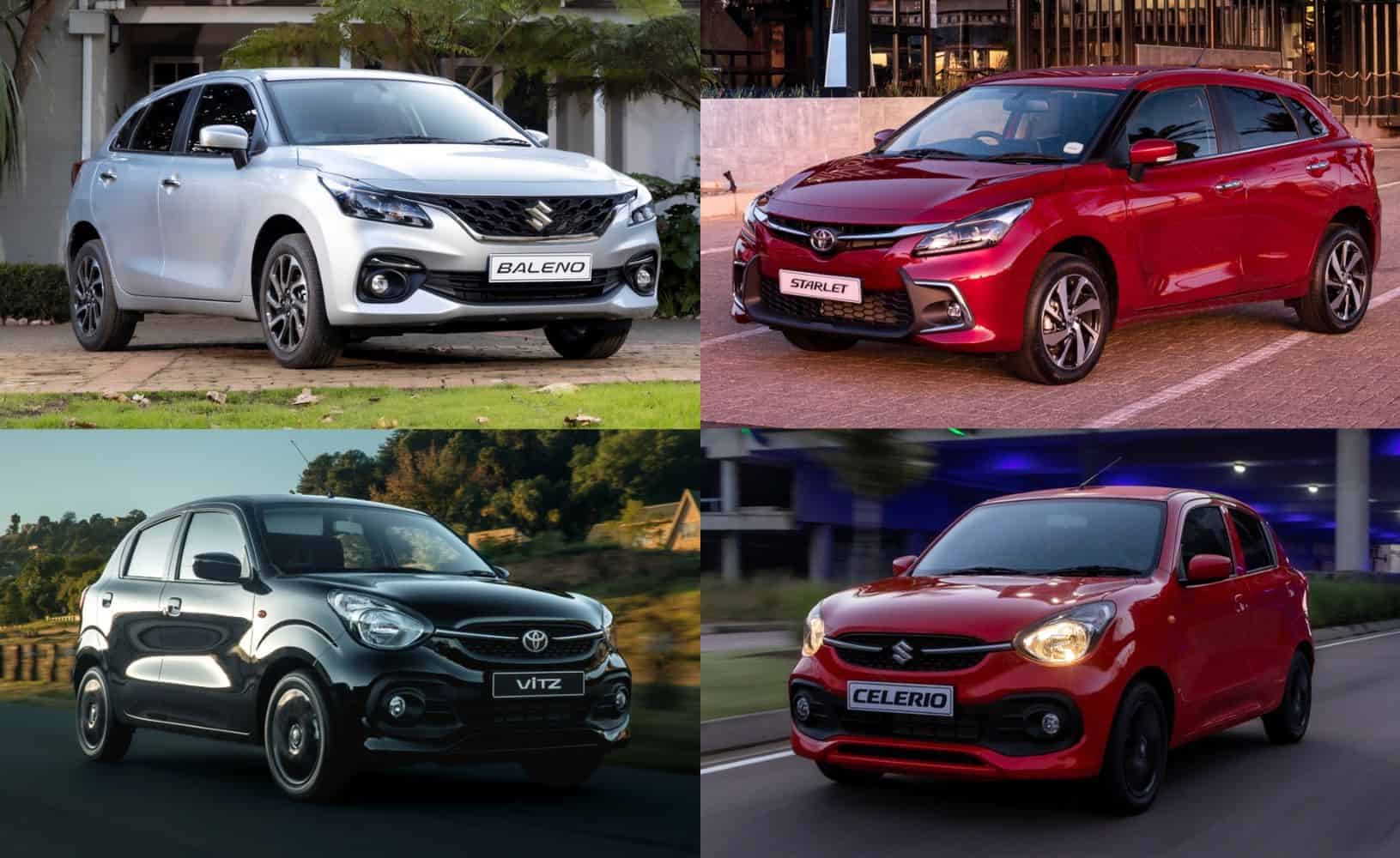
Joint venture models might feature the same spec, but pricing and warranties can differ. Joint ventures between carmakers have become a common occurrence in the motoring industry, whether its Toyota and Suzuki or Ford and Volkswagen. Manufacturers are considerably less sentimental about badges than the people who buy their products. In order to keep costs down they happily share engines, gearboxes, and platforms, then leave it to the marketing department to explain why each car is special. These relationships can be useful for buyers. A familiar mechanical package under a different badge might offer similar capabilities for less money, or more spec for roughly the same price. Unexpected results Pre-owned online portal AutoTrader’s average advertised prices from January to September 2026 reveal some unexpected results, like the Toyota Starlet undercutting the Suzuki Baleno. This based on model averages rather than comparisons of identical engines, equipment, and condition, so they point to promising alternatives rather than an exact price for the badge. “Looking beyond a familiar badge can give used-car buyers more choice within the same budget,” says George Mienie, CEO of AutoTrader. “A closely related model may offer better equipment or lower mileage for similar money. The important thing is to compare the individual cars and their service histories, so buyers can see what the extra spend actually buys.” Toyota Starlet vs Suzuki Baleno The Starlet averages R235 608 compared with R242 505 for the Baleno. Both have an average registration age of two years, although the Suzuki has covered less distance at 32 069km against the Toyota’s 36 715km. Apart from their identical styling and interiors, both features use a 77kW/138Nm 1.5-litre four-cylinder engine since 2022. Some older models also used a 1.4-litre engine. Both are paired with either four-speed automatic transmission or a five-speed manual.Because these cars are identical, shoppers should focus on the best bang for buck in terms of age, mileage, warranty coverage, and equipment rather than pledging allegiance to one brand. Toyota Vitz vs Suzuki Celerio The Suzuki Vitz is a rebadged version of the Celerio. Introduced locally in 2022, the production siblings share a 49kW 1.0-litre three-cylinder engine. It comes in a choice of a five-speed manual or an automated manual transmission. Here it is the Suzuki coming in at a lower price of R174 768 compared to the R189 071 for the Toyota Vitz. The average Vitz is two years old with 22 358km, while the Celerio averages three years old with 40 727km. For a buyer intending to keep the vehicle for several years, that could be a worthwhile trade. Provided its condition and service history support the odometer reading. Between examples of similar age, mileage, and specification, the cheaper Celerio is hard to argue against, especially as the Suzuki has a five-year/200 000km warranty versus the Toyota’s three-year/100 000km. The Toyota badge alone is little reason to overlook the Suzuki, although Toyota’s reputation and expansive dealer network count for a lot.
Toyota vs Suzuki: Weighing up used Starlet/Baleno and Vitz/Celerio
Full Article
Original Source
Read the full article at Citizen →KhanList aggregates and links to publicly available news content. We do not host full articles from third-party sources. Always verify important information with original sources.