
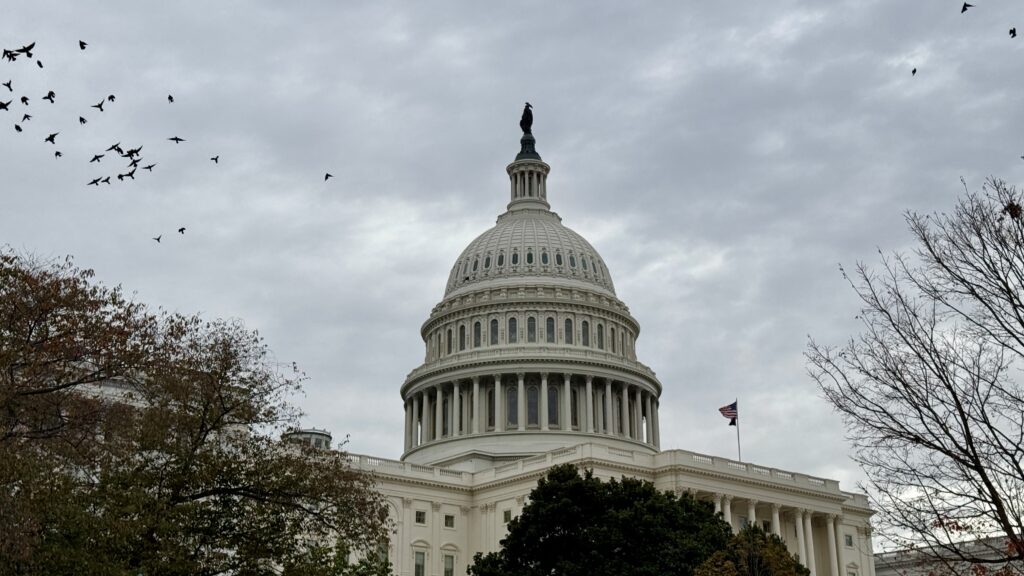
Get your daily dose of health and medicine every weekday with STAT’s free newsletter Morning Rounds. Sign up here. Good morning from a round-the-clock elections team at STAT, where we’ve been closely monitoring Election Day results nationwide. Below is a newsletter full of sharp analysis on how the results (so far) will affect American health care — read on! Voters roundly rejected the Republican health care agenda Brendan SMIALOWSKI / AFP via Getty Images WASHINGTON — Republicans — who pushed sweeping, unprecedented health reforms, from Medicaid cuts to MAHA’s upheaval — had a terrible, no good, very bad election night on Tuesday. Democrats gained control of both chambers of Congress, with shocking victories in deep red states like Texas, Kansas, and South Carolina: a sweeping, decisive result after many candidates ran on health-focused agendas. The strong political signal is likely to be interpreted as, among other things, a rebuke of the GOP’s health reform agenda. That frustration and anger could be seen even among relatively new allies like the Make America Healthy Again movement, which attached itself to the Trump administration through health secretary Robert F. Kennedy Jr. That bond seems weaker than ever. Jeffrey Tucker, president and founder of the MAHA-aligned Brownstone Institute, told STAT that the GOP’s “failure to take its mandate seriously — to give people back their lives and liberties — has led to what looks like yet another populist revolt in a different form.” “This loss tonight was well-deserved,” he said, echoing other MAHA leaders online. Though non-health issues — gas prices, the cost of groceries, and the war in Iran — loomed large, broad voter support for congressional Democrats could be taken as a mandate for the party to take bigger swings on health care. Democratic candidates who ran on trust in science and on their health credentials saw strong results, with the group 314 Action, which supports such candidates, calling the night a “STEM Wave.” And some key MAHA-aligned candidates lost on Tuesday. Sen. Roger Marshall (R-Kansas), who was among the founding members of the MAHA Caucus, lost his race, as did MAHA champion Zach Lahn, who ran to be governor of Iowa. The election, of course, will also have lasting impacts on America’s health policy. Democrats will now have powerful new tools to investigate the administration’s actions and push back on its agenda. Late Tuesday night, Sen. Ron Wyden (D-Ore.), a health policy leader in Congress, posted one word on X: “Subpoenas.” Below, a few other takeaways. Health care affordability was a potent campaign message Ross Mantle for STAT In several closely watched races, candidates made health care affordability a key campaign plank, promising to restore Affordable Care Act subsidies and fight the Medicaid cuts passed by Republicans as part of the One Big Beautiful Bill act in 2025. In Ohio, physician Amy Acton won the state’s governorship after pledging to make health care a major focus in office. Acton, who led Ohio’s Covid-19 response, prioritized protecting the accessibility of Medicaid, forgiving medical debt, tackling surprise billing, and creating a new prescription drug plan to lower costs. Her opponent, billionaire biotech entrepreneur Vivek Ramaswamy, frequently sought to turn the race into a referendum on the lockdowns and school closures that occurred during Acton’s pandemic-era tenure in state government. In Georgia, Democrat Keisha Lance Bottoms won the governorship, becoming the first Black woman to occupy that position in any state. Bottoms also pushed for more aggressive health coverage for the state’s lowest earners. Georgia’s controversial Medicaid program, which partially expanded coverage to low-income adults if they proved they were working, expires at the end of the year. Bottoms promised to switch to full Medicaid expansion provided under the Affordable Care Act. She defeated Republican Rick Jackson, the wealthy founder of Jackson Healthcare, a large physician and nurse staffing company. — Sarah Todd and Bob Herman Doctors and scientists won key seats A microbiologist. A doctor. A nuclear engineer. These are some of the Democrats who won seats in Congress last night. Perhaps the most surprising was pediatrician Annie Andrews. Andrews won South Carolina’s open Senate seat, which had been held by Republican Lindsey Graham for 23 years before his death. She, along with Michigan’s Abdul El-Sayed (more below on El-Sayed, who completed medical school but not residency), will be the the first Democrats with medical degrees in the Senate since 1969. In her campaign ads, Andrews frequently wore her scrubs, and made walking back Trump’s health policies central to her campaign. “My two decades as a physician have shown me in a thousand heartbreaking ways just how broken our health care system is,” her platform for reducing health care costs reads. Her platform included health care being a “right” and not a “privilege.” To that end, she said she will work to maintain access to vaccines and ensure rural hospitals do not close. For a sense of how far Andrews has come, when our colleague Margaret Manto wrote about her last year, for NOTUS (now the Washington Sun), her race was considered a longshot. “This is not a path I ever envisioned for myself. I was perfectly happy in my role as a pediatrician,” she told Margaret at the time. While not a doctor, Xavier Becerra, who served as health secretary in the Biden administration, cruised in his race to become California governor. From that perch, he could continue his focus on drug pricing, which has also been a priority for the state’s leaders. On the other side, longtime Republican Sen. Susan Collins of Maine, a prominent booster of federal support for academic research who criticized the Trump administration’s moves to reshape that system, lost her reelection campaign to Democrat Troy Jackson. The MAHA movement is on life support He ran as a model MAHA candidate — an enemy of Big Agriculture, a friend of Kennedy. And yet Republican Zach Lahn lost his race for the Iowa governorship, a crushing blow to the Make America Healthy Again movement. The MAHA PAC poured a million dollars into Lahn’s campaign and Kennedy enthusiastically backed him. The loss may reflect the waning power of the MAHA movement, which has been on shaky ground over the last several months amid frustration by some members that the Trump administration was too slow on achieving real progress, including on pesticides. Lahn had promised to take down Big Agriculture, ban Covid-19 vaccines from the market, and tackle Iowa’s high cancer rate. Sen. Roger Marshall (R) lost his reelection bid in Kansas. Marshall, a doctor, started the congressional MAHA Caucus. Although high prices for diesel and fertilizer were the initial drivers of discontent in the state, Marshall has spent the final two months of his campaign fending off reports of aggressive medical debt collection as an OB-GYN. Marshall also faced an unusually well-suited Democratic contender, Adam Hamilton. Hamilton leads one of Kansas’ largest megachurches and has gained crossover appeal, including endorsements from two former Republican governors. – Chelsea Ciruzzo and John Wilkerson ‘Medicare for All’ gets a high-profile champion Abdul El-Sayed’s win in a Michigan Senate race sets him up to be Democrats’ principal challenger to Kennedy. When I talked to him last week, he said he wants to lay the groundwork for a 2028 administration to rebuild the Department of Health and Human Services, but in the meantime he aims to hold Kennedy and Trump “accountable for all of the failures.” While his race was one of the most closely watched of the cycle, largely because of Democrats’ angst about the direction of their party, many in academia and public health had hoped he could be a fighter for them. El-Sayed trained as a physician-scientist, doing research on health disparities and maternal health before becoming the head of Detroit’s public health department. Through the race, he also amassed a huge platform that he will leverage to advocate for Medicare for All, as well as his vision for public health. We’ll have more to say later today, when my colleague Sarah Todd, who wrote about Acton’s gubernatorial campaign in Ohio, and I will have a breakdown of how doctors and scientists on the ballot fared. — Anil Oza What we’re reading A new kind of medical clinic is surprising some patients with thousands in ER bills, STAT Can you live longer for $5,500? Longevity clinics are the buzzy new trend at nonprofit hospitals, STAT Pennsylvania Dutch country, tired of waiting for biopharma, builds drug company of its own, STAT As Epic’s dominance grows, its iron grip is choking innovation in health technology, STAT GOP works to square making America healthy with taking away health insurance, STAT The China question is tearing biotech apart, STAT
Top health takeaways from the midterm elections
Full Article
Original Source
Read the full article at Statnews →KhanList aggregates and links to publicly available news content. We do not host full articles from third-party sources. Always verify important information with original sources.