
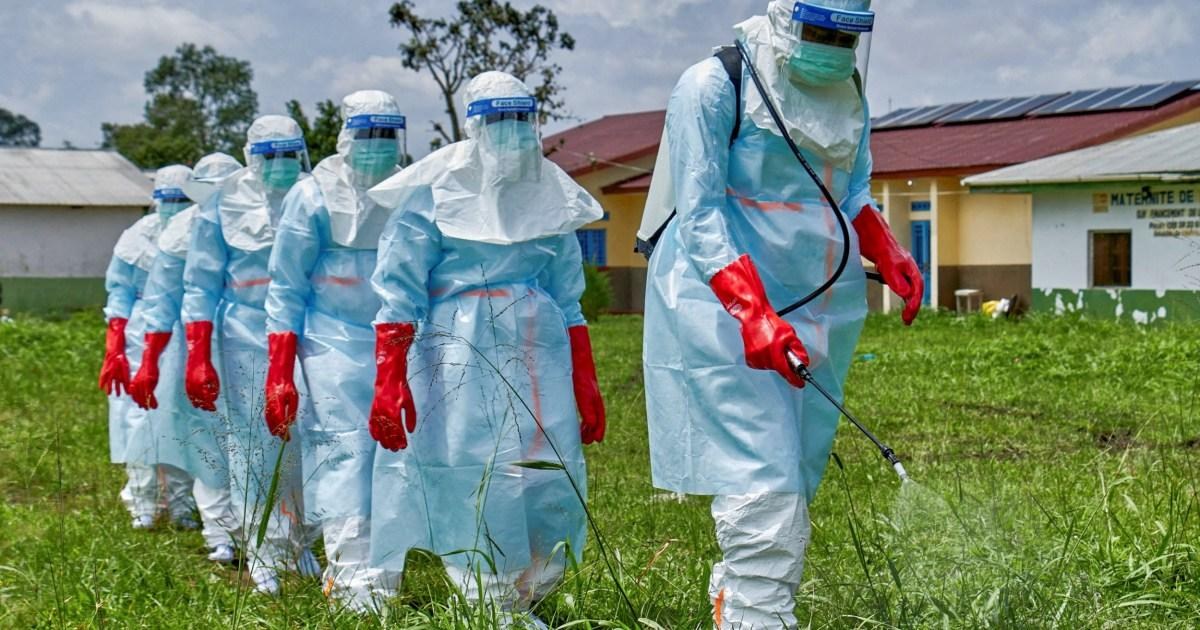
To view this video please enable JavaScript, and consider upgrading to a web browser that supports HTML5 video One of Africa’s top health officials has warned that the Ebola outbreak could ‘reach the UK’. Since May, some 10,000 people have been sickened across the Democratic Republic of Congo, with almost 5,000 deaths. Cases of the rare but often fatal fever have also appeared in Kenya, Nigeria and possibly Uganda, giving it the widest footprint of any outbreak. Dr Jean Kaseya, director general of the Africa Centres for Disease Control and Prevention, the continent’s main public health body, compared the rapid spread of Ebola to Covid. In the early days of the coronavirus pandemic, many countries assumed there was ‘zero risk’ of the virus jumping over their borders. Sign up for all of the latest stories Start your day informed with Metro's News Updates newsletter or get Breaking News alerts the moment it happens. ‘We want all countries to know that they are not safe if they don’t take appropriate measures,’ said De Kaseya, according to The Guardian. Travellers in some countries, like those passing through Jomo Kenyatta International Airport in Nairobi, Kenya, are screened for the virus (Picture: EPA) ‘Each country, not only in the African region, but all continents, must now increase the preparedness level and the possibility for treatment. ‘It is the first time three African regions have been affected [by Ebola]. The geographic extension of this outbreak is unprecedented.’ He added: ‘We don’t want to see the UK and other countries become a hotspot.’ Dr Sam Collins, head of guidance, clinical and public health response at the UK Health Security Agency, told Metro that the agency is keeping watch. ‘The ongoing Ebola outbreak in the DRC and surrounding areas is very serious, but the risk to the general public within the UK remains low,’ he said. ‘The UK is well prepared to respond safely and effectively to the risk of imported cases arising here.’ The outbreak has been compared to the early days of the coronavirus pandemic (Picture: Reuters) Dr Collins said that public health officials are screening healthcare and humanitarian workers who return from affected areas. ‘UKHSA continues to work with partners including the World Health Organization to monitor the situation closely,’ he added. The outbreak, Congo’s 17th in recent decades, is the fastest-spreading wave of the virus ever recorded, according to the country’s health ministry. The last outbreak, which erupted in 2018 and was declared over in 2020, took more than 10 months to reach the death toll this one did in three, at more than 1,550 deaths. 🚨 #EbolaRDC | Point de situation – 22 octobre 2026La riposte se poursuit dans 8 provinces et 66 zones de santé.📊 9 816 cas confirmés, dont 2 635 guéris et 4 757 décès. Le taux de suivi des contacts progresse à 89,1 %.✅ 17 nouvelles guérisons enregistrées en Ituri et au… pic.twitter.com/monZjBSHpI— Ministère de la Communication et Médias/RDC (@Com_mediasRDC) October 24, 2026 There are no vaccines or treatments for the strain of Ebola virus behind the outbreak, known as Bundibugyo. It spreads like the other five types of Ebola, through direct contact with the bodily fluids, such as blood or saliva, of someone infected. A person infected with Ebola cannot spread it until they develop symptoms. Bodily fluids from the body of someone who has died of Ebola can also be highly contagious, with the virus spreading during funerals. Unlike Covid, Ebola does not spread through particles in the air. The outbreak was first detected in Ituri Province in northeastern Congo, which remains the worst-affected province. Experts say the virus spilt over because early surveillance and testing failed to spot the disease’s emergence, with deep cuts to aid and attacks on health workers hampering efforts to contain community spread. Nine cases of Bundibugyo have been reported in Kenya, including two deaths. Nigeria announced its first case of Ebola during the current outbreak last week. The patient had returned from a trip to Uganda and has since been taken for treatment in Switzerland. What is Ebola? The rare and deadly virus has emerged again in Uganda and Congo (Picture: Getty) Ebola is an illness caused by a group of related viruses, known as orthoebolaviruses. Infections come in two stages – a dry stage and a wet stage. Dry symptoms, which include fever, aches, pains and fatigue, can progress to ‘wet’ ones such as diarrhoea, vomiting and bleeding. As the first round of symptoms, which show within 21 days, resemble the common cold or flu, many Ebola cases go undiagnosed. Some patients can suffer bleeding from the gums and nose, while the virus gnawing at the nervous system can make them irritable and confused. People who survive the virus may experience vision and hearing loss, joint pain, fatigue and neurological issues. Get in touch with our news team by emailing us at webnews@metro.co.uk. For more stories like this, check our news page. Arrow MORE: Hundreds of NHS GP websites across England and Wales go down – is yours affected? Arrow MORE: Woman, 31, found dead after ChatGPT ‘convinced her’ to roll back medication Arrow MORE: Man dies after catching Shamonda virus detected in humans for first time News Updates Stay on top of the headlines with daily email updates.
Top health official says the Ebola outbreak could reach the UK
Full Article
Original Source
Read the full article at Metro →KhanList aggregates and links to publicly available news content. We do not host full articles from third-party sources. Always verify important information with original sources.