
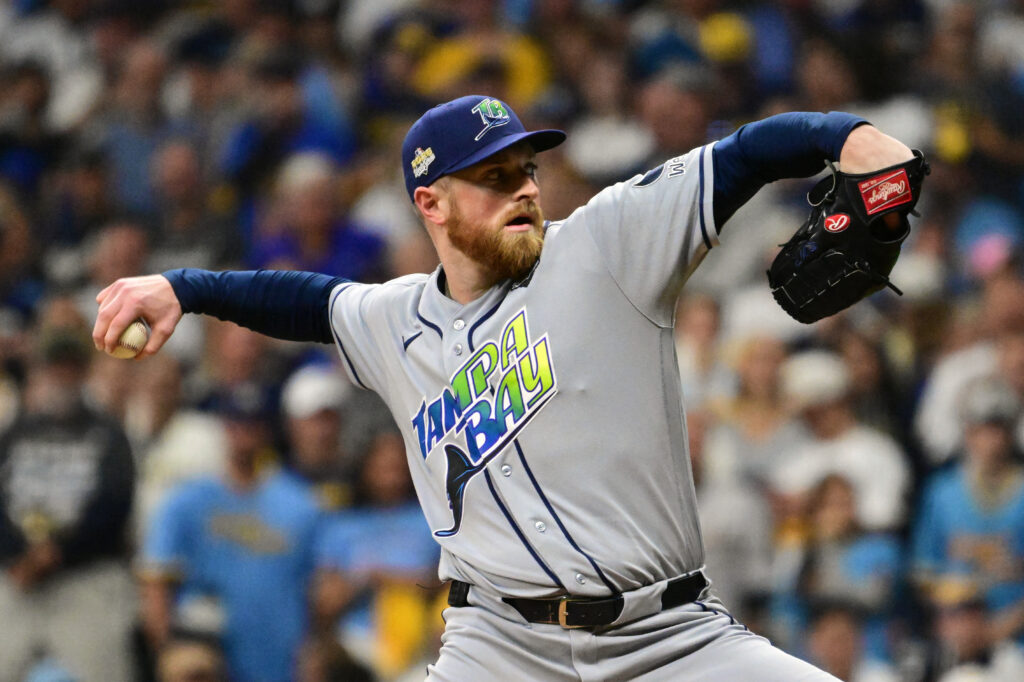
The celebration is on in Milwaukee and the offseason has arrived! Free agency won’t officially open for five days, as teams have until then to resolve any option decisions and have an exclusive negotiating window with their own free agents. There are no restrictions on the trade market, though! For the first time since August 3, teams can reengage in trade conversations. That means it’s time for a new look at the game’s top trade candidates. Some of these players have been in rumors dating back to the deadline, but many have only just emerged as realistic trade options. There are some big names on escalating salaries with clubs that don’t traditionally run high payrolls. Some struggled down the stretch to project as change of scenery candidates, while others might come available as a result of a front office change. There are only a couple truly rebuilding organizations, raising the possibility of more “baseball trades” than we see in a typical offseason. There might also be a runoff boost to the trade market from one of the weaker free agent classes in recent memory, especially on the position player side. Teams that need offense are going to be hard-pressed to find it without going to the trade front. The inevitability of an offseason lockout on December 1 might also accelerate the market by putting pressure on front offices to get more of their business done within the next five weeks. As a reminder, MLBTR’s trade candidate lists aren’t strict rankings of players’ trade value, nor are they solely about likelihood of being moved. We’re trying to balance both of those things, an inherently subjective exercise. Many of the players on the back half of this list would jump into the top 5-10 if there were more substantive reporting suggesting they’ll truly be available. All arbitration projections are courtesy of MLBTR contributor Matt Swartz. The projected windows of contractual control assume no changes to the service time structure in the upcoming CBA. Onto the list! (* = Player has no-trade rights) 1. Reid Detmers, Angels, LHP (arbitration-eligible through ’28; projected $7.5MM salary) The Angels discussed Detmers and José Soriano at the deadline, the first real signal they were focused on the long term after years of eschewing any kind of retool. Only Soriano wound up moving in August. Detmers should again be a top target for teams seeking starting pitching now that he’s down to two years of arbitration control. A former top 10 pick, the now-27-year-old Detmers is coming off a career season. He made all 32 starts and turned in a 3.36 ERA across 185 innings. Detmers punched out 28.5% of batters faced against a 6.5% walk rate while stabilizing some of the home run issues that plagued him earlier in his career. He had a particularly strong finish, allowing 1.89 earned runs per nine in 13 starts after the All-Star Break. It’s a solid, well-rounded profile that makes Detmers a No. 2 or high-end No. 3 starter. He sits around 94 mph and has a pair of swing-and-miss breaking balls. He showed the best command of his career, thrived versus batters of either handedness, and had no trouble turning lineups over multiple times. Detmers is projected for $7.5MM next year and should make around $20MM for his two years of arbitration. While it’s unclear how aggressively the Angels will rebuild, they’d have an uphill battle to competing within that two-year control window. The Halos landed top shortstop prospect Arjun Nimmala from Toronto for Soriano and should seek a similar headliner for Detmers — likely with a better package of surrounding talent. They could plausibly hear from upwards of two-thirds of the league, as any contender could slot Detmers somewhere in the starting five and fit him in the budget. 2. Drew Rasmussen, Rays, RHP ($20MM club option for ’27) Rasmussen’s second straight elite season confirms his status as one of the game’s best 10 to 15 pitchers. He finished ninth in AL Cy Young voting in 2025 and is likely to land in the top five after firing 172 innings of 2.67 ERA ball this year. Rasmussen fanned 26% of opponents against a 5% walk rate and carried his regular season dominance into the postseason. He’s one of 11 pitchers with 250+ innings and a sub-3.00 earned run average over the past two seasons. He’s keeping company with Cy Young winners and established aces. The talent has never really been in question. Outside of a 12-appearance rookie season, Rasmussen has managed a sub-3.00 ERA every year in the big leagues. He was a first-round talent in the draft who fell to the sixth round after undergoing two Tommy John surgeries at Oregon State. He required an internal brace procedure on his UCL in 2023, limiting him to 73 1/3 frames between 2023-24. The Rays signed Rasmussen to a two-year extension going into ’25 that bought out his final arbitration years and gave them a club option for 2027. That had a modest $8MM base value but contained a huge escalator package that could climb as high as $20MM. It reflected both Rasmussen’s talent and the injury risk, allowing his option price to balloon to $20MM if he stayed healthy. Rasmussen did just that, maxing out the escalators by avoiding any injuries. That $20MM price still looks like an unmitigated bargain. The Rays are obviously going to pick up the option. It’s less likely that they’ll actually keep him, however, as they’ve never carried a player making a $20MM salary. Even after a pennant run, they’re probably going to have a payroll in the low nine figures. The Rays can dangle one year of control over Rasmussen to a higher-payroll contender while targeting affordable starting pitching in return. 3. Zach Neto, Angels, SS (arb-eligible through ’29; projected $9.8MM salary) While there’s a solid chance Detmers moves this winter, Neto is a longer shot. He’s controllable for three seasons instead of two and naturally doesn’t come with the same health uncertainty associated with pitchers. If the Angels commit to a true rebuild, however, Neto would be one of the biggest names on the market. The 2022 first-round pick has emerged as a franchise shortstop. Baseball Reference has valued Neto around five wins above replacement in each of the last three seasons, while FanGraphs annually puts him in the 3-4 WAR range. Neto’s defensive grades are mixed, but few middle infielders match his power-speed acumen. He has gone 20-20 in three straight years, connecting on 27 homers while swiping 24 bags (albeit in 36 tries) this past season. Neto hit .239/.330/.436 across 704 plate appearances in 2026. There are some nits to pick in Neto’s performance. He strikes out a lot, isn’t an especially efficient basestealer, and can be prone to defensive lapses. He’s clearly a tier or two below the best players at the position (e.g. Bobby Witt Jr. and Elly De La Cruz), but three years of control over an above-average shortstop has immense trade value — particularly in an offseason where there’s essentially no free agent help at the position. The Angels reportedly inquired about one of the three best prospects in baseball (Boston’s Franklin Arias) when discussing Neto at the deadline. That’s a little too optimistic, but the Halos should justifiably demand multiple Top 100 talents and a headliner who’s among the top 25-50 prospects. Nimmala raked in Double-A after the Soriano trade and would hopefully be the long-term successor at shortstop, though the Halos would need to add a veteran stopgap for what’s likely to be another rebuilding year. 4. George Kirby, Mariners, RHP (arb-eligible through ’28; projected $9.8MM salary) 5. Emerson Hancock, Mariners, RHP (pre-arbitration, controllable through ’30) Outside observers, MLBTR included, have speculated about the Mariners trading a starter for years. It finally happened this past summer when they sent Luis Castillo to the White Sox, but the M’s have yet to shake up their homegrown rotation core. It’s probably time that changes. Seattle isn’t going to move touted rookie Kade Anderson. Anyone else on their starting staff could come up in trade conversations. Logan Gilbert is down to his final season of arbitration eligibility. Kirby is under team control for two years, Bryce Miller and Bryan Woo for three, and Hancock for four. The Mariners will get calls on all five of those starters. (They’ll probably get a few on Anderson as well but will quickly shut those down.) Kirby and Hancock were most publicly rumored to be available at the deadline. They seemingly shopped Hancock as a sell-high candidate while taking more of a due diligence approach on Kirby. Hancock, a former sixth overall pick, turned in a 3.57 ERA across 25 starts. He fanned a solid 22.3% of opponents, establishing a new career high by six percentage points, with some changes to his approach. Hancock flipped his fastball usage to throw more four-seamers and scale back on his sinker. He also introduced a cutter as his best secondary offering against lefties, who had teed off on his changeup in 2025. This version of Hancock looks like a solid third starter. He missed the final month with a left abductor strain but should have a normal offseason. Kirby has shown an All-Star ceiling but been closer to league average over the last couple seasons. He’s coming off a 4.33 ERA and a career-low 20% strikeout rate across 30 starts. His once pristine command has regressed slightly to “merely” very good, and he really struggled outside of Seattle’s pitcher-friendly T-Mobile Park this year. Although teams will be wary of the downward trends, Kirby would still garner plenty of interest in a market starved for controllable starting pitching. His average fastball velocity actually ticked up from 96 closer to 97 mph this year. He has a quality strikeout and walk profile against right-handed hitters and isn’t far too removed from looking like a No. 2 starter with this same general arsenal. Teams may feel he’s only a tweak or two from recapturing that ceiling. Seattle would likely only trade from their rotation to add immediate help on offense. They were 28th in scoring this year and may lose their best hitter, Randy Arozarena, via free agency. They need to replace him with a big bat in the corner outfield and could look for a shortstop upgrade. 6. Ketel Marte, Diamondbacks, 2B ($12MM salary in ’27, $20MM in ’28, $22MM per season in ’29-30, $11.5MM player option for ’31; deal includes $35MM in future deferrals)* Marte was at the center of drama again in 2026. The star second baseman no-showed for the first game of a series at Fenway Park in the middle of August, continuing what has apparently become an annual tradition. The D-backs placed him on the restricted list before moving him to the injured list, citing a knee issue. Marte returned a couple weeks later and finished the season without further problem, but his pattern of behavior has clearly begun to wear thin on the organization. Teammates and manager Torey Lovullo were less inclined to back him publicly, while owner Ken Kendrick said after the season he hoped for Marte to “overcome his consistent acts of immaturity.” That the D-backs continue to come up a game or two short of a playoff berth only adds to the sting of wondering how things might’ve otherwise turned out. Marte is coming off a relative down season. He had a league average .249/.316/.432 slash line with 22 homers over 624 trips to the plate. The switch-hitter continued to pummel lefty pitching but was a fair bit worse than average from the left side of the plate. Was this a one-year blip related to him playing at less than 100% or is it the start of a trend at age 33? There’ll surely be teams intrigued by the on-field upside. Marte is only a year removed from being the best offensive second baseman in the game. The work ethic questions combine with his contract to make him a very difficult player to value, however. He’s signed for five more years at a total of $87.5MM. Marte also has full no-trade rights as a 10-and-5 player. It wouldn’t be surprising if he’s back in the desert, but a trade this winter seems more likely than it did when the Snakes initially fielded offers last offseason. 7. CJ Abrams, Nationals, SS/2B (arb-eligible through ’28; projected $10.2MM salary) Abrams looked like one of the deadline’s top trade candidates, yet the Nationals’ surprisingly strong start diminished their interest in moving him. Washington was still on the periphery of the Wild Card race as the deadline approached, though an overmatched pitching staff (especially the bullpen) eventually caught up with them. Washington operated as short-term sellers in moving Luis García Jr. and Foster Griffin but justifiably stuck to a massive ask on Abrams. This was a career year for the former sixth overall pick. Abrams shattered his previous personal high with 33 homers and stole 34 bases in 40 tries. He hit .261/.336/.497 over 654 plate appearances. Abrams again tailed off at the plate as the season progressed, yet it wasn’t as significant a second half drop-off as he’d had in the prior two years. The defense remains an issue. Abrams reached 20 errors for the second straight season and the third time of his career. He tied Willy Adames for last among shortstops at -17 Outs Above Average. The Nats finally began playing him at second base in September, though they backed off initial plans for a full-time position change in favor of a more even split in the middle infield. Abrams is down to two years of arbitration control and has likely earned himself a boost into the eight-figure range. The Nationals already have the offense to compete for a playoff spot but would need to overhaul the pitching staff to take that step. Do they expect that to happen in ’27 or think they have a chance at securing Abrams on a long-term extension? If not, would they make this the final huge trade of a rebuild that has already lasted longer than initially planned? 8. Isaac Paredes, Astros, 3B ($13.35MM club option for ’27; projected for $15MM salary in arbitration if team declines option) 9. Christian Walker, Astros, 1B ($20MM salary in ’27) Paredes dominated trade rumblings last offseason as the Astros looked for a left-handed bat to balance the lineup. The reasoning was easy enough to see. With Paredes lost to a potential season-ending injury ahead of the 2025 trade deadline, Houston made a big splash to bring Carlos Correa back and step in at third base. That created a crowded infield picture in the offseason. A healthy Paredes was capable of handling either corner spot, but third base was earmarked for Correa. Shortstop belongs to Jeremy Peña. Jose Altuve’s move to left field was short lived. He was back at second base in 2026. Christian Walker had first base locked down on a three-year, $60MM contract. Designated hitter wasn’t an option — not with Yordan Alvarez shouldering the bulk of the load there. Houston ultimately hung onto Paredes, then controllable for two more years, and it worked out. Peña and Correa suffered early injuries, and the perceived infield “surplus” wound up being anything but. It’s a similar story this winter. Paredes, Peña, Altuve, Walker and Correa are all back in the infield, and Alvarez is still the designated hitter. That’s more veterans than everyday spots available. Injuries could sort this out naturally, but Walker is a little easier to move this winter than last with only one year left on his contract. Paredes is more expensive, giving Houston more reason to push for a trade. Both are free agents after the season. Paredes was terrific in 2026, hitting .262/.360/.447 with 25 homers. His glovework at third base was below average, but he was fine at first base in 15 games and even made a few cameos at second base (where he’s an emergency option but not a long-term fit). His arb projection outpaces his option price, so the Astros (or another club) will pick up the option rather than go through arbitration. Walker faded after a strong start but still hit 29 homers with good first base defense. His .226/.299/.427 slash as a 35-year-old means Houston would need to pay down a notable portion of his salary, but it’s something they could consider, especially after Walker outspokenly voiced displeasure with Houston’s fans after the ‘Stros were showered with boos by their own home crowd amid a Wild Card drubbing at the hands of the White Sox. Paredes is the easier of the two to move. He has clear positive trade value, but he’s a big contributor to the Astros and his extreme pull-side, fly-ball approach is a perfect fit with Daikin Park’s short left field porch. Walker has negative value, but a team might be willing to take on 40% of the remaining contract or so, sparing the Astros some money while cleaning up the infield and turning the page on the Wild Card controversy. 10. Alec Burleson, Cardinals, 1B (arb-eligible through ’28, projected $8.3MM salary) The Cardinals were nominally in contention for much of the first half but wound up selling at the deadline as their pitching staff was unable to hold up. The offense arguably outperformed expectations, thanks in large part to Burleson. The 27-year-old (28 in late November) hit a career-best 26 homers while slashing .279/.343/.473 overall. He did so while earning an eminently reasonable $3.3MM salary. Burleson has now been an above-average hitter in three straight seasons and a true plus hitter in each of the past two. He’s hitting .279/.324/.451 dating back to 2024 and .284/.343/.466 since 2025. He’s projected for a relatively hefty raise to $8.3MM. That’s plenty affordable for the Cardinals, but Burleson is down to two years of club control and the team is still in something of a transitional state. If president of baseball operations Chaim Bloom isn’t eyeing 2027 for a full-fledged aim at contention, there’s a good argument to listen on Burleson right now, as his trade value is never going to be higher. There’s no urgency to make a move, to be clear. The Cards can hold Burleson into the summer or even next offseason and still maintain nice trade value. If they’re in contention come 2028, he could be a part of that. However, there ought to be interest in a prime-aged slugger who’s fanned in only 16% of his plate appearances across the past two seasons. There are lots of first base options on the free agent market (e.g. Jake Bauers, Ty France, Alec Bohm) and a few others on this trade list, so time will tell if there are enough bidders to produce a compelling offer. Still, Burleson is going to draw plenty of interest and should be available if a team is willing to part with the right pitching to get him. 11. Steven Kwan, Guardians, CF/LF (arb-eligible through ’27, projected $11.3MM salary) Kwan had a terrible first three months of the season, falling to the bottom of a punchless Cleveland lineup while carrying a .212/.318/.257 batting line into July. That followed an ugly finish to the 2025 season that made it seem he was trending toward an offseason non-tender. Kwan completely changed the narrative with his final three months. The 29-year-old led the majors in average and on-base percentage from the start of July. Kwan hit .352/.445/.441 down the stretch. He finished the year with a .282/.382/.349 slash, walking at a career-high 13.3% clip against a sub-10% strikeout rate. Kwan’s already fringe power numbers cratered (three homers, .067 ISO), but he ranked among the top 10 qualified hitters in OBP. A four-time Gold Glove winner in left field, Kwan also showed he’s capable of handling a more demanding defensive assignment. He started nearly half of Cleveland’s games in center field and posted plus marks (six Defensive Runs Saved and Outs Above Average alike) over 637 innings. Kwan’s typically stellar left field defense remained intact. Cleveland president of baseball operations Chris Antonetti somewhat downplayed the chance of a Kwan trade at the team’s end-of-season press conference. “As we sit here today, we’re expecting Steven Kwan to be a big part of a contending team next year,” Antonetti told reporters. The Guards need outfielders and don’t have much on the books for next season, so they could accommodate a projected arbitration salary north of $11MM. They’re not likely to extend him but could get some compensation by issuing a qualifying offer after 2027. The team’s general operating procedure is to trade star players (aside from José Ramírez) once they’re this close to free agency, though. The Padres, Phillies, Cubs, Giants, Yankees, Astros, Blue Jays and Reds are among various teams that should be in contact with the Guardians’ front office. 12. Jarren Duran, Red Sox, LF (arb-eligible through ’28, projected $11.1MM salary) Duran is coming off one of the least productive 20-20 seasons in years. He narrowly reached that mark in both home runs and strikeouts but had ugly rate statistics. Duran batted .207/.266/.361 across 608 plate appearances, personal worsts across the board in a full season. Among 135 qualified hitters, only Ezequiel Tovar reached base less frequently. Duran’s walks, strikeouts, and hard contact all went backwards. The Red Sox presumably would be willing to move on. They reportedly made Duran available at the trade deadline — not long after he appeared to call out third base coach Chad Epperson for not making an aggressive send on what Duran hoped to be a sacrifice fly — but nothing came together. Boston’s offense wilted in September and scored two runs in two lopsided games against the Yankees in the Wild Card Series. Duran never got going, and the Sox could look for a bigger bat to split time with Roman Anthony in the left field/designated hitter mix. Duran’s projected arbitration salary has escalated to the $11MM range. There’s an outside chance he ends up non-tendered, but it’s likely another team would be willing to take him on as a change of scenery candidate. Duran batted .276/.339/.471 in nearly 1800 plate appearances between 2023-25. He’s an excellent runner and defensive left fielder who’d probably be fine in center field on a team that doesn’t have already have a Gold Glover at the position (i.e. Ceddanne Rafaela). Duran has two years of control remaining and would make sense for a club like the Giants, Cardinals, Rangers, Angels or Phillies. 13. Jacob deGrom, Rangers, RHP ($37MM salary, club option for ’28 starting at $20MM)* DeGrom may well take himself out of trade consideration. He built a full no-trade clause into his five-year, $185MM free agent deal with the Rangers. He leveraged that to nix talks between Texas and the Braves about a potential deadline deal that might’ve involved Spencer Strider going to Arlington. That’s his prerogative and perhaps he simply doesn’t want to move, but it may also signal that he wanted to defer that possibility until the offseason. The Rangers are at something of an organizational crossroads. They have an older, expensive roster that missed the playoffs for the third straight year despite playing in a division where every team essentially begged someone else to win it. Ownership has limited their payroll flexibility both over the offseason and at the deadline. Even if the Rangers don’t seem inclined to blow everything up, they should want to get out from some of their massive commitments to players in their mid-late 30s. For 2027, there’s none bigger than deGrom. He’ll make $37MM in the final guaranteed season of his deal. Texas received a $20MM club option for the ’28 campaign once deGrom underwent Tommy John surgery. That’d jump to $30MM if he finishes top five in Cy Young voting next year. The team’s hands are tied if he’s dead set on playing out the contract in Texas. If deGrom were willing to waive, there’d still be ample interest from big-market contenders. He’s coming off a pedestrian 4.20 ERA but struck out 30% of opponents while still throwing in the upper 90s. Teams are going to view him as a legitimate impact starter even at age 39. Atlanta would certainly check back in, while clubs like the Dodgers, Padres and Red Sox could fit as well. 14. Corey Seager, Rangers SS ($31MM annual salaries from ’27-’31)* If deGrom doesn’t want to waive his no-trade clause, could the Rangers approach Seager? He’d also need to agree to any move, as he has full no-trade rights as a 10-and-5 player. Seager’s contract is also heavier than his open-market value, as he’s slated to make $155MM for his age 33-37 seasons in the back half of a 10-year free agent contract. That’s a lot of money for a player who had three stints on the injured list in 2026 — two of them related to lower back issues. He also had a pedestrian .227/.312/.424 slash line across 436 plate appearances. Maybe there are too many complications to get a deal done. And yet, it still wouldn’t be a complete shock if a big-market team tries to make it work. Seager’s season numbers are weighed down by an ugly start while he was clearly hampered physically. He looked much more like his usual self in the final two months, batting .269/.332/.472 with 10 homers in 51 games after coming off the IL for the final time on July 31. Teams looking for help at shortstop or third base are going to have a difficult time finding it in this free agent class. Seager remains a viable shortstop but could slide to the hot corner. If the Rangers are willing to pay him down to a $22-25MM annual salary, a team like Atlanta or the Yankees could have interest in seeing if he’ll approve a deal. 15. Trevor Larnach, Twins, LF (arb-eligible through ’27, projected $6.3MM salary) The Twins already thought they traded Larnach, agreeing to a deadline swap that would’ve sent him to Houston for rental reliever Bryan Abreu. Astros owner Jim Crane killed the trade, a clear sign that he’d lost the faith of general manager Dana Brown (whom he’d dismiss three weeks later). Larnach finished the season in Minnesota, yet the writing seems to be on the wall. It was a solid year for the former first-round pick. Larnach batted .269/.352/.436 with 13 homers over 433 plate appearances. The Twins mostly kept him away from lefty pitching, but he was 31 percent better than average at hitting righties. Minnesota is deep in lefty-batting outfield talent. Top prospects Walker Jenkins and Emmanuel Rodriguez debuted down the stretch, while Alan Roden and Hendry Mendez are kicking around in the upper minors. The Twins would probably be served allocating Larnach’s projected $6.3MM salary elsewhere. It’s not going to be a huge return, but a team like the Padres or Diamondbacks would make sense. 16. Teoscar Hernández, Dodgers, LF ($14.5MM salary in ’27 ($8MM deferred), $15MM club option or $6.5MM buyout for ’28) The Dodgers certainly don’t need to clear payroll space, but Hernández is an expensive veteran heading into the final guaranteed season of his contract. On its own, that’s not cause to dump some of his salary, but L.A. has young Josue De Paula ready for a look in the majors. The 21-year-old, ranked among the top five prospects in the entire sport, debuted late in the year and impressed at the plate after tearing through the upper minors. Even if De Paula struggles, the Dodgers are comically deep in outfielders. Kyle Tucker is locked into right field on the massive contract he signed last winter. Andy Pages had a breakout year in center. Beyond De Paula, the Dodgers boast two more outfielders who rank within Baseball America’s top-20 prospects in the sport (Eduardo Quintero, Mike Sirota) and another who ranks No. 80 (Charles Davalan). If none of those prospects can handle the job early on, Los Angeles has several versatile veterans who can move around — Tommy Edman chief among them. The 34-year-old Hernández batted .267/.334/.425 (110 wRC+) and hit 16 home runs. The vast majority of his production came against lefties. He was a bit below average overall versus right-handed pitching. Defensively, he’s never been great but now rates well below average (-5 DRS, -5 OAA in 999 corner innings this year). Hernández’s bat is more good than great now, particularly when considering the stark platoon splits. Still, a smaller-payroll club that knows it’s not going to spend at the requisite levels to sign Seiya Suzuki or Randy Arozarena could view this as an opportunity to add a corner outfield slugger at a discount. The Dodgers might have to eat a few million to get the trade done, but they ought to be able to find a taker. Lower-spending teams with corner needs (e.g. Reds, Royals, Marlins), teams that really struggled against lefties (e.g. Blue Jays), and/or teams with outgoing designated hitters (e.g. Twins, Rangers) make some sense. Ultimately, his destination may hinge on how much money the Dodgers are willing to eat. 17. MacKenzie Gore, Rangers, LHP (arb-eligible through ’27, projected $8.7MM salary) Gore’s first season in Texas didn’t go especially well. The Rangers ponied up a five-player package to acquire him from the Nats last winter, with infielders Gavin Fien and Devin Fitz-Gerald headlining the return. Texas was surely enamored of Gore’s potential; he’s a former No. 3 overall pick who once ranked as the top pitching prospect in the sport but has been beset by injuries and a shaky period where the Padres (his original club) sent him back to extended spring training to refocus on getting his mechanics in order. The Friars only saw Gore for 16 big league games before trading him to the Nationals as part of the Juan Soto blockbuster. Gore didn’t break out into stardom like James Wood and CJ Abrams, but he showed plenty of promise in D.C. At one point in the summer of 2025, Gore was sitting on a 3.02 ERA with a 30.5% strikeout rate, 7.7% walk rate and 36% grounder rate in 110 1/3 innings (19 starts). He looked to finally be breaking out in full — at least until an awful four-start stretch wherein he surrendered 23 runs in 15 2/3 innings. He rebounded nicely and finished strong, but his season drew to a close with a 4.17 ERA. Texas undoubtedly was hoping to acquire two years of performance closer to that pre-catastrophe form. It didn’t work out. Gore had his share of nice starts, but he spent most of the season with his ERA hovering in the low-to-mid 4.00s. His average fastball only nominally declined (95.3 mph in 2025; 95.1 mph in 2026), but he saw his strikeout rate and swinging-strike rate take real steps back; after posting respective marks of 27.2% and 13.3% in ’25, Gore dipped to 23.2% and 11.2% in 2026. Those are all still solid numbers, and Gore even gave up less hard contact than in 2025. However, he also struggled with men on base and was particularly ineffective with runners in scoring position; with opponents on second and/or third, Gore yielded an awful .294/.395/.500 batting line. Now down to one year of club control and a projected $8.7MM salary, Gore is a relatively pricey, one-year upside play. He’s not a lock to be moved, but he could bring back a prospect or two while trimming some money off the payroll, which has been a goal for Rangers ownership for more than two years. Even if Gore’s just a decent innings eater, his salary is pretty reasonable. And, of course, a 28-year-old lefty who sits 95 mph with above-average bat-missing abilities could still break out with a new level — particularly when considering his draft and prospect pedigree. The Rangers will probably need a pretty decent offer to move him, as they don’t have great rotation depth in house and would need to sign someone to replace his innings. Plus, if they can coax that breakout themselves, Gore would be a qualifying offer candidate (if that system is still in place) or could feasibly enhance his value ahead of the ’27 deadline. The White Sox, Mets, Blue Jays, Orioles, Braves, Giants, Cubs, Reds and old friends in San Diego all stand as reasonable fits. 18. Jeremy Peña, Astros, SS (arb-eligible through ’27, projected $13.1MM salary) We already touched on two Astros infielders above. Peña is a different case — a much (much) more valuable trade asset but one whose price tag will be considerably higher than Paredes and Walker. The 29-year-old is coming off another brilliant all-around season, his second in a row. He missed time with a hamstring strain and calf strain but turned in a hearty .277/.325/.477 batting line (124 wRC+) when healthy. Peña ripped a career-high 22 homers despite logging only 483 plate appearances. His typically excellent defensive grades dipped to below average, but that’s not a shock for a shortstop who played through a pair of leg injuries at times in 2026. Both surely impacted his range and quickness. Dating back to 2025, Peña is a .291/.345/.477 hitter (130 wRC+) in 1026 plate appearances. Given his excellence, it’s fair to ask why the Astros would consider trading him at all. They’re not entering any sort of rebuild, after all. However, this is the exact same situation the Astros encountered with Kyle Tucker. Peña, like his former right field teammate was in the 2024-25 offseason, is an All-Star with Gold Glove defensive talent and high-end offensive contributions. Both are represented by agencies that rarely consider extensions for star players, however — Excel Sports Management for Tucker and the Boras Corporation for Peña. The Astros have to know they’re not going to sign Peña long term. Owner Jim Crane has never signed a player for more than six years nor has he guaranteed more than $150MM to any individual player. Peña is one healthy (or mostly healthy) season away from trouncing both those marks. Trading him would weaken the 2027 roster but would also scale back payroll — Crane is generally loath to pay the luxury tax, and Houston will be close to that threshold — while bringing in some high-end young talent to a system that is largely devoid of impactful prospects. The Braves are a perfect match on paper, but the Blue Jays, Red Sox, Tigers, Phillies and Rays all make varying degrees of sense. Even teams with a set option at shortstop could consider jumping into the fray, as Peña is one of the most talented players in the game at his position. A deal isn’t a slam-dunk, but teams will try and the Astros will likely hear them out. 19. Rafael Devers, Giants, 1B ($31MM salaries in ’27-30, $29MM salaries in ’31-33) The Giants unsuccessfully looked to offload one of their big contracts at the deadline. It’s hard to imagine there’ll be much interest in Matt Chapman or Willy Adames this offseason. A Devers trade is a long shot as well but at least a little more plausible. While most of the San Francisco lineup sputtered, Devers had a monster second half. Among qualifiers, only Alex Bregman, Fernando Tatis Jr. and Yordan Alvarez had a higher OPS after the All-Star Break. Devers finished the season with 37 home runs while batting .258/.340/.525 through 633 plate appearances. He remarkably managed that production despite playing through a left side core injury that required surgery in mid-September, ending his year a couple weeks early. Devers just celebrated his 30th birthday. He’s signed for another seven years at a total of $211MM. The contract is likely higher than his open market value. (Pete Alonso signed for five years and $155MM for ages 31-35 off a similar platform season, as one reference point.) There’s a scarcity of impact bats, however, so perhaps another team would be willing to eat something in the vicinity of $165-180MM on the Devers contract. The Giants wouldn’t get much of a prospect return, but this might be their best chance to unload one of their long-term contracts and clear payroll room to spend on pitching or outfield help. It’d probably require the Giants committing to at least a retool — they’re already a below-average offensive team even with Devers — but would create positional/payroll flexibility. Bryce Eldridge is entrenched as the first baseman of the future. Do the Giants really want both first base and DH locked up for the next half-decade? 20. Hunter Goodman, Rockies, C (arb-eligible through ’29, projected $6.2MM salary) The Rox maintained a high asking price on Goodman at the deadline. Ken Rosenthal of The Athletic reported a few days before August 3 that Colorado was demanding that teams deal from the very top of their farm systems for the slugging catcher. There’s no indication they backed off those heights once the deadline arrived and the 27-year-old remained in Colorado. It’s another litmus test for how firmly the Rockies consider themselves to be rebuilding. Goodman is controllable for three more seasons. He’s projected for a lofty $6.2MM salary as a first-time eligible arbitration player and could be in the eight figure range by 2028. Unless the Rockies believe they’re going to be playoff competitive within the next two seasons, they should trade him. That’s traditionally not how they’ve operated, and while they have a fairly new front office, the Monfort family ownership group would need to sign off on a trade of the team’s star player. Goodman is one of the biggest power threats in MLB — regardless of position. He’s coming off a 41-homer season and is tied for eighth in the majors with 72 longballs since the start of 2025. No other catcher came within 14 homers of Goodman this year. While one might initially assume that’s juiced by Coors Field, that’s not the case. Goodman has 43 homers on the road over the past two seasons, tied with Junior Caminero for most in the majors. He can hit the ball out anywhere. Elite as Goodman’s power is, he does have something close to a one-dimensional profile. Goodman struck out at a 30.5% clip this season, leading to pedestrian batting average (.245) and on-base (.310) marks. He’s an extremely aggressive hitter who doesn’t take many walks, even as pitchers have become increasingly reluctant to attack him within the strike zone. Goodman has worked to bring his defense closer to league average, but he’s a bigger catcher who’s not the most natural receiver. He has a long exchange and middling arm strength, and his nine throwing errors this year were tied for the MLB high at the position. The Rockies have tolerated the defense, but teams that place more of a premium on that might feel he’s better suited mixing in a lot of first base/corner outfield/designated hitter work. Although there’s enough power that Goodman’s bat would play at any position, a team probably won’t offer a monster trade return if they want to move him out from behind the plate. 21. Shea Langeliers, Athletics, C (arb-eligible through ’28, projected $8.7MM salary) The Athletics expected to be further along in the rebuild by now. A 64-98 finish — their fifth straight year alongside the Angels in the bottom two spots in the AL West — led to a front office change. New president of baseball operations Taylor Smith takes over with the club a year away from opening their stadium in Las Vegas. It’s fair to say the A’s aren’t quite as bad as their record suggests. They were around .500 into the middle of June until a bunch of injuries devastated the lineup. They still have arguably the worst pitching staff in the American League, however, and it’d take an improbable White Sox-style jump to compete for a 2027 playoff spot. Where does that leave their franchise catcher? Langeliers, a Boras Corporation client, is down to two years of arbitration control. There’s nothing to suggest the sides have ever come close on an extension. Owner John Fisher surely wants to pitch the ’28 team as a playoff contender in the new city, but they’d be leaving trade value on the table if they hold Langeliers without any real expectation of contending next season. Langeliers is one of the best power-hitting catchers in the game. He hit 23 homers in just 106 games this year, batting .262/.328/.474 despite losing seven weeks to a meniscus tear in his right knee. Only Cal Raleigh has more longballs at the position over the past four seasons. Langeliers has never graded highly as a receiving catcher but has a plus-plus arm and is very good at controlling the running game. There are some parallels with Goodman, and there should be overlap in their respective trade markets (e.g. Yankees, Giants, Rangers). 22. Spencer Torkelson, Tigers, 1B (arb-eligible through ’28, projected $7.7MM salary) An absolutely massive September saved what was shaping up to be a lost season for Torkelson, the former No. 1 overall pick and top prospect whose career in Detroit has been more valleys than peaks to this point. The 27-year-old was hitting .220/.314/.402 through the end of August — about league-average production. He’d popped 20 homers and walked at an 11.1% clip, but Torkelson had also punched out in 31.5% of his plate appearances, continuing a trend of poor bat-to-ball skills. Torkelson went 1-for-4 on Sept. 1 and never really looked back. Over the final 27 days of the season, he posted a gargantuan .296/.432/.648 slash with six homers, five doubles, a triple and a 14.8% walk rate. Impressive as those numbers are, Torkelson also fanned in one-third of his September plate appearances and needed a massive .355 average on balls in play to make that production happen. That September surge was just enough to give Torkelson a nearly identical line to the .240/.333/.456 he posted in 2025; his ’26 campaign ended at .230/.331/.435. Tork has meaningfully upped his walk rate over the past two seasons, but this year’s 31.7% strikeout rate is a career-worst. He doesn’t make hard contact at the level you’d expect from a 6’1″, 220-pound slugger who was praised for having 70-grade raw power (on the 20-80 scale) during his prospect days. The Tigers have two years of club control remaining over Torkelson, and his $7.7MM projected salary is hardly exorbitant. However, he’s become emblematic of a core that hasn’t gelled the way the front office hoped would be the case when the ’24 Tigers caught fire late in the year and made a Cinderella playoff run. Detroit’s lineup was productive for much of the season but went completely M.I.A. in both May and August — not at all dissimilar from Torkelson’s strikeout-prone, up-and-down level of performance over the years. Detroit could hang onto Torkelson and hope for more consistency, but he’s a poor defensive first baseman whose bat has never developed the way they hoped. Trading him could open first base for Colt Keith, thereby creating more infield time for younger players like Hao-Yu Lee and yet-to-debut Max Anderson. One way or another, it seems likely the Tigers will turn over some of their lineup. 23. Jake McCarthy, Rockies, OF (arb-eligible through ’28, projected $4.6MM salary) McCarthy isn’t the most exciting player on this list, but he should have broad appeal given his affordability and well-rounded profile. He’s a 29-year-old outfielder who can play all three spots, though his range is stretched in center. McCarthy hit .291/.334/.475 with 15 homers and 32 steals in 38 attempts during his first season in Colorado. He was a little more productive at Coors Field, as one would expect, but still managed a solid .267/.318/.408 showing on the road. The lefty-swinging McCarthy batted .319 against southpaws this year and has neutral platoon splits in his career. McCarthy’s career has been up and down — he alternated good and bad seasons throughout his time with the Diamondbacks — but he’s at least a high-end fourth outfielder who has now had three seasons where he’s looked like a solid regular. The Rockies should be willing to cash in his final two years of arbitration eligibility for a couple mid-level prospects, as McCarthy is unlikely to be a core piece in an ongoing rebuild. 24. Jimmy Crooks, Cardinals, C (pre-arbitration, controllable through ’32) MLBTR has written extensively about the possibility that the Cardinals will trade one of their catchers. It’s an area of organizational strength that should eventually result in a move. Rookie Leo Bernal appears to be the preferred option in 2027, at least as a bridge to top prospect Rainiel Rodriguez. That might not leave any room for the 25-year-old Crooks. He hasn’t hit yet at the major league level (.168/.231/.313 in 67 games), but the Oklahoma product has an excellent defensive reputation and has posted huge numbers in Triple-A. He garnered some top 100 prospect attention entering the 2026 season. It’d make sense for the Cardinals to look to swap Crooks for upper level starting pitching. St. Louis could also entertain offers on Iván Herrera for the same reason, though he’s not blocked to the same extent that Crooks is — especially if they move Burleson. Herrera is a bat-first player who’s more of a primary designated hitter and part-time catcher. He’s entering his arbitration window and coming off a relative down season (.241/.353/.382 across 717 plate appearances) that’d make an offseason trade something of a sell low. 25. Yusei Kikuchi, Angels, LHP ($21MM salary in ’27) Kikuchi enters the final season of a three-year, $63MM contract. The Halos have fired the GM who signed that deal (Perry Minasian) and embraced more of a retool. They’d need to pay down a portion of the contract but will surely be open to moving Kikuchi for a modest prospect return. The two-time All-Star was limited to 14 starts this past season by shoulder inflammation. It wasn’t great production, as Kikuchi turned in an ERA close to 5.00 across 67 2/3 innings. He’ll nevertheless be on the radar for teams looking for mid-rotation help as long as the Angels are willing to cover $8-10MM of his $21MM salary. Kikuchi has a track record as a No. 3 caliber starter and still has above-average stuff, sitting 95-96 mph and mixing four pitches. He recorded a decent 22% strikeout rate this year and is a season removed from making 33 starts with an ERA around 4.00. 26. Andrew Vaughn, Brewers 1B (arb-eligible through ’27, projected $8.5MM salary) 27. Trevor Megill, Brewers RHP (arb-eligible through ’27, projected $8MM salary) Vaughn and Megill were both big contributors to the Brewers’ 2026 World Series run, but they’re both entering their final season of club control and projected for salaries of note. That’s also true of star catcher William Contreras, and Milwaukee tends to be open on to offers on all players ahead of their final year of control. However, Contreras is arguably the team’s best position player — an integral part of the roster at a spot where the organization is lacking a clear in-house alternative. The newly minted World Series MVP is also a slam-dunk qualifying offer recipient (if that system remains in place in the next CBA) in a way that isn’t true of Vaughn and Megill. Even if the QO system is revamped, there will be some form of new system to compensate the Brewers for Contreras’ departure — probably more so than with the other two. Turning to the two players we’re actually listing as trade candidates here, both are veterans in line for contracts paying them around $8MM. Megill is the more established of the two and will have the bigger market. Every team is in need of bullpen help in the offseason; not every club sets out looking for a first baseman and/or designated hitter. Megill, 33 in December, came to the Brewers in an April 2023 trade that sent a PTBNL (Taylor Floyd) to the Twins, who’d designated him for assignment. Megill had previously bounced from the Padres to the Cubs to Minnesota via waivers. Like so many other pitchers, he found a home in Milwaukee with some help from the Brewers’ pitch lab. He’s pitched 189 2/3 innings with a 2.80 ERA, 30.2% strikeout rate and 7.6% walk rate dating back to 2023. The Brewers moved him into a high-leverage role in ’24, and he’s tallied 81 saves and 13 holds with 12 blown opportunities along the way. Megill is a dominant piece of manager Pat Murphy’s relief corps, but the Brewers aren’t going to make a QO to a reliever ahead of his age-34 season next winter. (They’re probably not going to make one to any reliever.) If they want compensation for Megill, the best route is a trade. And while losing him would be a hit to the ‘pen, Milwaukee saw Aaron Ashby step into the bullpen spotlight during the playoffs while Abner Uribe gives them another power arm to consider. Lefty DL Hall is also on hand, and underrated righty Grant Anderson should be healthy next year despite missing the end of the current season with a biceps injury. The Brewers, more than almost any team in the game, have a knack for unearthing hidden bullpen gems (as evidenced by Megill himself). Trading Megill both trims payroll and further stocks the farm — all while dealing from a position of great depth. It’s classic Brewers. Vaughn, meanwhile, is coming off a big .306/.390/.444 showing in a limited role. He tallied 331 plate appearances, seeing extensive time against lefties in particular. He torched southpaws with a .336/.421/.517 line and walked (12%) nearly as often as he struck out (13.5%) in those matchups. Against righties, he posted a solid but fairly punchless .285/.369/.395 slash with a 9.6% walk rate and 17.7% strikeout rate. The Brewers bought low on Vaughn in 2025, sending displaced veteran starter Aaron Civale to the White Sox in exchange for the former No. 3 overall pick. He’s blossomed in Milwaukee and could simply be kept to take the everyday mantle at first base for free agent Jake Bauers. But Vaughn would need a big season to be a QO consideration, and there are plenty of first base options available in free agency and trade if president of baseball ops Matt Arnold and his staff want to cash in on Vaughn’s Brewer breakout. They could sign/acquire an established option elsewhere on the market, or the Brewers could follow the playbook they did with Vaughn, Bauers and so many of their pitchers. Bauers and Vaughn were acquired as struggling players whose poor results pushed them out of their former clubs’ plans. No one should be surprised if Milwaukee sells high on Vaughn … then acquires a cheaper, unheralded player and turns him into a genuine threat at first base. 28. Brandon Marsh, Phillies, LF (arb-eligible through ’27, projected $8.3MM salary) Marsh was an All-Star in 2026. Four months later, he’s a change of scenery candidate. After hitting .301/.339/.490 in the first half, Marsh had a brutal .184/.243/.259 showing coming out of the All-Star Break. The end result: a middling .260/.304/.408 slash line with 18 homers over 568 plate appearances. Paired with average defensive grades in left field, his season was barely above replacement level. It’s been a frustratingly up-and-down career for Marsh, who has never hit left-handed pitching well enough to break out of a platoon role. He hits for high averages and typically gets on base against right-handers, second half struggles notwithstanding, but doesn’t have the power to be an impact corner bat. While Marsh can contribute in the right role, it’s probably time for the Phillies to shake things up. Marsh projects to make a little over $8MM in his final season of arbitration. 29. Jo Adell, Guardians, RF (arb-eligible through ’27, projected $9.6MM salary) Adell has big power, hitting 20+ homers in three straight seasons and connecting on 37 longballs as recently as 2025. It’s a boom or bust offensive approach, though, as he’s failed to reach base at even a .300 clip in any of those years. Adell’s .230/.292/.430 slash line over the past three seasons is essentially league average. He gets there by destroying left-handed pitching (.288/.345/.591 in his last 400 PAs) but ranks near the bottom of the league in getting on base versus righties. The Guardians acquired Adell from the Angels at the deadline. He hit at a league average level in 48 regular season games and had a poor postseason. They’ll probably put him right back on the market rather than pay a nearly $10MM projected salary for his final year of arbitration. Right-handed bats were in enough demand at the deadline that it stands to reason they’d find a taker rather than needing a non-tender. The Braves, Giants, Twins and Blue Jays need to improve against lefty pitching and would make some sense. 30. Carmen Mlodzinski, Pirates, RHP (arb-eligible through ’29, projected $1.6MM salary) Teams in need of controllable innings will — or should — be in touch with Pittsburgh about Mlodzinski. He doesn’t have the name value of a Paul Skenes, Braxton Ashcraft or Jared Jones, but he’s a controllable, prime-aged righty who has been largely squeezed out of the Pirates’ crowded rotation mix. He started a dozen games in 2026 but was pushed to the bullpen and wound up making 25 relief appearances. The Bucs are welcoming back Skenes, Ashcraft, Jones, Bubba Chandler and pricey rotation anchor Mitch Keller. There’s no clear spot for Mlodzinski to start. That’s not always a problem, but Mlodzinski was outwardly angry about being bounced from the rotation in late May when Jones made his return from UCL surgery. The team briefly placed Mlodzinski, 27, on the restricted list after he “wasn’t ready” to pitch out of the bullpen following the shift. He candidly acknowledged at the time that he was talking with his family and his agents about his next step before returning the following day. Mlodzinski noted that he never requested a trade. “I want to do what’s best to help us win baseball games,” he told MLB.com’s Jason Mackey at the time. “Being around these guys, this team, it’s a pretty cool group to be a part of. Of course I want to start and will always want that, but winning games takes precedence.” While Mlodzinski is a strong, if not overqualified sixth starter/swing option, other clubs surely took note of his comments and are going to inquire. After all, he pitched 123 innings with a 3.95 ERA this season. His 18.1% strikeout rate was below average, but his 8.2% walk rate and 42.6% grounder rate were both better than average. Mlodzinski is a former No. 31 overall pick (2020) who sits 95 mph on his four-seamer and complements it with five other offerings. His projected salary is minimal, and the remaining club control is highly appealing. He’s not an ace, but a team looking for a quality third/fourth starter could do much worse. The Pirates would still have Hunter Barco, Antwone Kelly and Khristian Curtis as depth options on the 40-man roster, with top prospect Seth Hernandez rapidly climbing the minor league ladder. They could also sign a veteran swing option in free agency (e.g. Jordan Montgomery, Colin Rea, Sean Newcomb, Cal Quantrill) to backfill some innings. The Giants, Padres, D-backs, Mets, A’s, Nationals, Orioles, Royals, White Sox, Angels, Astros, Blue Jays and Guardians are among the many examples of reasonable on-paper suitors. 31. Will Warren, Yankees, RHP (pre-arbitration, controllable through ’30) 32. Ryan Weathers, Yankees, LHP (arb-eligible through ’28, projected $3.1MM salary) The Yankees are extremely deep in starting pitching — so much so that they’re bound to receive offers on some of their more affordable and controllable arms. Presumptive AL Cy Young winner Cam Schlittler isn’t going anywhere, and the veteran trio of Gerrit Cole, Max Fried and Carlos Rodón is locked in on pricey long-term deals that won’t be changing hands. That’s four rotation spots settled, but the Yankees have Warren, Weathers, Clarke Schmidt, Luis Gil and prospects Elmer Rodriguez and Carlos Lagrange all queued up as options for the fifth spot. It’s a much deeper group than most organizations can boast, and it’d make sense for newly extended GM Brian Cashman to listen on some of that depth. It’s possible someone like Rodriguez or Lagrange could be traded as part of the return for a marquee addition to the lineup, but they’re otherwise quite likely to stay put. Gil could also go but is more of a change-of-scenery candidate after injuries waylaid his past few seasons. He was named AL Rookie of the Year in 2024 — his first season back from Tommy John surgery — but missed most of 2025 with a lat strain and was derailed by shoulder issues in 2026. He’s pitched just 110 2/3 total innings (majors and minors combined) since winning ROY honors. Schmidt, meanwhile, had Tommy John surgery in 2025 and returned for only two-thirds of an inning late this season before being shut down with a biceps issue. Warren and Weathers stand as the two most plausible names to change hands and net a return of note. Warren, 27, pitched 156 innings of 3.92 ERA ball with slightly better-than average strikeout (23.3%), walk (8%) and ground-ball (44.6%) rates. He sits 93.7 mph on a four-seamer that headlines a five-pitch arsenal, and in addition to four remaining years of club control, he has two minor league option years remaining. Weathers is younger but more established. He’s a former top-10 pick (Padres, 2018) who’ll turn 27 in December. He notched a 3.60 ERA in 137 1/3 innings this season while starting a career-high 25 games. Injuries have impacted Weathers throughout his career, and he finished the regular season on the 15-day IL due to a flexor strain. Weathers was healthy enough to pitch 1 2/3 scoreless frames of relief in the ALDS, however, so there’s no reason to think the flexor is a major issue going forward. In his past 262 1/3 major league innings, the hard-throwing southpaw touts a 3.67 earned run average with a sharp 23.6% strikeout rate, an excellent 6.7% walk rate and a big 47.2% grounder rate. Both Weathers and Warren are affordable. Any team looking for rotation innings could try to pry one of the two away, whether that entails sending prospects to the Yankees or an established big league bat to plug into the lineup at a position of need (e.g. third base, catcher, second base). 33. Edward Cabrera, Cubs, RHP (arb-eligible through ’28, projected $4.8MM salary) Cabrera was the Cubs’ big pitching acquisition last offseason. Chicago sent three prospects, headlined by rookie outfielder Owen Caissie, to Miami for three years of arbitration control over the talented right-hander. Cabrera’s first season on the North Side was a massive disappointment. He had three separate stints on the injured list — two due to blisters on his middle finger, plus a seven-week absence for a left hamstring strain. Cabrera was limited to 80 ineffective innings, allowing a 5.96 ERA with a career-low 20.3% strikeout rate. The Cubs demoted Cabrera to the bullpen when he returned from the second blister in the middle of September. They left him off their playoff roster. Manager Craig Counsell acknowledged in the middle of August that the acquisition had not worked out, at least to that point. “It hasn’t clicked. You spend a lot of time figuring those out. I wish every story was a success story. This one, right now, is not,” Counsell told reporters at the time (link via Patrick Mooney of The Athletic). “We’re certainly going to keep working on trying to find answers there and trying to find solutions. … I wish I could tell you every story is a success story. But we haven’t done it here.” Does that mean Cabrera’s time in Chicago will be one and done? The Cubs need starting pitching, so perhaps they’re inclined to give him another chance, but he clearly fell out of favor down the stretch. There’d be teams interested in a flier, as Cabrera is a year removed from tossing 137 2/3 innings of 3.53 ERA ball with a 26% strikeout rate. He’s under arbitration control for another two seasons. 34. Ryan McMahon, Yankees, 3B ($16MM salary in ’27) 35. Anthony Volpe, Yankees, SS/2B/3B (arb-eligible through ’29, projected $4MM salary) The Yankees’ infield is clearly due for some turnover. Jazz Chisholm Jr. is a free agent. The Yanks acquired Luis García Jr. from the Nationals at the trade deadline, but he’s mostly a first baseman now and never graded well at second base. He and Ben Rice can share first base and DH duties … but there’s still Giancarlo Stanton to consider. He’s been hurt much more often than not in recent years, but Stanton can still hit for huge power when healthy and is making $25MM next year. You’d think that if healthy, he’s going to be the primary DH. Rice isn’t going to move back to catcher. There are a lot of moving parts here. That’s before even getting to the rest of the infield. Top prospect George Lombard Jr. debuted late in the season and should be at shortstop on Opening Day. McMahon, Volpe and perhaps García are in line for reps at third base and second base, it seems. At least, that’s the case if they’re all still on the roster. The McMahon acquisition simply hasn’t worked out for the Yankees. He’s been a plus third base defender, as advertised, but any hope that a move to Yankee Stadium with its short right field porch would bring about more power and offensive consistency has since been stamped out. He’s taken 545 plate appearances as a Yankee and batted .211/.289/.349 with a strikeout rate just shy of 31%. He received only 65 plate appearances versus fellow lefties this season and hit just .193/.281/.228. A team with payroll space to burn could try to take on McMahon’s contract to shore up its third base defense while also effectively purchasing a prospect from the Yankees as compensation for taking McMahon’s $16MM salary (and sparing the Yankees the associated 110% luxury tax hit). The A’s, Angels and Cardinals are teams in a transition period who got little to no third base production last year and could try such a gambit. Volpe was once the Yankees’ shortstop of the future. He’s never managed to hit in the majors, however. Through 2132 plate appearances, Volpe is a .225/.288/.374 hitter — about 16% worse than league-average. He hit for career-worst levels of power in 2026 (two homers, .091 ISO in 246 plate appearances) but walked at a career-high 10.2% rate. Lombard is locked in at shortstop moving forward, leaving Volpe to play either second or third. His plus defensive chops make him a realistic candidate at either spot, but other teams will undoubtedly have interest in trying to buy low on a still 25-year-old former top prospect whose standing within the organization has slipped. There’s a much broader slate of teams who could look into this; the Reds, Angels, Royals, Nationals and Tigers are just a few of the logical possibilities. 36. Royce Lewis, Twins, 1B/3B (arb-eligible through ’28, projected $5.1MM salary) Lewis is yet another high-end talent who’s coming off a couple inconsistent seasons. He struggled badly enough early in 2026 that the Twins optioned him to Triple-A in the middle of May. Lewis, who’d been Minnesota’s primary third baseman up to that point, came back up as a first baseman. Shortstop Brooks Lee had slid over to third base in place of Lewis and played elite defense at his new position. Lee popped 24 homers on the year and is a Gold Glove finalist at the hot corner. He’s not relinquishing the position. The minor league stint initially appeared to invigorate Lewis’ bat. He batted .279/.330/.512 with a lower strikeout rate in June. That didn’t last, as the former first overall pick hit .234/.284/.377 across his final 296 plate appearances of the season. Lewis has managed only a .232/.288/.401 line going back to the start of the ’24 campaign. The Twins could look for more consistent offense out of first base. It wouldn’t be a surprise if another team is willing to give Lewis a look, especially if they have a need at third base — where there’s a very limited supply in free agency. 37. Xavier Edwards, Marlins, 2B (arb-eligible through ’29, projected $3.5MM salary) 38. Otto Lopez, Marlins, SS (arb-eligible through ’29, projected $5.4MM salary) The Marlins don’t need to trade either Edwards or Lopez. Both players can be affordably controlled for another three seasons. The Fish have flirted with contention for the past two years and need to try to win at some point. But there have already been reports suggesting they will listen and the club has generally been willing to trade controllable players. Luis Arraez was traded to the Padres with almost two years of club control. Jazz Chisholm Jr. was traded to the Yankees when he was two-plus years from free agency. Trevor Rogers was traded to the Orioles with that same window of control. Jake Burger was traded to the Rangers when he was still controlled for four seasons. Ryan Weathers and Edward Cabrera were sent packing when each player was three seasons from the open market. Liam Hicks was sent to the Rays with four-plus years of control. This winter’s shortstop market is pretty bleak, which makes Lopez particularly interesting. The top free agents are Mauricio Dubón and J.P. Crawford. Dubón should be in a utility role but might end up getting a shortstop gig due to lack of alternatives. Crawford’s shortstop defense is poor, he’s already been pushed to spending some time at third base and he’s about to turn 32 years old. Teams like the Braves, Rays, Red Sox, Nationals, Blue Jays, Padres and others might be looking for shortstop help. López is far more appealing than any of the free agent options. He was credited with 5.9 fWAR this year thanks to his combination of speed, defense and contact-heavy offense. If the Marlins get a strong offer, perhaps they could pull the trigger and open the shortstop spot for prospect Aiva Arquette. Utility guy Javier Sanoja could hold the spot until Arquette is ready and then move elsewhere. With Edwards, the market forces won’t be the same since Chisholm, Arraez, Brandon Lowe and Gleyber Torres are free agent second basemen but Edwards is younger and cheaper than all of them. He’s been worth 2-3 fWAR for three straight years. His glovework isn’t regarded as highly as that of López but he is better at second base than he was at shortstop. 39. Hunter Greene, Reds, RHP ($15MM salary in ’27, $16MM in ’28, $21MM club option or $2MM buyout for ’29) The Reds were dealt a massive blow in August when Greene underwent Tommy John surgery for the second time in his career. He’ll miss the entire 2027 season. Cincinnati is on the hook for a $15MM salary that currently has Greene as the highest-paid player on the roster. He’s signed for $16MM for 2028 and there’s a $21MM team option for the ’29 season. Cincinnati will need to decide whether they can afford to eat that short-term cost when they have needs all throughout the roster (rotation, bullpen, outfield, third base). It’d sting to sell low on Greene, a former second overall pick who has shown a top-of-the-rotation ceiling around an all too frustrating series of injuries. Greene combined for a 2.76 earned run average and 29% strikeout rate in 45 starts between 2024-25 but missed time along the way to groin and elbow issues. 40. Joe Ryan, Twins RHP (arb-eligible through ’27, projected $9.6MM salary) Ryan has seen his name floated in trade rumors going back to the 2025 deadline. They hung onto him both at that deadline and through the 2025-26 offseason. Minnesota played well enough to operate as modest buyers, so a Ryan trade was never a major consideration this past summer. That effort at short-term contention didn’t work out, but it’s clear that new owner Tom Pohlad has no appetite for a rebuild. That’ll remain the case this offseason. They’re unlikely to move Ryan strictly for prospects, but general manager Jeremy Zoll suggested at the end of the season they’d at least consider dealing from their rotation depth (link via Bobby Nightengale of The Minnesota Star Tribune). “In a perfect world, if you can take areas of strength and exchange those for areas of weakness, and build a better club in aggregate, that’s what we’re trying to do. That’ll be on our minds,” Zoll said. The GM didn’t specifically name-check anyone from the rotation they’d consider dealing. They’ll get calls on most of their starters. Ryan, Bailey Ober, deadline pickup Dean Kremer and returning top starter Pablo López (who missed 2026 due to UCL surgery) are all free agents following the ’27 campaign. Ryan would command the biggest return of the bunch. He’s down to one year of arbitration eligibility and has shown a #2 caliber ceiling. Ryan pitched at that level in the first half this year, carrying a 2.85 ERA and 28% strikeout rate into the All-Star Break. He had an ugly finish around a monthlong absence due to a left glute strain, yet there’s no reason to believe that’ll carry over into 2027. Even with his late-season struggles, Ryan touts a 3.59 ERA and 27.2% strikeout percentage in 81 appearances over the past three years. There’d be no shortage of interest if Minnesota did want to swap him for infield and/or bullpen help. Other to Watch Astros: Josh Hader, Cristian Javier Athletics: Lawrence Butler, Zack Gelof Blue Jays: Ernie Clement, Nathan Lukes Braves: Ozzie Albies, Sean Murphy, Jurickson Profar, Spencer Strider Cardinals: Riley O’Brien, Andre Pallante Cubs: Pedro Ramírez, Matt Shaw Diamondbacks: Jordan Lawlar, Eduardo Rodriguez Dodgers: Alex Call, Tyler Glasnow Giants: Camilo Doval, Jung Hoo Lee, Casey Schmitt Guardians: Kyle Manzardo, Brayan Rocchio Mets: Francisco Alvarez, Brett Baty, Sean Manaea, Kodai Senga, Devin Williams Nationals: Keibert Ruiz, Jacob Young Orioles: Colton Cowser, Jackson Holliday, Coby Mayo, Luis Robert Jr. Padres: Freddy Fermin, Yuki Matsui Pirates: Mitch Keller Rangers: Jake Burger, Evan Carter, Nathan Eovaldi Rays: Garrett Cleavinger, Griffin Jax, Shane McClanahan Red Sox: Brayan Bello, Kristian Campbell, Tanner Houck, Johan Oviedo Reds: Andrew Abbott, JJ Bleday, Nick Lodolo, Spencer Steer Rockies: Willi Castro Royals: Kyle Isbel, Michael Massey, Vinnie Pasquantino Twins: Dean Kremer, Pablo López, Bailey Ober, Matt Wallner White Sox: Luis Castillo Yankees: Luis García Jr. All featured images courtesy of Imagn Images.
Top 40 Trade Candidates Of The 2026-27 MLB Offseason
Full Article
Original Source
Read the full article at Mlbtraderumors →KhanList aggregates and links to publicly available news content. We do not host full articles from third-party sources. Always verify important information with original sources.