
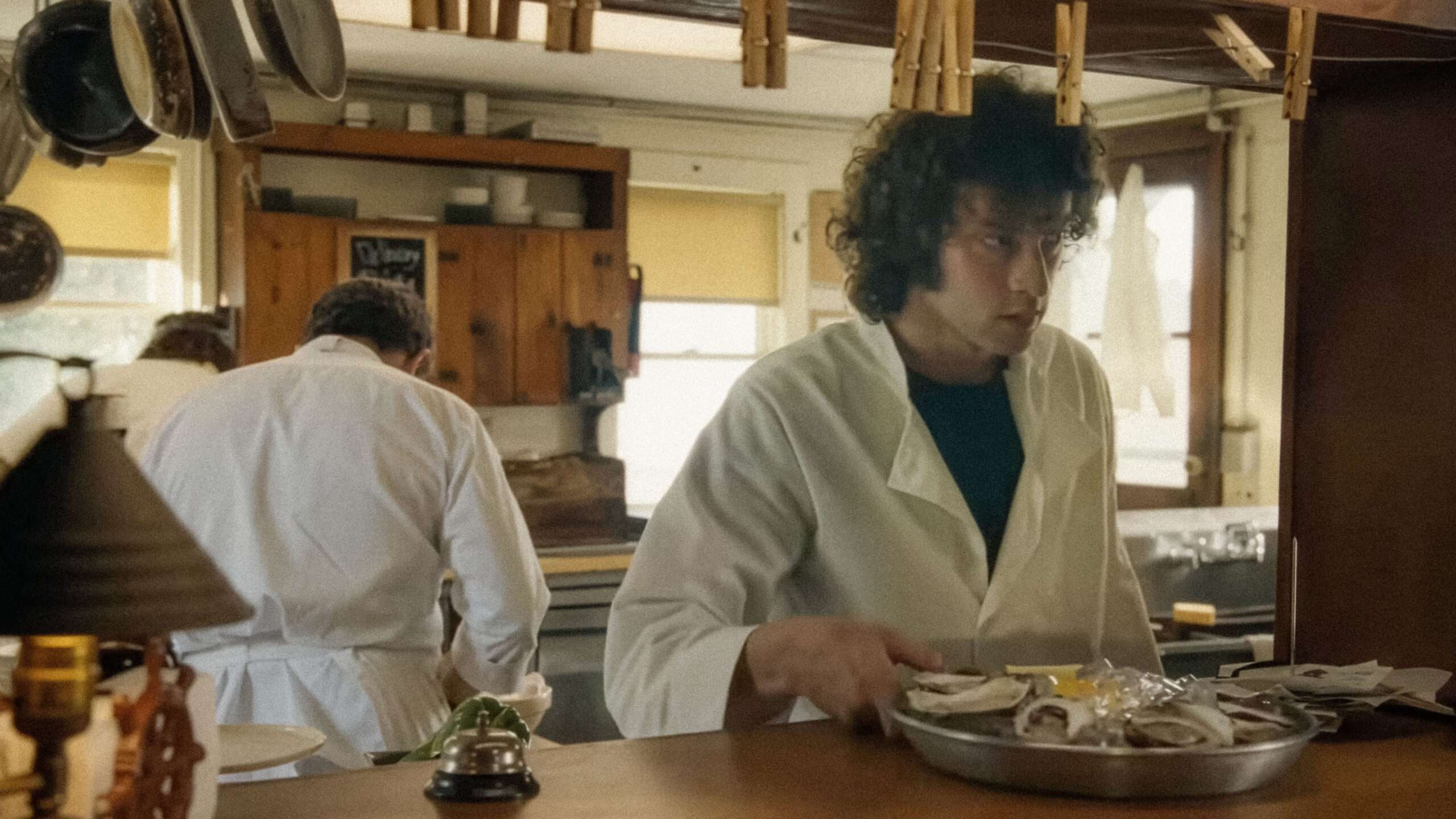
If you've followed the battle lines of the gender wars recently, one of the most heated fronts is over publishing. Men, the story goes, don't read anymore, especially not fiction, because women in publishing have kept younger white male authors out of the industry. What's left is an industry trading on the fumes of romantasy slop. Hope you like fairy porn, otherwise, it's old science fiction novels for you. Purveyors of this narrative tend to minimize the broader decline of reading as well as the vast increase in competition, across all mediums, for entertainment time. But there have been gendered shifts in who reads and writes books as the publishing industry has evolved. And there's certainly been plenty of discussion in outlets like The New York Times about why men have left the written word behind. Everyone interested in this discussion should watch Tony, a small, slight, reasonably effective biopic about a young Anthony Bourdain—a sort of origin story for a man who became a cultural legend. It's not a formal volley in the gender wars, nor does it frame itself as such. But it is, at heart, a portrait of a young man who, more than anything else, wants to be a writer. He's an impulsive, angry, moody, drunken mess, at least until he learns how to do something physical and economically useful with his life. The movie takes place over a single summer in Provincetown, Massachusetts, where a college-aged Tony Bourdain goes because of a girl. He's told his parents he won a writing fellowship, and he tells the girl too, even though he was rejected from the program. After he gets into a drunken brawl at a restaurant and gets his money stolen because he's passed out on the street, he ends up working in that very same kitchen, washing dishes just so he has a place to sleep. He lies to get that job, too, telling the restaurant's owner he has formal kitchen training when he doesn't. This Bourdain is mouthy, blustery, and arrogant. But he hasn't yet proved himself. Over the course of the summer, he gets his chance, starting from the bottom with stacks upon stacks of dirty dishes. Yet he becomes part of a kitchen team, a unit working together toward a single purpose, and he begins to make friends. He also gets into drugs, partly just to survive the punishing hours in the restaurant. He finds a mentor in the establishment's owner and kitchen boss, a man trained in culinary school who has no name except Chef, played by Antonio Banderas in a standout performance. Chef is stern, demanding, and sometimes angry, but also patient and tolerant of Bourdain's youthful mess. He doesn't set out to be a role model or a mentor in the traditional sense, but he becomes one anyway, showing Bourdain both the artistic and economic value of good food, and the exhausting thrill of working long, sweaty hours to make it. He makes a man of Bourdain, and a future chef. Tony is Bourdain's origin story. Bourdain, of course, would go on to become a celebrated New York chef, spending his 20s and 30s in some of the city's best restaurants and working his way up the culinary food chain. And yes, eventually, he became a writer, breaking out with an article in The New Yorker and then a book, Kitchen Confidential: Adventures in the Culinary Underbelly, that launched his even more celebrated career as a swaggering, opinionated, no-bullshit, intensely masculine explainer of food and food culture. But he didn't write that book, or become that man, until he'd been working in kitchens for 20 years, making something real and tactile in the world, and something real of his own life. He didn't write, in other words, until he had something to write about. Writing is a tough business, and there are no guarantees, especially when there's so much competition both on and off the page. But "do something real," "become an authority on something," and "gain confidence in yourself built on actual knowledge and experience" are pretty good pieces of advice for anyone who wants to write, or otherwise present themselves to the world. At the very least, that's what worked for Tony—sorry, Anthony—Bourdain.
Tony Is an Anthony Bourdain Origin Story
Full Article
Original Source
Read the full article at Reason →KhanList aggregates and links to publicly available news content. We do not host full articles from third-party sources. Always verify important information with original sources.