
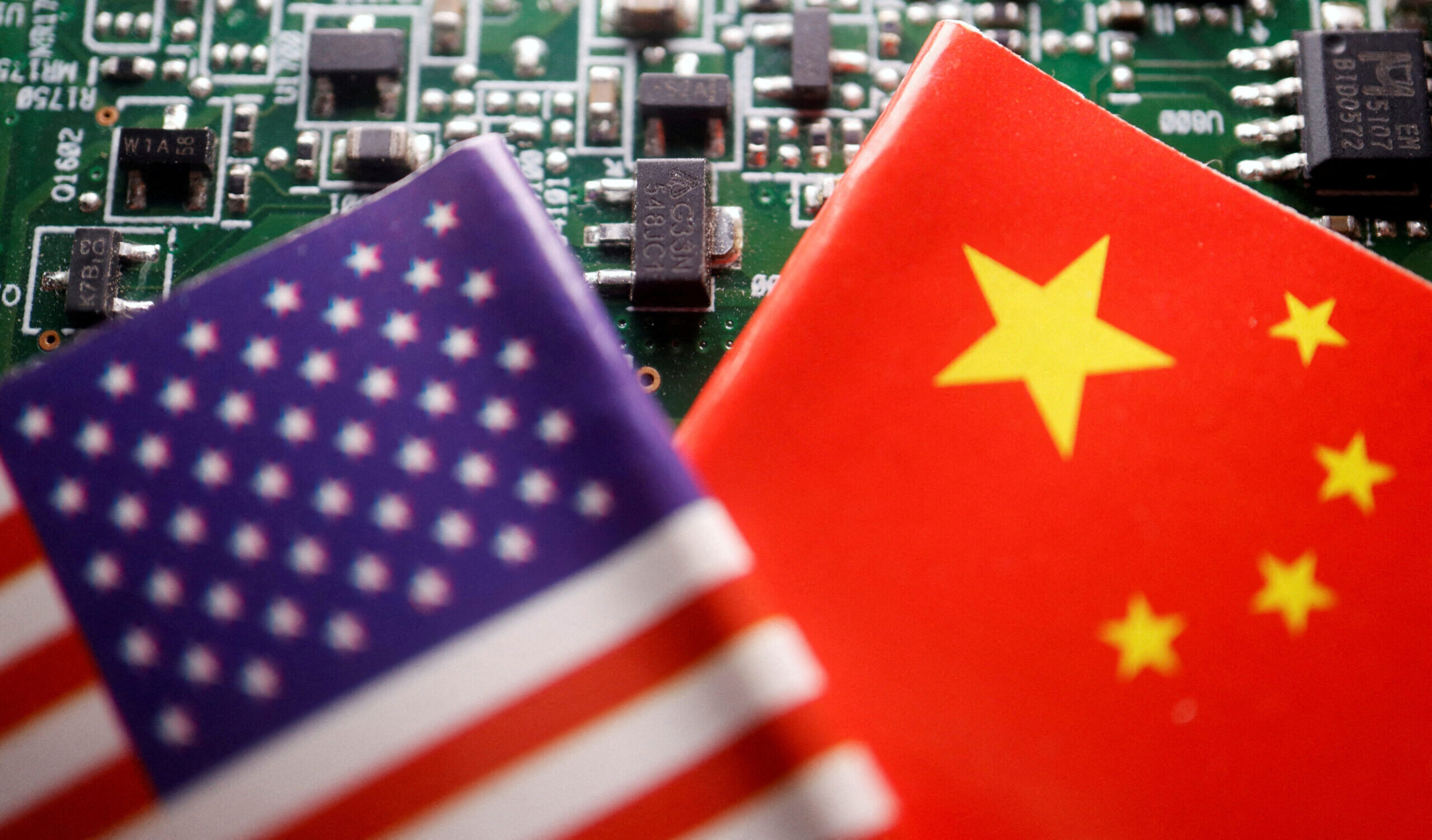
November 24, 2026 • 10:27 am ET Greg Francis, Trevor Rudolph The US government is changing how it provides foreign assistance in support of US technology at a risky moment: foreign governments are seeking alternatives to US technology, and China’s methods for financing its own offerings are becoming more opaque. This creates unique challenges for US firms and requires a smarter, data-driven approach to technology competition, alongside a renewed effort to build trust in US suppliers. The second Trump administration has shifted the emphasis from a largely grant-based approach to a finance-led model that is more focused on near-term sales. Most work around digital development and internet freedoms designed to build US-centric ecosystems has been discontinued; the US Digital Connectivity and Cybersecurity Partnership was stopped, as was funding for the State Department’s Bureau of Cyberspace and Digital Policy foreign assistance, and Congress has rescinded funding for the Public Wireless Supply Chain Innovation Fund, a program that promoted open, interoperable infrastructure and reduced dependence on Chinese suppliers. The new approach supports US technology sales and interests through traditional lending and export credits. It then draws on funding mechanisms such as the America First Opportunity Fund and National Security Investment Programs, alongside export financing from the Export-Import Bank and investment support from the US International Development Finance Corporation. To date, it is unclear how directed or thematic the new assistance will be, but the practical result so far is a stark reduction in overall support, even if grant-funded technology assistance has not disappeared. USAID-administered assistance declined by 23 percent in spending and 43 percent in new commitments from fiscal 2024 to fiscal 2025 alone. Anecdotal evidence suggests that the decline across 2026 has been much more severe. And while available data encompass assistance beyond technology, they clearly show the scale of the restructuring and the need to understand which market-building functions remain available to US firms. This shift in how the US uses its economic prowess comes at a challenging geopolitical moment. That is because competitors—take China—heavily fund the overseas deployment of their own technologies, often through state-backed lending, export credits, and financing packages that boost the uptake of nationally produced technology, severely challenging competing firms without comparable financing. Customers outside the United States also want, increasingly, an alternative to US suppliers across the technology stack, including cloud services, AI models, and supporting infrastructure. In one notable case, Vietnamese operators signed roughly $43 million in equipment deals with China’s partly state-owned telecommunications companies Huawei and ZTE last autumn, reversing years of alignment with Western suppliers. It should have been a wake-up call. This desire to hedge is driven by the significant trust gap stemming from fears that Washington—through executive orders, export control restrictions, or other instruments—could effectively activate a “kill switch” to terminate access to US technology. These fears were exacerbated by reports that Ukraine’s access to Starlink was throttled and by the nineteen-day termination of access to Anthropic’s Mythos 5 and Fable 5 models. Foreign leaders, German Chancellor Friedrich Merz among them, lament that substituting away from US technology comes at a price, believing also that “the costs of digital dependence are even higher”—a view echoed by the G77 several weeks ago and again by Brazilian President Luiz Inácio Lula da Silva as he explained his country’s goal of shifting trade away from Washington. In this respect, Merz may be articulating what many countries are already doing: Earlier this year, Microsoft reported uptake of China’s DeepSeek across various economies and found that many longstanding US trading partners were opting for alternatives to US AI. A Massachusetts Institute of Technology/Hugging Face study found that Chinese open-weight models led global downloads in the year ending August 2025, with a 17.1 percent share compared to 15.86 percent for US models. Better data for smarter competition To adapt to these funding and trust deficits, the United States must adopt a smarter, data-driven approach to its expenditures. Usefully, the new model relies on institutional partners, including private credit providers, whose underwriting and lending decisions depend on strict habits of rigorous assessment, due diligence, and measuring returns. That discipline must also be adopted by the US agencies meting out technology-related assistance to help them keep the playing field level among competitors. Such a culture change within parts of the executive branch will need to be supported by data showing what the US is competing against. Frustratingly, even data on China, a longstanding competitor of bipartisan concern, remain opaque about the full scale of state-backed technology financing, which involves a network of parastatal lenders, intermediaries, and financing arrangements. But broad figures exist, and they paint a picture that should underscore the need for better information: $2.2 trillion expended across some 30,000 projects in 217 countries between 2000 and 2023 makes China the world’s largest official creditor, with roughly $1.50 lent for every dollar Washington lends or donates. Predictably, the share of China’s cross-border acquisition lending into sensitive sectors, including technologies with national security implications, has risen from 46 percent to 88 percent over the last decade. Are there datasets Washington can use to better track Chinese technology investments? One useful source for tracking foreign investment in sensitive technologies and supply chains is China’s AI Exports database, developed by RAND and AidData at William & Mary. According to the William & Mary AidData team, funding for the database expired in 2022. Without continued access to such data, it is difficult for Washington to develop a coherent strategy for identifying, tracking, and competing with Chinese foreign technology investment. Are there models that US policymakers can use to identify export opportunities? At least one, courtesy of the International Trade Centre (ITC), which estimates a country’s unrealized demand for products in international markets. The ITC covers more than four thousand product groups—more than is needed to develop a strong plan for US technology exports—and currently provides estimates of export potential through 2031 using International Monetary Fund and United Nations population data. Although designed primarily for goods rather than cloud services or AI models, it offers a useful methodological starting point for identifying where export opportunities may emerge. Combining such analysis with US intelligence and corporate input could help policymakers and investors distinguish promising markets from those where financing or other barriers make competition less viable, helping every dollar of assistance go further. Based on the current landscape, US policymakers should focus on three immediate remedies: The State Department and relevant research institutions should restore funding for empirical data initiatives to track competitors’ technology investments and the financing terms offered to foreign buyers; The State Department’s overseas missions, working with the Commerce Department, should augment that analysis with granular, country-level market intelligence gleaned from US diplomatic posts and supplemented by commercial information provided (voluntarily) by businesses; and The Commerce Department and National Institute of Standards and Technology, working with relevant industry bodies, should lead the international standards community in formalizing consistent ways to compare technology offers, creating the empirical underpinnings of smarter lending and underwriting decisions. Together, these steps would help Washington identify where China-backed financing is most influential, where American companies can compete on commercial terms, and where targeted government support could make the difference. Rebuilding trust More current and granular data will tell the United States where to compete most effectively, but this is only a necessary, not sufficient, condition for success. It must be paired with advocacy for US technology’s competitive advantage. Stop-start exports in recent years demand a renewed effort to explain what US suppliers still do best, supported by government assurances that dispel foreign customers’ fears that US technologies may be here today but gone tomorrow. This includes a global reintroduction of “US Inc.” to explain why American goods and services are best-in-class, provide a sliding scale of sovereignty options, offer cybersecurity without creating dependency, ensure interoperability, and allow foreign partners a voice in decision-making, particularly with respect to AI governance. US business groups must support this effort by coaxing their members to explain the many effective ways that US firms earn their staying power: structurally (e.g., by installing local governance), commercially (e.g., by enabling data residency), and legally (e.g., by litigating rather than bending to unlawful demands to access data). Where industry groups can coordinate this messaging with foreign assistance programs, the message will land that much more effectively. It is only logical that the State and Commerce Departments collaborate with trade associations, such as the Information Technology Industry Council, to set up bilateral vehicles that demystify how US instruments that raise concerns about data sovereignty, like the CLOUD Act, work in practice. Such collaboration becomes even more persuasive when the United States can measure where competing technologies are being offered, on what terms, and what buying them will ultimately mean to trading partners in terms of sovereignty, security, and replacement costs. Friedrich Merz may hold firm to one view today, but with a little help in totting up the costs and risks, he may be persuaded otherwise tomorrow. Data-driven policy, shared transparently and paired with a clear explanation of the long-term benefits of US technology, will help buyers make informed choices. The way in which these opportunities are made available will in turn build trust, which, however ephemeral, remains the basis of any contract and the best closer of any sale. Greg Francis is executive vice chair of Access Partnership, a global consultancy for the innovation sector. Trevor Rudolph is a former White House official with responsibility for Cyber and National Security, a senior non-resident fellow at the Atlantic Council’s GeoTech Center and host of geopolitics talk show, Memo: Random. The GeoTech Center champions positive paths forward that societies can pursue to ensure new technologies and data empower people, prosperity, and peace. further reading Image: Flags of China and US are displayed on a printed circuit board with semiconductor chips in this illustration. (Florence Lo via Reuters Connect)
To compete with China on technology, the United States must address data and trust deficits
Full Article
Original Source
Read the full article at Atlanticcouncil →KhanList aggregates and links to publicly available news content. We do not host full articles from third-party sources. Always verify important information with original sources.