
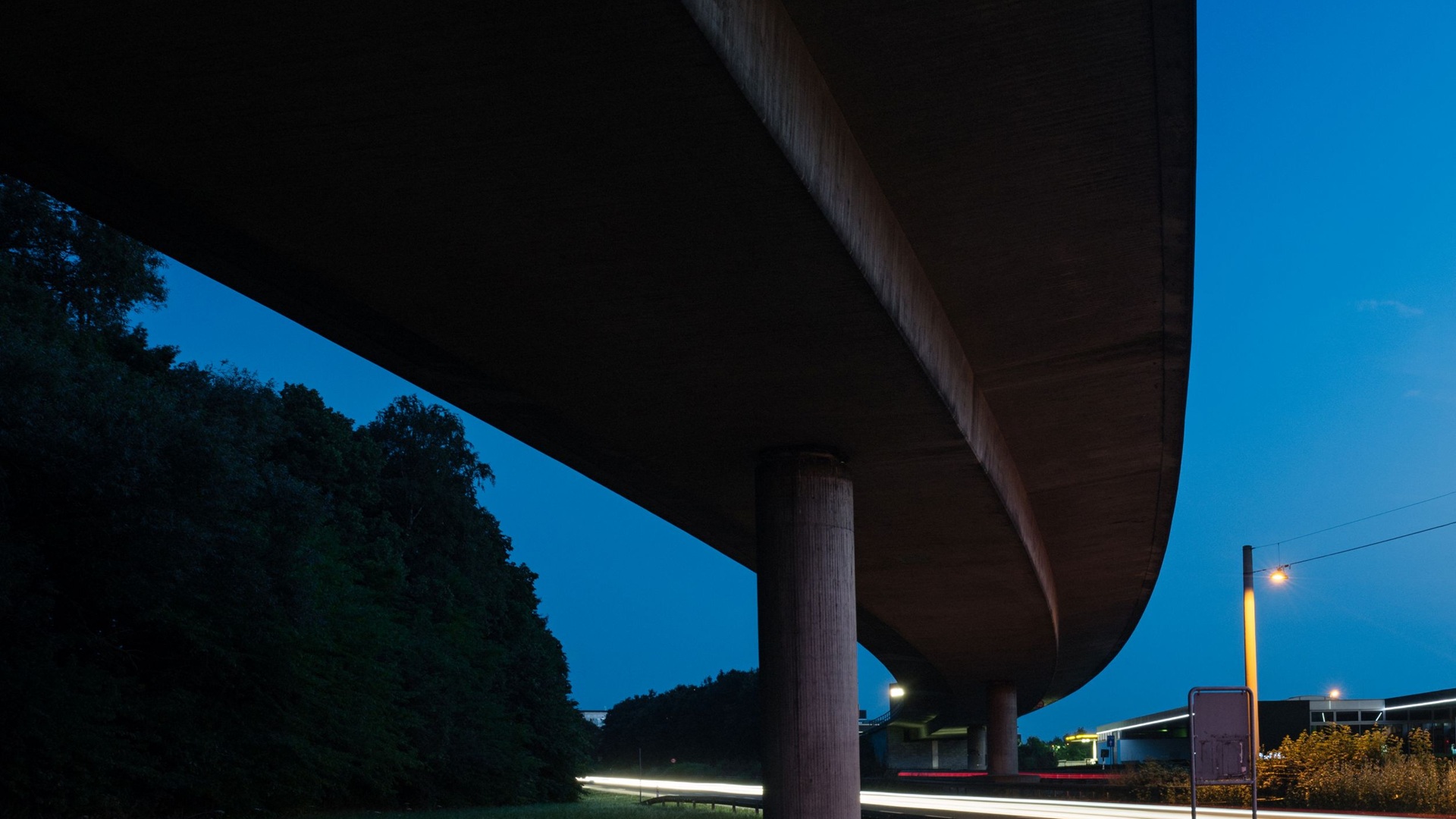
Many bridges in Germany are gradually reaching the end of their intended service life.Roberto SchirdewahnKey TakeawaysGerman researchers created an autonomous drone that could detect tiny, hidden cracks in concrete bridges.It can navigate dark, narrow spaces inside bridges, plan its own flight routes and store inspection data on an SD card.The drone is currently undergoing lab tests. A smart autonomous drone invented by researchers in Germany could reportedly make bridge inspections faster, safer and significantly cheaper by uncovering tiny, hidden cracks in the concrete. The unmanned aerial vehicle (UAV) was made by David Müller, MSc, and Raphael Dyrska, PhD, both research associates at Ruhr University Bochum, and their team. According to the scientists, the autonomous system can explore narrow, poorly lit areas inside bridge structures and scan concrete surfaces for damage. It uses AI to find hairline cracks that human inspectors might otherwise miss, and can even plan its own flight routes, while storing inspection data directly on a SD card. Its aim is to reduce the workload of bridge inspectors as aging infrastructure faces increasing pressure from traffic and environmental conditions. The system is currently undergoing lab tests. The team hopes to demonstrate its capabilities inside a real bridge. “Our drone can make inspections safer, faster, and more affordable,” Müller elaborated. Smarter bridge inspections Thousands of bridges in Germany require annual inspections, as many were built between the 1960s and 1980s and were not designed to withstand today’s traffic volumes. Heat, frost and other environmental factors can severely damage their concrete surfaces. Even though detecting cracks as early as possible is crucial to keeping them safe, conventional inspections can be both time-consuming and prone to human error. “Inspectors normally work on site with a clipboard and a camera. This approach is demanding and prone to error,” Patrick Herbers, MSc, a research assistant at the university, and one of the experts involved in the project, said. However, Herbers pointed out that their drone could address these challenges by accessing areas that are difficult or potentially dangerous for human inspectors to reach. Its compact size allows it to fly inside narrow, hollow sections of concrete bridges, where it scans the surrounding walls for cracks. At the same time, the device uses simultaneous localization and mapping (SLAM), a technology that enables autonomous machines to determine their position and map unfamiliar environments simultaneously. It can therefore find its way without external positioning systems. The next challenge The drone is currently being tested at the flight laboratory run by Ruhr University Bochum’s Chair of Control Engineering and Systems Theory. The facility is located at the Center for the Engineering of Smart Product-Service Systems (ZESS). The team now plans to test the technology inside a real bridge to see how well it performs in real-life conditions. “We want to demonstrate that our drone not only works in laboratory settings, but also in practice,” Marcel Neuhausen, PhD, a postdoctoral researcher at the Ruhr University Bochum’s Artificial Intelligence and Formal Methods Department, said. Despite potential concerns, the researchers insist that the drone will not replace human inspectors. It will rather collect inspection data and flag critical areas, and leave the final assessment of structural damage to qualified professionals. The research team believes this could speed up the digitalization of infrastructure inspections and address the growing shortage of bridge inspectors. “The number of bridge inspectors is decreasing, the demands are growing, and the bridges aren’t getting any younger,” Müller concluded in a press release. Get the latest in engineering, tech, space & science - delivered daily to your inbox.Based in Skopje, North Macedonia. Her work has appeared in Daily Mail, Mirror, Daily Star, Yahoo, NationalWorld, Newsweek, Press Gazette and others. She covers stories on batteries, wind energy, sustainable shipping and new discoveries. When she's not chasing the next big science story, she's traveling, exploring new cultures, or enjoying good food with even better wine.
Tiny autonomous drone hunts bridge cracks, plots own route, saves data on SD card
Full Article
Original Source
Read the full article at Interestingengineering →KhanList aggregates and links to publicly available news content. We do not host full articles from third-party sources. Always verify important information with original sources.