
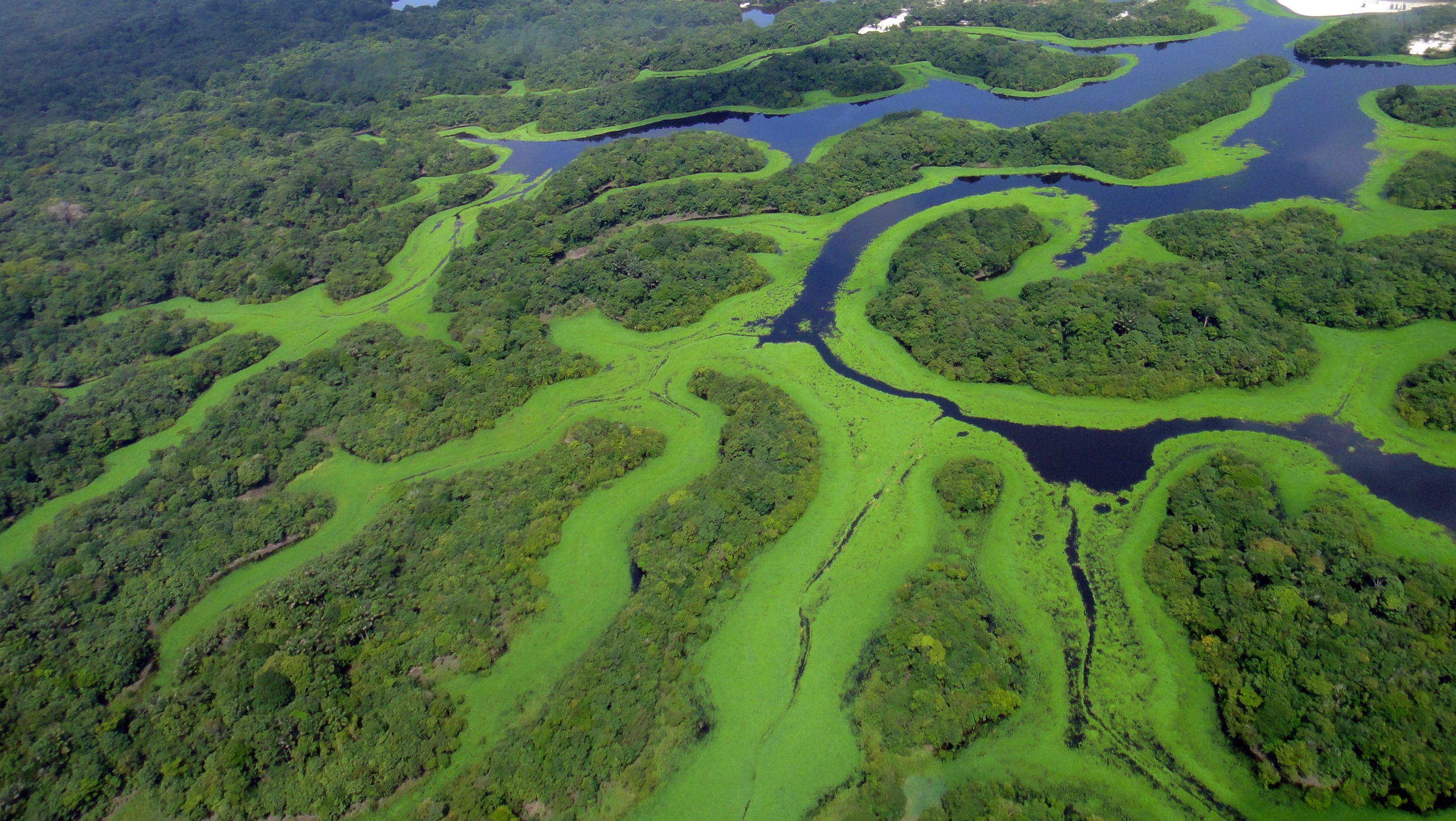
Under President Lula, Amazon deforestation dropped to a 10-year low, but experts warn a victory by Senator Flávio Bolsonaro could reinstate policies favoring agribusiness and mining.Enforcement rollbacks could have tangible effects on deforestation spikes, Indigenous land invasions, new illegal roads in reclaimed forests, and expanded river dredging that spreads mercury contamination.As neighboring right-wing governments reshape regional dynamics, the election will also determine Brazil’s stance in international climate diplomacy and its adherence to global environmental targets. As voters in Brazil prepare to head to the polls on Oct. 4, forest guardians and environmental analysts are bracing for a high-stakes presidential contest that could abruptly shift the nation’s environmental policy. The election presents a stark choice between maintaining current conservation strategies, experts say, or risking a policy U-turn that could reverse recent progress in lowering deforestation rates across the Amazon rainforest and other biomes. The election is shaping up to be a tight race between left-wing President Luiz Inácio Lula da Silva, seeking a fourth non-consecutive term, and Senator Flávio Bolsonaro, the eldest son of former far-right President Jair Bolsonaro (2019-2022), who was arrested and blocked from running for office after being sentenced in a failed coup d’ètat trial. According to polls, the two are very likely to face off in a runoff election scheduled for Oct. 25. Lula’s administration managed to drop deforestation in the Amazon to its lowest level in a decade — Brazil holds 60% of the biome. However, experts and conservationists warn that these gains are fragile, hanging by a thread that could snap if Flávio Bolsonaro brings back his father’s policies, favoring agribusiness and mining, and slashing Indigenous rights and support. In a detailed analysis of the candidates’ environmental platforms, the Climate Observatory, a prominent coalition of Brazilian civil society organizations, concluded that issues related to climate and the environment are receiving far less attention than necessary. The exception is Lula’s plans, where the only area of concern is energy — which was to be expected due to recent support from the president for oil drilling on the Amazon shore. “The platforms of the other candidates are all much weaker on the environmental agenda, with some being absolutely unacceptable,” Suely Araujo, public policy coordinator at the Climate Observatory, said in a Sept. 10 press release. President Luiz Inácio Lula da Silva during a campaign event in Curitiba, Brazil. Image courtesy of Ricardo Stuckert. Márcio Astrini, executive secretary of the coalition, warned that Flávio’s conservative interests could lead to a systematic rolling back of environmental protections, mirroring his father’s legacy. “Even under a government that is somewhat committed to combating deforestation, the task is already very difficult,” Astrini told Mongabay. “And when there are leaders who are on the opposite side of it, believing that a ‘chainsaw’ is right and that conservation laws are wrong, the situation becomes nearly impossible.” The domestic stakes are further heightened by a broader regional trend across South America. With conservative and far-right leaders recently taking power in neighboring Amazonian nations — including Peru, Colombia, Bolivia and Ecuador — and Venezuela under pressure from the U.S.’s interventionist fossil fuel agenda, analysts warn that Flávio Bolsonaro’s victory could forge a regional bloc prioritizing resource extraction over conservation. Such a “conservative alliance” would cover up to 95% of the Amazon without environmental leaders, potentially pushing the biome toward an irreversible tipping point. Opposition presidential candidate Flavio Bolsonaro, left, greets El Salvador’s Minister of Justice and Public Security Hector Gustavo Villatoro during a meeting, in Sao Paulo, Sunday, Aug. 30, 2026. Image by AP Photo/Andre Penner. Reclaiming the land The stakes are highly visible in the Xingu River Basin, located in the northern state of Pará. In the Apyterewa Indigenous Territory, the Parakanã people are slowly reclaiming lands that were once overrun by approximately 3,000 non-Indigenous invaders. During the Jair Bolsonaro administration, Apyterewa was Brazil’s most deforested Indigenous territory, losing an area nearly the size of Paris in 2022 alone. Following Lula’s inauguration in 2023, federal forces launched an eviction operation to dismantle the illegal settlement of Vila Renascer, which had grown to include bars, churches and gas stations. The crackdown dropped Apyterewa to 12th place in the deforestation rankings, with cleared areas falling to just 7.5 square kilometers (1,853 acres) in 2025. Today, families are moving back to their ancestral homes. “Our plan is to take care of our land, of the forest we still have left,” Wenatoa Parakanã, president of the Tato’á Association, which represents the Parakanã people, told Mongabay. But security remains fragile. Since the scale-back of federal security forces in late 2024, at least nine attacks have been registered in the territory. In December 2025, a hired cowboy of IBAMA, Brazil’s environmental agency, was killed in an ambush while removing illegal cattle, and Indigenous leaders survived shooting attacks in early 2026. “The invaders always tell us that they’re just waiting for this government to leave so they can come back,” Wenatoa said. A similar dynamic exists in the nearby Triunfo do Xingu Environmental Protection Area. There, a state-led enforcement campaign known as the Curupira Operation established fixed inspection bases in 2023, causing deforestation to plummet from 421.8 km2 (104,230 acres) in 2021 to 48.07 km2 (11,880 acres) in 2025. Yet, the area remains vulnerable. Another example of recent conservation efforts in Brazil is also seen in the Terra do Meio Ecological Station. In 2022, an illegal 42.8-km (27-mi) road branched off a road, pushing deep into the conservation unit to service an illegal gold mine. The road threatened to split the 26-million-hectare (64-million-acre) Xingu Socioenvironmental Corridor in half. For years, the Parakanã Indigenous people had their territory exploited by around 3,000 invaders. Image by Bruno Peres/Agência Brasil. In May 2023, responding to civil society alerts, federal agencies established a permanent control base on the Iriri River, shutting down the route. Today, satellite images show that the road has been completely swallowed by regrowing forest. But maintaining such victories requires constant vigilance and funding. Luísa Molina, an anthropologist with the Instituto Socioambiental (ISA), emphasizes that while removing occupiers is a concentrated military operation, tackling issues like illegal logging is a stealthy “guerrilla” conflict. “What’s lacking is enough staff and a budget that Congress keeps squeezing,” Molina said. This legislative effort is part of a broader, years-long push by Brazil’s agribusiness-dominated Congress to dismantle environmental safeguards. Since 2022, lawmakers have passed a series of major rollbacks, including stripping powers from the ministries of environment and Indigenous peoples in 2023. In 2025, Congress approved a sweeping environmental licensing reform — dubbed the “devastation bill” by activists — which allows strategic infrastructure projects to bypass complete environmental reviews if approvals are delayed. More recently, in May 2026, the legislative body pushed through a bill designed to bar the use of key satellite monitoring tools used by environmental agencies to track and block active deforestation. Brazilians will also choose lawmakers in the upcoming elections. A man walks down an unpaved stretch of highway BR-319 in the Brazilian Amazon between the cities of Manaus and Porto Velho on Aug. 10, 2018. Image by AP Photo/Fabiano Maisonnave. The infrastructure push Despite positive results on his environmental agenda, Lula also pushed for agribusiness infrastructure that has caused friction with local communities and conservationists — but these efforts could also secure votes and support for his re-election. The Lula administration has promoted the expansion of the Arco Norte logistics corridor, including roads, rail and waterways. In April 2026, the Brazilian government launched bids to pave critical sections of the BR-319 highway, a project long desired by locals that critics argue will push the Amazon toward a tipping point by enabling illegal side roads and increasing deforestation rates. To bypass environmental licensing requirements that previously blocked the project, the government utilized a legal loophole created by recent law reforms. This allows infrastructure work at existing facilities to proceed without full environmental impact studies, a strategy described as a bid to gain regional electoral support ahead of the October vote. Another controversial project is the dredging of the Madeira River waterway. While dredging keeps soy barges moving during extreme droughts, it threatens local riverine livelihoods. Scientists say mercury levels are elevated in the Madeira’s riverbed and in fish like the pirarara (Phractocephalus hemioliopterus). Miners use quicksilver mercury to bind gold, then dump it into the river. Local communities report they were never consulted about the waterway concession and express concerns about safety following fatal barge crashes. Despite concerns regarding Lula’s infrastructure projects, riverine residents fear a right-wing return even more. “The Bolsonaro family’s four years in power were very complicated,” Luciomar Monteiro da Costa of the Pastoral Land Commission (CPT) told Mongabay. “So, they’re afraid things will go back to the old ways.” Residents at Paraíso Grande riverine community, located 30 minutes by fast boat from the city of Humaitá, say the risk of accidents with big convoys increases during the Madeira River’s high-water season, when its banks are flooded.. Image by Karla Mendes/Mongabay. Frozen diplomacy These anxieties also reflect on the future of funding for conservation efforts beyond government actions. Under Lula, the Amazon Fund quadrupled its annual financing, rising to 1.3 billion reais ($233 million) in the 2023–2025 cycle. The fund, which currently has 6.7 billion reais ($1.2 billion) available, acts as a crucial lifeline for community-based forestry, supporting projects like the babassu coconut breakers in Tocantins and sustainable pirarucu fish management in Amazonas. Grantees remember 2019 vividly, when Jair Bolsonaro froze the fund immediately after taking office. “Today, a suspension would have a much more serious impact because the climate system is under greater stress,” Rayandra Araújo, a climate policy specialist at the Talanoa think tank, told Mongabay. Caution is already spreading. According to the environmental news site Capital Reset, at least five donor countries are delaying their contributions to the newly launched Tropical Forest Forever Facility (TFFF) until the election results. COP30 President André Corrêa do Lago greets Brazil’s Indigenous chief Raoni Metuktire at the Blue Zone at the 30th Conference of the Parties (COP30). Image courtesy of Ueslei Marcelino/COP30. A policy shift risks disrupting international climate targets and Brazil’s role in climate diplomacy. Regulatory rollbacks could invalidate traceability efforts for foreign buyers and jeopardize Brazil’s updated national climate commitments to cut emissions by up to 67% by 2035, along with Brazil’s pledge to eliminate illegal deforestation by 2030, which both depend on the continuity of federal enforcement, experts say. Beyond hurting Brazil’s nature and diplomacy, analysts warn that a Flávio Bolsonaro presidency could put Brazilian agribusiness at risk of losing access to European markets if the country fails to control deforestation. Slated to take effect at the end of 2026, the European Union’s Deforestation Regulation (EUDR) requires exporters to verify that commodities like soy and cattle are not sourced from land cleared after 2020. Brazil is the world’s largest exporter of both soybeans and beef. Banner image: Aerial view of Anavilhanas National Park in Amazonas state. Image by Lincoln Barbosa via Wikimedia Commons (CC BY-SA 3.0). Brazil election could put 95% of the Amazon under right-wing governments FEEDBACK: Use this form to send a message to the author of this post. If you want to post a public comment, you can do that at the bottom of the page. Credits Topics
Tight Brazil election challenges fragile gains for Amazon conservation
Full Article
Original Source
Read the full article at News →KhanList aggregates and links to publicly available news content. We do not host full articles from third-party sources. Always verify important information with original sources.