
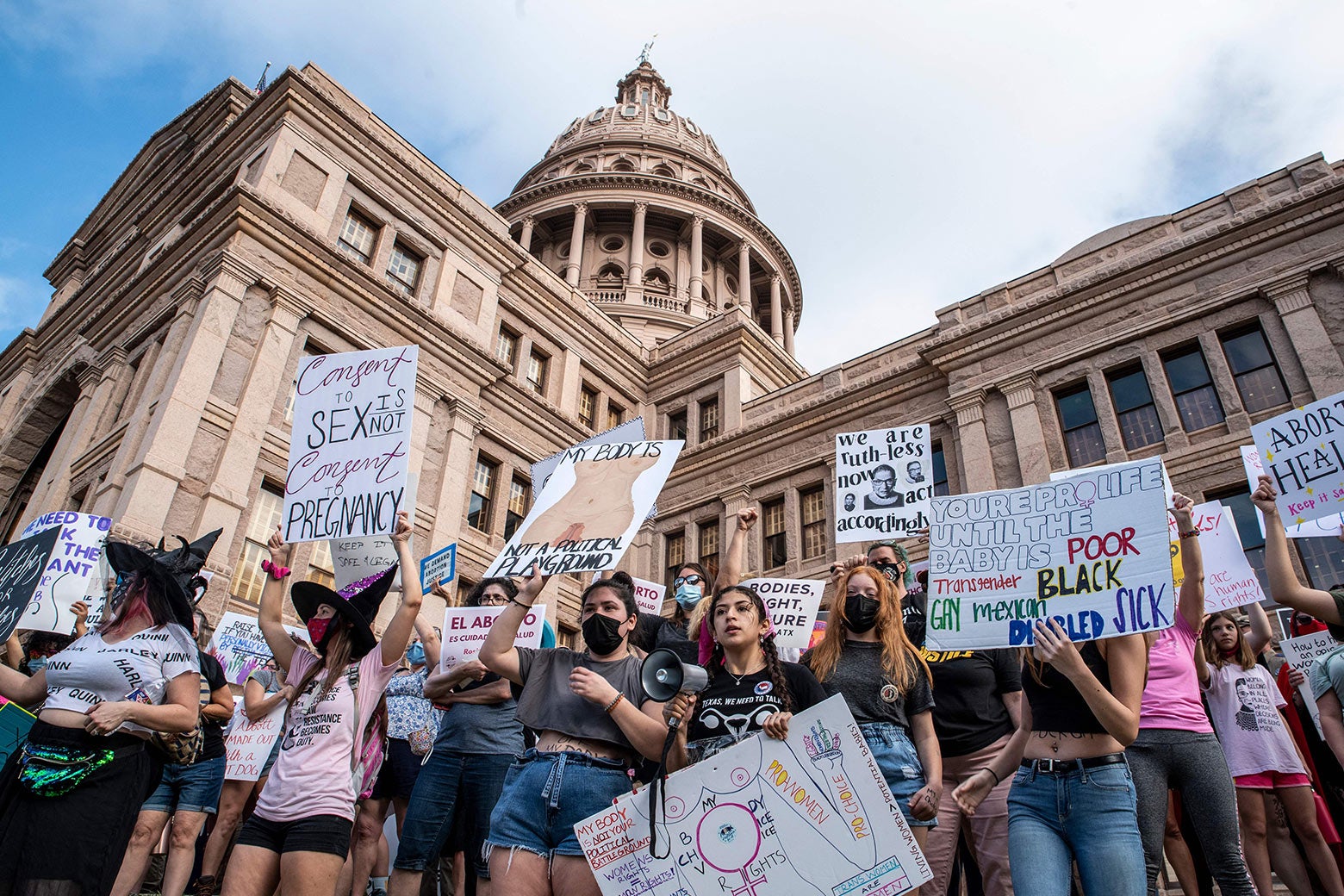
Jurisprudence The arguments against this lawsuit are Kafkaesque. Sergio Flores/AFP via Getty Images Sign up for Executive Dysfunction, a weekly newsletter that highlights one under-the-radar story about how Trump is changing the law—or how the law is pushing back—and keeps you posted on the latest from Slate’s Jurisprudence team. If abortion laws are killing women, will anyone be held accountable? That’s the question at the heart of a case filed on behalf of Tierra Walker, a Texas woman who died of pregnancy-related medical complications in 2024. Walker was suffering from several major health conditions, including diabetes, when she learned she was pregnant. Preeclampsia, a potentially fatal condition involving high blood pressure in pregnancy, had led to the stillbirth of Walker’s twins several years earlier, and she was worried that it would be unsafe for her to continue another pregnancy. She raised her concerns to her medical team, asking if she could end her pregnancy, but she was told that there was nothing wrong with her baby and turned away. As her pregnancy continued, Walker’s health deteriorated. She suffered repeated seizures, was diagnosed with a potentially fatal blood clot, and experienced wild swings in blood pressure. Time and time again, she asked for an abortion. Her doctors responded with the same reassurances about her baby, and the same refusals of her request. Four months into her pregnancy, Walker’s teenage son discovered her unresponsive in bed. She died of complications related to preeclampsia at only 37-years-old. Her family’s lawsuit against state officials and medical providers seeks basic accountability for what happened to her. Emergency abortion access has been a flashpoint since the Supreme Court overruled Roe v. Wade in 2022. The Biden administration launched lawsuits designed to establish that a federal law passed in 1986 to prevent patient dumping, the Emergency Medical Treatment and Labor Act, required physicians to provide abortion as stabilizing treatment. While the Trump administration has withdrawn the Biden EMTALA guidance and dropped the previous administration’s lawsuit, an Idaho hospital has continued its own EMTALA suit. Reproductive-rights litigators, meanwhile, have challenged the narrow medical exceptions written into to abortion bans, seeking to clarify that they give doctors discretion to protect patients’ health and lives, and establishing that the laws are unconstitutional if they do not offer emergency medical access. Walker’s case is unique for two reasons. First, it quite literally puts on trial everyone whose actions led to Walker’s death. To date, conservatives have responded to abortion-related tragedies by pointing the finger elsewhere. When another group of Texas women challenged the constitutionality of the state’s abortion bans, Republicans blamed the women’s plight on doctors who didn’t understand the law. State medical organizations, in turn, blamed lawmakers for writing ambiguous laws that offered no guidance about when doctors can intervene. Walker’s case argues that all of these parties bear some responsibility. Her lawyers argue that state officials, including Texas Attorney General (and GOP Senate candidate) Ken Paxton, pursued a course of conduct that they knew would force women to sacrifice their lives and health, even as the state’s constitution is understood to protect a right to life. But Walker’s estate also takes aim at state medical authorities and the medical team that treated her, arguing that they knowingly denied her life-saving care. More than any case to date, Walker’s will tell a new story about how the tragedy of a post-Dobbs America has multiple villains. Second, and even more revealingly, the suit takes seriously antiabortion ideas that the state and federal Constitution protect a right to life. Since the 1960s, abortion opponents have pointed to the Due Process Clause of the Fourteenth Amendment in arguing that state laws cannot deprive anyone (including the unborn) of life without due process. Walker’s estate argues that if the state or federal Constitution protects such a right, it must also apply to pregnant women. The U.S. Supreme Court has never explicitly recognized a right to life, under the Due Process Clause or otherwise, but several decisions hint at the importance of protecting human life, including those multiple precedents end-of-life decisions. The Texas Supreme Court has suggested that the state’s constitution also protects a right to life. Walker’s estate asks why her life was worth so much less to the defendants than her pregnancy was. The suit also raises a number of other claims that will have major implications. Walker’s estate argues that doctors’ failure to treat her constituted medical malpractice, violated the Americans with Disabilities Act by withholding care that would have been available to people with conditions unrelated to pregnancy, and violated EMTALA. The suit may face a number of obstacles. Some of the state defendants will probably claim immunity from suit. Qualified immunity shields government officials from consequences unless their conduct violates a “clearly established” statutory or constitutional right. Ironically, given some of their positions in other cases, Paxton and his co-defendants will likely assert that the existence and scope of a right to life are anything but clear. Walker’s treatment team will claim that their hands were tied by criminal abortion bans—and that EMTALA guarantees nothing for pregnant patients. Molly Duane of Amplify Legal, the lawyer who is representing Walker’s estate, told me that she expects the doctors to blame the state and the state to blame the doctors. All the defendants will also likely blame Walker for her own condition, given that she suffered from a constellation of issues before becoming pregnant. These arguments are Kafkaesque. Walker’s conditions were under control until she got pregnant, and preeclampsia is pregnancy-related. If Tierra Walker can be blamed for her own death, it’s hard to see what kind of pregnancy-related condition could justify an abortion. But still it’s far from a sure thing that Walker’s estate will prevail. Nevertheless, even litigating the case serves a powerful purpose. It is one thing to report on what happens to women like Tierra Walker. It is quite another to put on trial those deemed responsible. Whatever happens in court, Walker’s case will tell a powerful story about the experience of pregnancy in America—and ask both courts and voters if anyone should be held to account. Jurisprudence Supreme Court Texas Judiciary
Tierra Walker Died from Texas’ Abortion Ban. Will Anyone Pay a Price?
Full Article
Original Source
Read the full article at Slate →KhanList aggregates and links to publicly available news content. We do not host full articles from third-party sources. Always verify important information with original sources.