
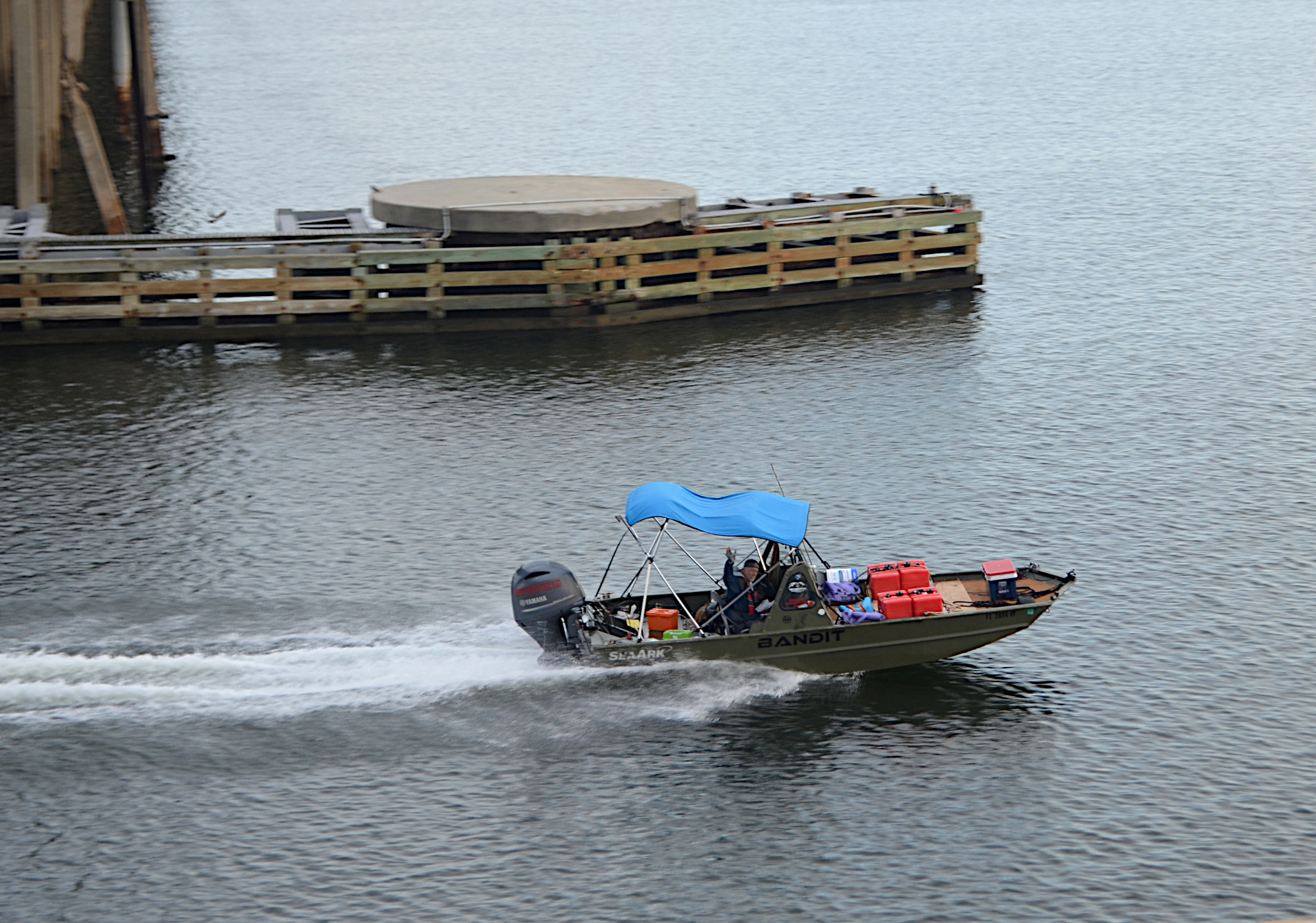
(CN) — In September, Captains Dustin Kidd and Marc Crutcher embarked on a challenge that has become increasingly popular — and increasingly controversial.They planned to boat the Great Loop, a collection of mostly inland waterways that coils through the East Coast and Midwest with extended routes into Canada and the Bahamas.The Great Loop goes through some of the most famous bodies of water in the country: the Mississippi and Hudson rivers, the New York canals, the Great Lakes, the Gulf Coast and the Atlantic Intracoastal Waterway. Designed for commercial boat traffic, it’s also been embraced by recreational boaters as a way to sightsee through the United States.Unlike some recreationists, who might spend months or even a year peacefully sailing through locks, rivers and lakes, Kidd and Crutcher aimed to complete the Great Loop as quickly as possible.It’s a challenge that’s exploded in popularity in recent years, angering leisure boaters and drawing warnings from water officials.Their boat “White Lightning” was equipped with two 200-horsepower motors, giving them more power than most cars.They carried extra gas tanks, radar and night vision equipment and a Starlink Mini to connect to the internet. Their cooler was full of deli sandwiches from Southern grocery chain Publix, along with wraps and military rations assembled by Crutcher.On Sept. 6, they departed from Kentucky Dam in Western Kentucky, heading south on the Tennessee River and the Tenn-Tom Waterway to the Gulf of Mexico.They cut across Florida on the Okeechobee Waterway, then headed up the East Coast to the Hudson River. Canals led them to the Great Lakes — and after passing through Chicago, they followed the Illinois, Mississippi and Ohio rivers back to Kentucky Lake.Captains Dustin Kidd, left, and Marc Crutcher, right, are interviewed on Fox 32 Chicago as they approach Peoria, Illinois, near the end of their record-breaking Great Loop journey. (YouTube screenshot via Courthouse News)Traveling more than 4,200 miles along this shorter, all-U.S. route, the pair returned 11 days, 21 hours and 51 minutes later. It was the fastest-ever documented circumnavigation of the Great Loop.“I tell people that the speed record is all about strategy — not about speed,” Kidd said in a phone interview on the day they completed the run. “It’s not for the weak-hearted.” The boat had no sleeping quarters. “There’s about a million things that could go wrong,” from bad weather and canal locks to construction and obstructions along the route.Speedruns like this exploded in popularity last year, when Texas boater Robert Youens completed a solo circuit of the Great Loop in a record-smashing 19 days, 13 hours and 1 minute.His attempt garnered hundreds of thousands of views on social media, helping turn a sleepy cruising route into a spectator sport.These Great Loop races are now so popular that there’s now even a website to track attempts. Its owner, who asked not to be named, said his site got more than 100,000 visits this year.The owner said he started the site “just for fun” last year after following Youens’ record-breaking journey. Before that, “I didn’t even know what the Great Loop was." He put these attempts in the context of people’s love for a race: “As soon as we had boats or cars, we’ve been racing them.”While these so-called speed loopers have drawn many fans, they’ve also prompted harsh criticism.The New York State Canal Corporation says attempts to race through its section of the Great Loop are illegal. Reached for comment, a spokesperson said it’s “akin to trying to break speed records on roadways.”The corporation runs more than 500 miles of New York canals, including the famed Erie Canal.The Erie is more than 200 years old and not built for these races, the spokesperson said. And with lots of kayakers and paddleboarders out on the water, “it is not safe to have motorized vehicles passing them at high speeds.”The Great Loop spans more than 4,000 miles of rivers, canals and coastal waterways. A longer route also goes through the Bahamas and parts of Canada. (America's Great Loop Cruisers Association via Courthouse News)Then there’s Kim Russo, director of the America’s Great Loop Cruisers’ Association, a recreational group for people who boat the circuit.In July, as Youens attempted a new record-breaking attempt, Russo said it was impossible for boaters to continue chasing speed records while remaining safe and courteous to other boaters. She said such risks were inherent to the goal, since aiming for shorter times meant going faster and minimizing stops.“We’ve seen serious mechanical failures and weather decisions that raise concerns,” she wrote in a social media post. “I have tracked boats traveling as much as three times the posted speed limit.”To cut down on total times, crews also sometimes minimize how much sleep they get.“Fatigue and safe boating simply don’t mix,” Russo wrote. “It’s only a matter of time before someone is seriously injured.”Youens has been blunt about the risks he helped popularize.In 2025, he fell asleep at full throttle in a remote stretch of South Carolina and ran aground. He posted about the incident and ultimately decided to set minimum sleep rules for himself.Youens made another attempt this year in a duck-hunting vessel. In a phone interview, he described it as a “dumbass boat [that] ain’t designed to cross oceans.” It began taking damage in the Gulf of Mexico and started falling apart near Erie, Pennsylvania. As they took on water “pretty darn big time,” Youens and his partner abandoned their run.“There’s a lot of sensitive and historic waterways along the route that are easily damaged,” Youens said in a phone interview. He has mixed feelings about the craze he helped start.“I don’t want that to be my legacy,” he said, “that Robert Youens started everyone going out and disobeying the law and tearing up our historic and fragile waterways.” For others who want to attempt the race, he has a simple message: “You have a responsibility for not only yourself but all the other boaters on the water and all the other rescue groups to do it safely.”Marc Crutcher and Dustin Kidd celebrate a successful Great Loop speed record in September. They finished the 4,000-plus-mile route in just under 12 days. (Dustin Kidd via Courthouse News)Two weeks before Kidd and Crutcher returned to Kentucky Dam, another record was made.Martin Bysiewicz, owner of the Tampa, Florida-area company Fast Marine, beat Youens’ 2025 record for fastest solo run.Departing from Tampa on a supercharged jet ski and returning on Sept. 4, his trip lasted 18 days, 5 hours and 23 minutes, beating Youens by more than a day. He was joined by Steven Fulladosa on a support vessel, also a jet ski.Bysiewicz’s journey was grueling. “There were a few days [when] I had zero sleep for two, three days at a time,” he said in a phone interview.Superchargers, drive shafts, jet pumps and a wiring harness all failed. In the Mississippi River section, he hit a boulder at around 30 or 40 mph, ripping a 4-foot hole in his hull. The jet ski started sinking before Bysiewicz and Fulladosa patched it with waterproof sealant tape and fiberglass, finishing the repair work at a shop late that night.Other challenges came from authorities. Traveling through the New York canal system, Bysiewicz estimated he lost almost four days.The canal’s locks were operating under a strict no-wake policy, which prohibits water vessels from creating waves behind them and thus requires boaters to go at idling speeds. These rules have been increasingly enforced amid speed record attempts.On Aug. 24, as Bysiewicz jetted through the historic Erie Canal, the New York State Canal Corporation issued a timely notice to mariners.It reiterated that all boaters must follow posted limits on the canal system “to protect public safety, reduce wake-related damage and ensure smooth, efficient navigation.” Violators can face fines and delays.The Fast Marine team led by Martin Bysiewicz, left, are seen entering the Hudson River in New York City in August as Bysiewicz set solo and personal watercraft speed records. (Martin Bysiewicz via Courthouse News)Besides speed limits and no-wake rules, Great Loop boaters have to abide by other safety regulations and local laws.At Pickwick Landing Dam on the Tennessee River, officers blocked Bysiewicz from night-riding on his jet ski. Bysiewicz said that “had we not run into any issues,” he thought a jet ski could make the trip in under 12 days — a week shorter than the record he set this year.Matt Majors, an officer of the Tennessee Wildlife Resources Agency, said boaters are welcome to experience the Great Loop however they like but must abide by all local rules.“Most [personal watercraft] don’t come with navigation lights,” Majors said. “That’s why we have laws that prohibit night-riding.”The Great Loop was an asset to the Volunteer State, Majors said — and a great way to explore the world from a different perspective.“In my mind, it shows how connected we are,” he said. “You can go anywhere from right here in great old Tennessee if you put a boat on the water.”Although racers like Bysiewicz have gained a following, the majority of the Great Loop’s recreational boaters still take it slow.Cinda and Mark Boomershine of Atlanta spent 15 years planning their own trip on the Great Loop, eventually embarking from Stuart, Florida, in May 2024. They ultimately lived for 15 months on a 56-foot yacht with their kids, then 8 and 10, documenting their journey on their YouTube channel.In a phone interview, Cinda explained they’d waited until their children were strong swimmers and old enough to be useful at locks. “We didn’t think it was responsible or safe to do the loop with babies or toddlers,” she said.The Great Loop includes the famed Erie Canal, pictured here at a lock near Niagara Falls. (Leonard G./Wikimedia via Courthouse News)On the journey, the Boomershine children learned new skills, visited historic sites and met other boaters. Maybe best of all, living in close quarters made the family “super tight.”Boaters like the Boomershines can take a dim view of speed loopers. They were controversial, Cinda said, “mainly because they don’t always obey the laws.”“In their attempt to set a personal record, their bad behavior could impact all future loopers,” she wrote in an email.Despite the controversy, racing through the Great Loop remains a thrilling endeavor for those seeking glory or even just fun.On his business page for Fast Marine, Bysiewicz has gained tens of thousands of followers. Just this month, he signed a book deal for a memoir of his experiences. The cover art shows Bysiewicz and two friends jet skiing past the Statue of Liberty, under the title “All or Nothing! Complete Decimation of the World Record: The Fast Marine Great Loop Story.”Criticisms and official rules have not closed the book for Bysiewicz. He said he wants another run, this time in a different type of boat to minimize delays and maximize speed.“I think next year I’ll attempt this again,” he said. “I’ll do it on a jon boat this time, so that I can go ahead and run day and night without any legal issues.”Subscribe to our free newslettersOur weekly newsletter Closing Arguments offers the latest about ongoing trials, major litigation and rulings in courthouses around the U.S. and the world, while the monthly Under the Lights dishes the legal dirt from Hollywood, sports, Big Tech and the arts.Additional Reads
Thrill seekers love this long-haul boat race. Critics say it’s a public nuisance
Full Article
Original Source
Read the full article at Courthousenews →KhanList aggregates and links to publicly available news content. We do not host full articles from third-party sources. Always verify important information with original sources.