
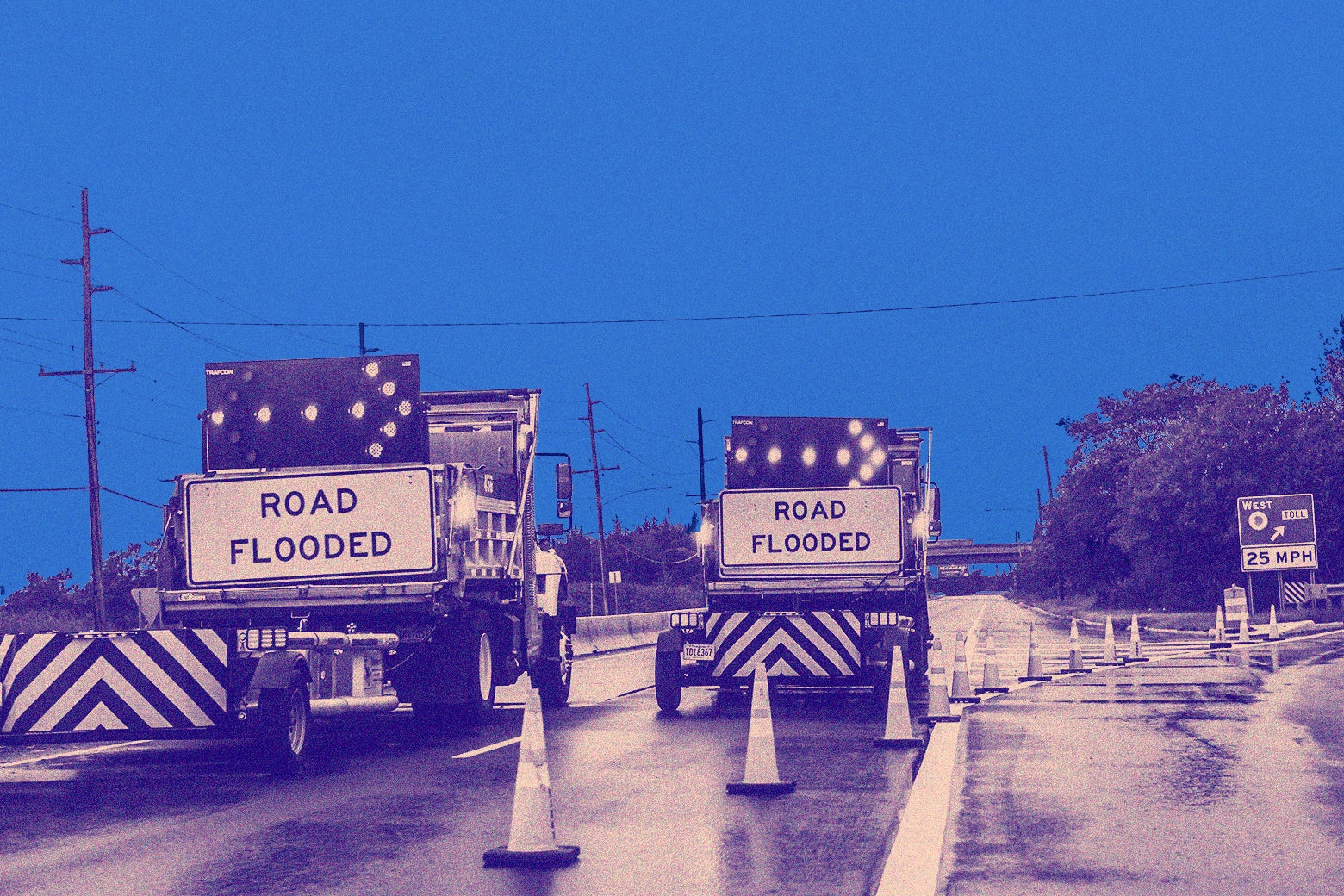
The Slatest This Weekend’s Storm Was a Preview of What’s to Come Photo illustration by Slate. Photo by Matthew Hatcher/AFP via Getty Images. This story is adapted from the Slatest newsletter. You can sign up here to get it in your inbox every day. If you live along the East Coast, you’ve probably had a damp few days. Storms, like the nor’easter that dumped rain from North Carolina to Maine over the weekend, happen. But a phenomenon known as El Niño may have made this one more likely, and it’s threatening to fuel other extreme weather around the world for months to come. What is El Niño, and why is it called that? El Niño is a climate pattern that periodically warms the Pacific Ocean. It got its name from South American fishermen, who noticed in the 1600s that warmer waters peaked every few years around Christmastime and dubbed the pattern El Niño de Navidad (“the Christmas Child” in Spanish). These days, scientists track El Niño using satellites and sensors. And they forecast that this year’s event could be the strongest on record, spiking sea temperatures far above normal. Was this week’s storm related to El Niño? We can’t know for sure. El Niño is a complicated event, and linking individual weather events to broader climate patterns can be tricky. But as the New York Times explains, El Niño shifts the Pacific jet stream south, which appears to help nor’easters form off the southeastern U.S. and travel up the Eastern Seaboard. Flooding—which ravaged coastal towns and my basement over the weekend—is also more frequent, in part because warmer water helps strengthen storms. So is El Niño just a fancy term for climate change? Not at all. El Niño is a naturally occurring phenomenon. But it does interact with climate change. Scientists still debate whether greenhouse gas emissions have made El Niño stronger. But even if they don’t, El Niño acts like a force multiplier in an already-warming world. Where else is El Niño being felt? Warmer seas help spawn Pacific hurricanes, which have already battered Hawai‘i this year. As I write this, rhyming storms named Polo and Nolo threaten to bring flooding to Hawai‘i and Mexico. What does El Niño mean for the rest of the world? In a cruel twist, a phenomenon that can inundate the Eastern U.S. can fuel heat, fire, and drought elsewhere. Over the next few months, Australia and Brazil face a heightened risk of heat waves. Indonesia may suffer additional wildfires. In parts of Africa, Central America, and India, drought is already strangling crop yields and threatening famine. Some scientists project that El Niño’s effects could kill 451,000 people worldwide by February. What can we do about it? El Niño began long before humans started burning fossil fuels. But think of this year’s event as a postcard from the future. The disruptions it could wreak on everything from air travel to farming preview what a normal year may look like decades from now if carbon emissions continue unabated. As the climatologist Jeffrey Shaman writes in the Times, El Niño offers governments a chance to prepare, whether by funding firefighters or creating warning systems for residents during heat waves. Most importantly, it offers all of us a choice: Is this really the future we want? Tolga Akdoğan Whether you’re stuck inside like me or just hoping to pass the evening without dooming about potential climate catastrophe, try these recommendations on for size. A buffet of bite-size videos: TikTok is awash in vertical dramas, a new form of entertainment intended to be watched exclusively on your phone. Episodes are chopped up into two-minute dopamine hits, with endless cliff-hangers and plot twists to keep viewers tuned in. Steffi Cao argues that we should be wary of the algorithm that incentivizes mindless scrolling, but there is nonetheless something charming about the wacky human storytelling that drives these videos. A freaky new TV season: If vertical dramas aren’t your thing, there are plenty of other boundary-pushing shows to watch. J. Bryan Lowder writes that, after several years of duds, Ryan Murphy’s 13th season of American Horror Story has “finally tuned back into the mix of camp and the grotesque that made the golden era so good.” Some tech advice: If you’ve contemplated trading in your smartphone for a dumbphone, listen to the latest episode of ICYMI before taking the plunge. Host Kate Lindsay talks with writer Stephanie Murray about the unexpected challenges of relying on a low-tech device in a high-tech world. Some wordplay to end your day: What’s a six-letter word for a “facility whose workers are always trying to get in everyone’s genes”? What’s an 11-letter word for “weapons once nicknamed ‘California toothpicks’ ”? Test your skills with today’s crossword. OK, that’s all for me today. Have a great night!
This Weekend’s Storm Was a Preview of What’s to Come
Full Article
Original Source
Read the full article at Slate →KhanList aggregates and links to publicly available news content. We do not host full articles from third-party sources. Always verify important information with original sources.