
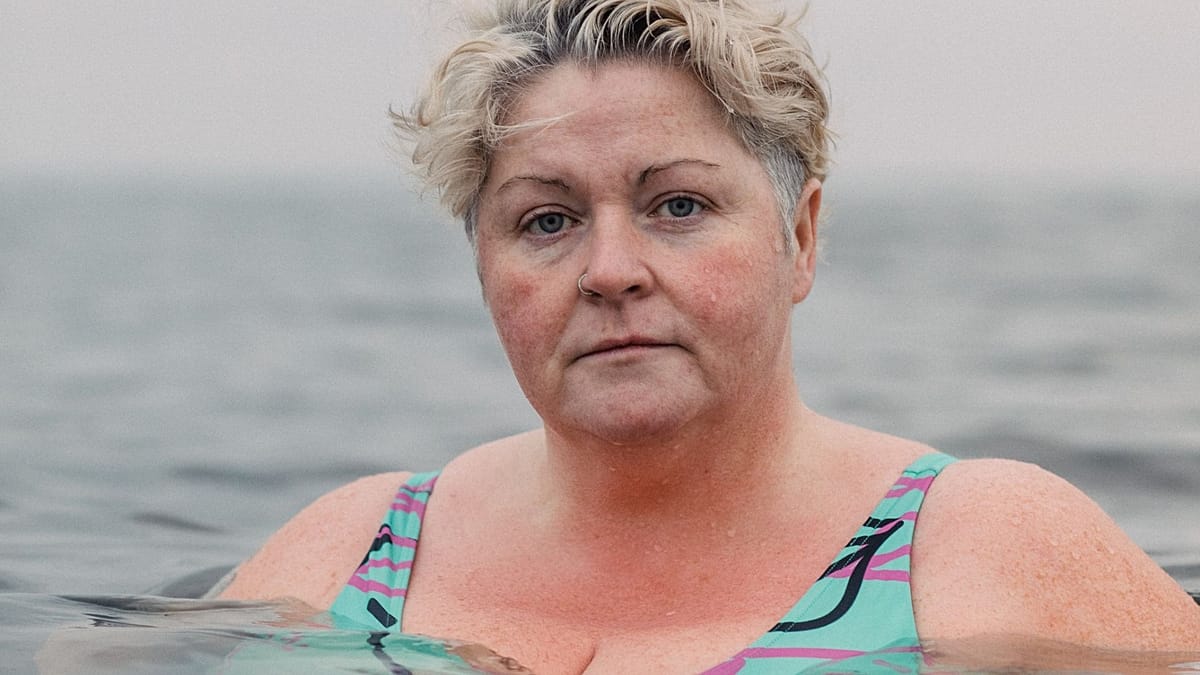
“I remember our beautiful beach before the pollution,” says Brittany resident Jean Hascoet, who leads the local campaign group Baie de Douarnenez Environnement. “Now, with thousands of pigs near our town, everything is different.” ADVERTISEMENT ADVERTISEMENT Across France and Spain, Europe’s shorelines are being choked by toxic algal blooms. Scientists are clear on the cause: decades of chemicals leaching into waterways. Poorly handled human sewage, as well as fertilisers and excess manure from ever-expanding factory farms, are to blame. Seas warmed by climate change are further fuelling the rapid growth of the algae which disrupts delicate ecosystems, killing off fish and plant life. Some types can also cause nausea, vomiting and rashes in humans – prompting hundreds of swimming bans across the continent this summer. Climate investigations outlet DeSmog visited some of the worst impacted spots in Europe, speaking to fishers, swimmers and business owners whose livelihoods and wellbeing depend on healthy waters. ‘Spain’s sacrificial zone’: Farming threatens a protected lagoon “You’ll never see me swimming in that water again,” Fina says. The 84-year-old from Murcia lives with her husband on the beachfront at Los Urrutias, on the west coast of Spain’s Mar Menor, Europe’s largest saltwater lagoon. Rotting seaweed piles up on the shore, giving off a foul stench. “This used to be paradise. The sea was teeming with seahorses,” Fina says. The last decade has seen a sharp increase in sea life-choking algae in Mar Menor – a hotspot for Spanish and international tourists. Despite being granted ‘legal personhood’ by the Spanish government in 2022, giving it rights to protection and restoration, the lagoon remains under stress from agricultural runoff. Cyanobacteria, also known as blue-green algae, is reliant on nutrients such as nitrogen and phosphorus to grow. Intensive farming in the Mar Menor region provides a ready supply of nutrient-rich manure, slurry and fertiliser runoff. Studies estimate agriculture is responsible for around 85 per cent of the nutrients entering the lagoon, with urban sources making up the rest. “The land can’t accommodate it all,” says Pedro Luengo, a biologist and spokesperson for the campaign group Ecologistas en Acción in Murcia. “We’re a sacrificial zone.” Even to the east of the lagoon, furthest from the farmland, local authorities must work hard to preserve an artificial paradise for tourists. In the first three months of 2026, they collected more than 4,000 tonnes of algae from Mar Menor’s shores and nearby water – roughly the weight of 1,000 elephants. But it hasn’t shielded those who rely on the lagoon for their livelihood. “We used to catch far more gilt-head seabream and prawns. Now the catch is much smaller,” says Rubén Albaladejo, a fisherman from Lo Pagán. “The Mar Menor is a drain into which everyone dumps their rubbish and waste.” Rising water temperatures are further hindering the reproductive ability of these species: “We’ve reached 30 degrees – something we’ve never seen before,” says Albaladejo. Scientists warned in August that human-caused climate change added around 2°C to peak Mediterranean sea temperatures and around 1.4°C in Western European seas, according to World Weather Attribution. The Mediterranean averaged a record 27.07°C in July. Spain’s environment ministry is funding eight projects with more than €11.5 million to cut livestock pollution, including new ways of treating pig slurry and moving sheep to open pasture. They are part of a €675 million national programme to recover the lagoon, but by the end of 2025 only about 16 per cent of that budget had been spent. ‘The Lough is dead’: Fishers in Northern Ireland face their worst ever year Two thousand kilometres away in Northern Ireland, Declan Coney has also seen Lough Neagh – the UK’s largest lake – devastated by blue-green algae every summer since 2023. “Fishing was instilled in me – generation after generation,” Coney says. But “this year has been the worst ever for fishing. The Lough is dead.” Trout and eel numbers have fallen in recent years, in part due to the oxygen-depleting algae whose weight forces Coney’s fishing nets shut, so fish can’t swim inside. Since the 2000s, the lough has been besieged by invasive zebra mussels. By hogging phytoplankton, these mussels deprive other species of a vital food source, as well as attaching to fishing nets and ripping them. “There’s no money [in fishing],” says Coney, who has been working on the lake since 1975. “It’s not a livelihood anymore.” As in Spain, Lough Neagh’s algal blooms are the result of decades of nutrient pollution. Northern Ireland’s livestock sector has grown rapidly, supported by government expansion plans since 2013: poultry numbers have risen by a third, and pigs by 74 per cent. Earlier this year, nonprofit Watershed Investigations and UK newspaper The Guardian found evidence of cattle, pig and human faeces in samples of water from the lough, which spans nearly 400 square kilometres and provides 40 per cent of Northern Ireland’s drinking water. Regulations aimed at improving Lough Neagh’s water quality, including reducing phosphorus and nitrogen levels in animal feed, and limiting manure application, need to be strengthened and better implemented, a report by the Office for Environmental Protection concluded in April. It notes positive investment and efforts from farmers but says more on-farm support and oversight is needed. Mary O’Hagan lives on the north-west of the lake. During the COVID-19 pandemic, she set up a wild swimming group, and found that the cold water had huge benefits – from improving mental health to relieving chronic pain. “In my 30s, I didn’t have much of a life, I wasn’t looking after myself. Swimming in Lough Neagh changed my life completely,” O’Hagan says. “We had a community.” But after the second year of the blooms, she felt forced to shut the swimming group down. “It was like Armageddon. To see the shores covered as far as the eye can see in pea green sludge was horrendous,” she says. “I couldn’t in all good conscience organise swims where people would be exposed to bacteria, algae, or god knows what else.” Blue-green algae can cause vomiting, diarrhoea and skin irritation. ‘More animals than people’: Manure run-off poisons Brittany’s beaches Brittany, in northwest France, faces its own deadly battle: sea lettuce algae has been linked to as many as six fatalities on the region’s beaches since the 1980s. When it breaks down, it can produce hydrogen sulphide – a lethal gas that smells like rotten eggs – which can cause blocked airways and fluid to build up in the lungs if inhaled in large quantities. Locals here are vocal about their suspicions of the cause. Near the tourist town of Saint-Brieuc, one resident has scribbled “les cochons” – the pigs – across an official sign warning about the danger and symptoms of inhaling toxic gas from the algae. “We have many more animals than people,” says environmental author Yves-Marie Le Lay, who wears a protective mask at his local beach when algae growth reaches dangerous levels. Although Brittany’s peninsula covers just five per cent of France’s surface, its 6.8 million pigs account for 58 per cent of the country’s total population. “We have a manure problem, it all ends up in the rivers.” France’s national audit court, the Cour des comptes, found in 2021 that more than 90 per cent of the nitrogen in the affected bays comes from agriculture. Environmental activist Fabrice Hamon is uneasy about the coming months. On his local beach, Plage de Penfoul, E. coli forced a partial swimming ban in 2025. This summer’s drought now means that harmful excess nutrients have built up in the soil of nearby fields treated with manure. “Right now there’s a build-up of bacteria in the fields,” Hamon says. “All it takes is a heavy downpour and, bingo. It’s a slow-acting poison: little by little, ecosystems are being degraded by the build-up of pollution linked to intensive farming.” Hamon is working on a system to monitor for the bacteria in around 20 rivers that flow onto local beaches, so that tourists and local beachgoers can check for warnings through an app called La Météo Bacterio. Elsewhere in Europe, citizens can report the presence of blue-green algae through the Bloomin’ Algae app by the UK Centre for Ecology & Hydrology. The app is available in the UK, Belgium, Greece, Luxembourg, the Netherlands and Norway. ‘The sea was dead’: Baltic blooms flourish in record heat Citizen science projects like Hamon’s could become vital in the battle against pollution in Europe’s waterways. In northern Germany, volunteers led by the Schleswig-Holstein branch of the environmental nonprofit Bund für Umwelt und Naturschutz Deutschland (BUND) are collecting water samples twice a month from local rivers to help pinpoint sources of pollution and help cut nutrient runoff into the Baltic Sea. Jürgen Leicher, the group’s deputy chairman, has been sailing these waters for 40 years, and says this year’s algal blooms are the worst he’s ever seen. Temperatures in Germany broke records for three consecutive days in June, reaching almost 42°C. Satellite images of the Baltic in August show vast algal blooms swirling towards the coast. Algae grows quicker and lasts longer in warm waters, as higher temperatures allow it to digest and reproduce at a faster rate. “You feel really afraid when you sail for hundreds of miles through a yellow-brown dirty sea,” says Leicher. “All the way through this algae, the sea was dead. You see no birds, no mammals, no fish. It’s so empty.” Isabel Seeger, marine conservation expert at Deutsche Umwelthilfe, says the source of the problem is clear: “Our current agricultural system, which is reliant on high fertiliser consumption and manure from mass livestock farming, is the biggest cause of eutrophication in the Baltic Sea.” The intergovernmental body HELCOM estimates that agriculture accounts for up to 90 per cent of nitrogen and up to 80 per cent of phosphorus in diffuse nutrient run-off into the Baltic. Despite decades of intergovernmental efforts to reduce nutrient pollution, such as placing strict limits on agricultural fertiliser inputs, the Baltic is struggling to recover from the environmental damage combined with rising temperatures. Each year, when algae dies it sinks to the seabed, taking large amounts of phosphorus with it. That phosphorus is released back into the ocean in future years – a dangerous feedback loop that gains speed as the sea warms. Ultimately, though, scientists say that nutrient pollution must be slashed to limit the recurrent harmful algae growth – and that means transforming agricultural practices. “The science is clear on what needs to be done,” says Professor Friedhelm Taube from Kiel University (CAU), who spent 12 years advising Germany’s Ministry of Agriculture. Governments should support farmers to use less nitrates-heavy fertiliser; plant catch crops like grass clover that absorb some of the excess nutrients from soils before they run into rivers, lakes and the sea; and reduce the number of animals farmed to one livestock unit per hectare – a technical term that translates to just one dairy cow or roughly three pigs – on limited land, he says. For campaigners in Murcia, the choice is just as stark: “Either we wreck the Mar Menor or we transform the agricultural model,” says Luengo. Additional research by Joey Grostern
‘This used to be paradise’: How intensive farming is destroying Europeans’ favourite swimming spots
Full Article
Original Source
Read the full article at Euronews →KhanList aggregates and links to publicly available news content. We do not host full articles from third-party sources. Always verify important information with original sources.