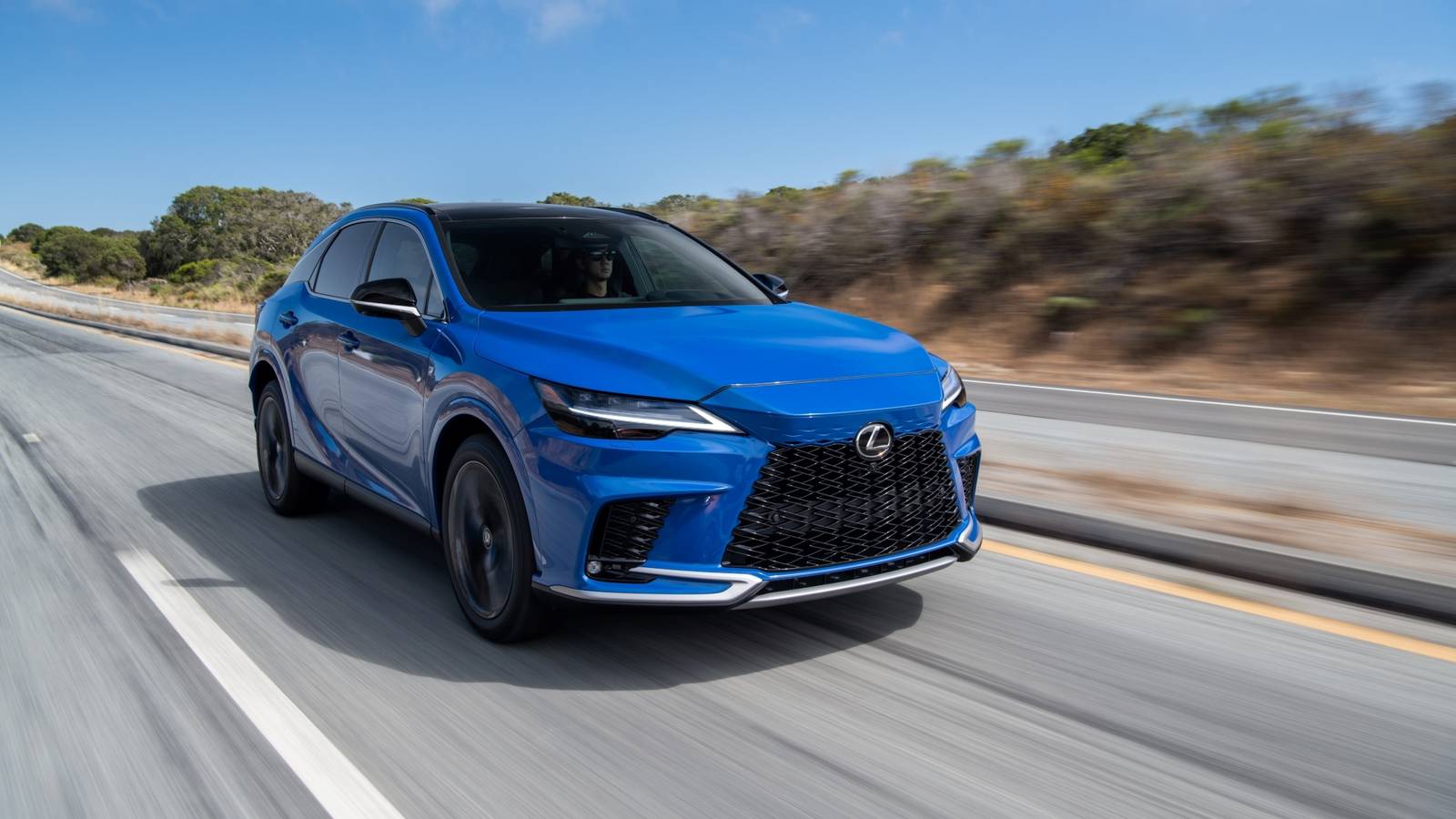
Buying a luxury SUV usually means paying for more than a nicer cabin and a prestigious badge. For many shoppers, the bigger question is whether that premium experience is worth the added complexity and potentially higher repair bills. The Lexus RX takes a different approach, pairing a quiet, comfortable interior with the engineering philosophy that has made Toyota vehicles so trusted over the years. It doesn't try to out-sport every German rival, but it does make a strong case for luxury that is easier to live with. That combination is a big part of why the RX has become such a popular luxury SUV. For buyers who care about comfort and refinement but don't want to spend years worrying about ownership costs, it offers a particularly appealing middle ground. Luxury buyers are thinking beyond the badge A premium logo can come with a premium bill Credit: Mercedes-Benz A luxury SUV can look like the obvious choice when you're shopping for comfort, technology, and a more upscale driving experience. But once ownership costs enter the picture, the badge on the grille isn't necessarily the most important thing to consider. The average annual repair cost for a German luxury SUV is $807, nearly 50 percent higher than the class leader. That kind of gap can make reliability and long-term ownership costs much harder to ignore, especially for buyers planning to keep their SUV for several years. That's why more shoppers are looking beyond brand prestige when choosing a luxury vehicle. Affordability, reliability, ownership satisfaction, and the quality of the experience all matter when mainstream SUVs can already offer plenty of high-end features. Luxury is about more than what you see Credit: Lexus For many buyers, a luxury vehicle's appeal comes down to how it feels to use every day. A quiet cabin, comfortable seats, a smooth ride, dependable technology, and confidence in the ownership experience can matter just as much as the emblem on the hood. The RX fits that broader definition of luxury particularly well. It combines the comfort and refinement expected from a premium SUV with an engineering philosophy focused on reliability and resale value. That helps explain why the RX has become one of America's best-selling luxury SUVs. Instead of relying solely on prestige, it makes the ownership experience itself part of the luxury proposition. The Lexus RX makes a strong case for worry-free luxury Toyota's engineering philosophy is hiding underneath Credit: Lexus The RX is essentially Toyota's approach to engineering wrapped in a more luxurious package. Lexus gives buyers the refinement and comfort expected from a premium SUV while keeping the focus on reliability and long-term value. For 2026, the RX offers four different powertrain choices, giving buyers plenty of ways to tailor the SUV to their needs. The lineup starts with the RX 350, which uses a 2.4-liter turbocharged four-cylinder producing 275 horsepower and 317 pound-feet of torque. The RX 350 returns 22 mpg city and 29 mpg highway with front-wheel drive, while all-wheel-drive versions manage 21 mpg city and 28 mpg highway. It's a straightforward option for buyers who want the RX experience without going down the hybrid route. The hybrid lineup adds another layer Credit: Lexus Three hybrid versions give the RX a broader appeal, starting with the RX 350h. It pairs a 2.5-liter four-cylinder with three electric motors and a CVT to produce 246 horsepower and 233 pound-feet of torque, while returning 37 mpg city and 34 mpg highway. At the other end of the performance spectrum is the RX 500h F Sport, which uses a turbocharged 2.4-liter engine and two electric motors. With 366 horsepower and 406 pound-feet of torque, it's easily the most powerful version, while still returning 27 mpg city and 28 mpg highway. Base Trim Engine 2.5L I4 Hybrid Base Trim Transmission 2-speed CVT Base Trim Drivetrain All-Wheel Drive Base Trim Horsepower 183 HP @6000 RPM Base Trim Torque 233 lb.-ft. @ 4300 RPM Base Trim Fuel Economy (city/highway/combined) 37/34/36 MPG Base Trim Battery Type Nickel metal hydride (NiMH) Make Lexus Model RX The RX 450h+ takes a different approach as a plug-in hybrid. Its 2.5-liter four-cylinder and three electric motors produce 304 horsepower, while its battery allows up to 38 miles of electric-only driving and all-wheel drive comes standard. The RX feels like a luxury SUV where it matters Comfort is the real star of the show Credit: Lexus The RX isn't trying to turn every drive into a sporting event, and that's part of its appeal. Instead, it focuses on the qualities that make a luxury SUV pleasant to live with, including a quiet cabin, a comfortable ride, supportive seats, and a polished interior. That approach makes the RX particularly well suited to everyday driving. Whether it's handling a daily commute or a longer road trip, the SUV is designed to make those miles feel easy rather than demanding. The hybrid powertrains also fit that personality nicely. Their smooth operation complements the RX's broader focus on comfort, giving the SUV a relaxed character that should appeal to buyers who want refinement without an overly complicated driving experience. The cabin backs up the luxury badge The RX's interior isn't just about looking upscale; the overall experience is an important part of its appeal. Comfortable seating, quiet surroundings, and straightforward everyday usability help give the SUV the kind of polished feel buyers expect from a luxury vehicle. That matters because a luxury SUV has to deliver more than a prestigious badge to justify its price. The RX makes its case through the way it handles the ordinary parts of ownership, from the morning commute to a weekend road trip. There is a caveat, though. The Lexus infotainment system isn't considered as intuitive as BMW's iDrive or Genesis' interface, so shoppers who put cutting-edge technology and interface design at the top of their list may find the RX less compelling. The RX makes more sense over the long haul Reliability is where the Lexus really stands out Credit: Lexus The RX's biggest advantage may not become obvious until you've owned it for a few years. J.D. Power gives it an 82/100 score for Quality & Reliability and an 81/100 overall, tying it for the top spot in its class with the Cadillac XT5. Repair costs also make a strong case for the RX. RepairPal ranks the RX 350 third among 14 luxury midsize SUVs, gives it a 4.0 out of 5.0 reliability rating, and puts average repair costs at $550 per year, well below the $807 class average. Resale value adds to the ownership story Credit: Lexus The RX also looks good when it's time to move on from it. Kelley Blue Book predicts that a 2026 RX will retain 51.5 percent of its value after five years, putting it among the top 10 SUVs for resale. That combination of reliability, lower repair costs, and strong resale value gives the RX an advantage that isn't necessarily visible from the driver's seat. It's the kind of benefit that becomes increasingly important when you plan to keep a luxury SUV for years rather than trade it in after a short ownership period. The warranty is another part of the equation, with Lexus offering six years or 70,000 miles of powertrain coverage. That's more generous than the coverage offered by BMW, Mercedes-Benz, and Audi, although Genesis goes even further with its 10-year/100,000-mile powertrain warranty. The RX isn't perfect, and that's worth knowing Its comfort-first approach has trade-offs Credit: Lexus The same priorities that make the RX appealing can turn off some shoppers. It puts comfort ahead of sharp handling, so buyers looking for an SUV that feels especially athletic will find the BMW X5 more engaging. The infotainment system is another weak spot compared with some rivals. BMW's iDrive and Genesis' interface are considered more intuitive, so the RX isn't the obvious choice for shoppers who put technology and interface design above everything else. There are also some questions around the move to a turbocharged four-cylinder engine. The previous V-6 had a long-standing reputation for reliability, while the smaller forced-induction engine doesn't have the same established track record yet. Safety isn't entirely without caveats Credit: Lexus The RX has performed well through most of the IIHS safety testing, with the majority of its ratings coming back as Good. One test, however, stands out for the wrong reason: the Moderate Overlap Front: Updated Test received a Poor rating. There is also a recall affecting some 2026 RX models because the rearview camera feed can go blank when the vehicle is shifted into reverse. That issue means the affected vehicles don't meet one of the federal safety standards. Neither issue completely undermines the RX's ownership case, but they're important considerations for shoppers comparing it with other luxury SUVs. The RX has plenty going for it, but its strengths don't mean every buyer will find it to be the perfect fit. The RX undercuts its biggest luxury rivals It gives buyers a lower entry price Credit: Lexus The Lexus RX starts at $51,975, putting it well below several of the luxury SUVs buyers are likely to cross-shop. The BMW X5 starts at $69,750, while the Mercedes-Benz GLE starts at $63,500 and the Genesis GV80 starts at $59,195. The Genesis is arguably the closest rival from a value perspective, offering an upscale cabin without the German brands' higher starting prices. Even so, it still costs more to get into than the RX. The BMW X5 has the edge when outright performance matters. Its standard turbocharged inline-six makes 375 horsepower, comfortably ahead of the RX 350's 275 horsepower, while the Genesis GV80's 3.5T also produces 375 horsepower. The hybrids make the ownership case stronger Credit: Lexus Fuel costs help the RX stand out even more for buyers planning to keep their SUV for several years. The RX 350h averages $2,100 in annual fuel costs, compared with $3,050 for the front-wheel-drive RX 350 and $3,150 for the all-wheel-drive version. The competition isn't as easy on the wallet. The most affordable Mercedes-Benz GLE to fuel averages $3,300 per year, while the Genesis GV80 costs at least $3,450 and the BMW X5 requires around $3,050 annually. The X5 does have a plug-in hybrid that can travel up to 40 miles on electric power, while the Mercedes-Benz GLE 450e can go up to 50 miles. Still, the RX 350h makes a strong case for buyers who want the benefits of a hybrid without stepping up to a plug-in model. The RX makes the most sense for a certain kind of buyer Luxury without the ownership headache Credit: Lexus The Lexus RX is a strong fit for buyers who care more about comfort, reliability, and long-term ownership than razor-sharp handling. It's especially well suited to commuters, families downsizing from larger SUVs, empty nesters, and retirees who want a premium vehicle without unnecessary ownership stress. It also makes sense for anyone planning to keep their SUV well beyond the warranty period. The RX's reliability reputation, relatively low repair costs, and strong resale value all become more meaningful when you're thinking in terms of years rather than a short lease cycle. The RX won't beat a BMW X5 for driving excitement or lead the class in every technology category. What it does offer is a refined, comfortable SUV with a strong ownership story, making it a compelling choice for buyers who want luxury without all the drama that can come with it.
This luxury SUV offers Toyota reliability without the drama
Full Article
Original Source
Read the full article at Howtogeek →KhanList aggregates and links to publicly available news content. We do not host full articles from third-party sources. Always verify important information with original sources.