
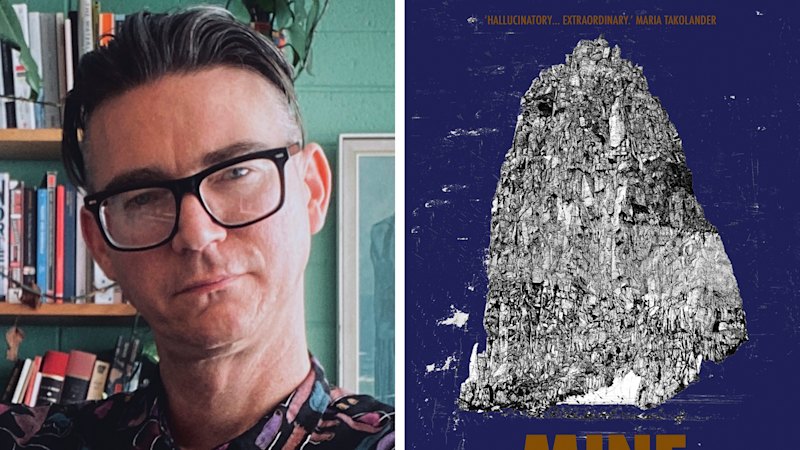
Jack Cameron StantonAugust 28, 2026 — 11:11amIf awards ceremonies are anything to go by, the one-sentence novel is having a moment.The Norwegian Jon Fosse and Hungarian Laszlo Krasznahorkai, winners of the Nobel Prize for Literature in 2023 and 2025 respectively, see the humble full stop as a needless barrier to be banished from their richly textured and deeply introspective novels.Lucy Ellmann’s Ducks, Newburyport, a Goldsmiths winner and Booker shortlistee, is composed of a single sentence detailing the protagonist’s far-reaching anxieties that persist over a thousand pages, held together with the refrain “the fact that”.These writers are rule breakers. They dispense with full stops, scene breaks, and chapters by using an array of conjunctions and punctuation, both workmanlike and exotic, to keep the damn thing rolling. Each page is a formidable, handsome wall of text. They write the literary equivalents of a horror vacui, a painting afraid of emptiness, a canvas completely covered.At his best trawling through the history books: Adam Ouston.Despite these books being a single, unbroken sentence, I doubt anyone reads them in one sitting, nor that the authors indeed intend for us to do so. You would need a preternatural concentration or heroic dose of stimulants. Likely both. They offer no restorative pit stops, no spaces to breathe, nowhere obvious to rest a bookmark and take stock of everything that has come before. You must rip yourself away from the currents, forever amid a gathering thought.Once the books get going, however, the effect is a degree of immersion beyond that of conventionally stylised fictions. Sure, they make demands on us, but difficulty (more than idle, easily absorbed fiction) rewards. I find myself switching between two mental states: one of hypervigilance, following every thread, and another that lets the stream of words wash over me.I’m no proselytiser for the one-sentence novel. I trudged through Mathias Enard’s Zone like an explorer with a machete chopping through an overgrown path. I never finished Ducks, Newburyport. And yet, the new novel from Tasmanian writer Adam Ouston has me, if not converted, at least showing up for Sunday service.Ouston’s debut, Waypoints, took as its subject the lesser-known history of Harry Houdini’s first controlled flight, which happened in 1910 in Diggers Rest, Victoria. His latest novel, Mine, also embraces smoke and mirrors, but this time on the level of the sentence. Mine by Adam Ouston. It begins after a poet falls into an abandoned mineshaft. Injured and trapped in that elemental darkness, the ageing poet reminisces about his campaigns as an ecoactivist while other memories and voices start to intrude, hinting at “something bigger than him, a secret story beneath the apparent one”.Appraising Ouston’s novel by what happens is about as illuminating as recounting Waiting for Godot. Ouston’s single sentence is not the poet’s life flashing before his eyes. It is a broad narrative frame to capture a deeper history. In this sense, the set-up shares more DNA with a poem than a plot-driven novel.We learn that the poet has been exploring the West Coast of Tasmania to research his magnum opus, a collection inspired by hauntology, an attempt to capture the “island’s soul”. A hauntology: the past is a revenant in the present and therefore has not passed at all.At first Ouston allows the hauntology to drift ill-defined, more spirit than flesh, until other stories rise in the poet’s mind. These include most notably the true histories of settler-colonial explorers and mining magnates laying claim to the land, alongside other accounts of exploration paired with environmental extremes, such as the Mawson and Mertz Antarctic expedition in the early 1900s. Dispersed among these are the poet’s own memories of his youthful days of climate action and a tender reflection upon the death and funeral of a dissident journalist friend.The most vital of these non-fictional strains is Ouston’s lively reconstruction of the ascent and rivalry of two enterprising capitalists, Bowes Kelly and James Crotty, whose legacies culminated in the Mount Lyell Mining and Railway Company. We begin to suspect these historical anecdotes are not arbitrary and may, taken together, begin converging upon this “secret story beneath the apparent one”.Ouston is at his best trawling through the history books. At times Ouston’s descriptions of the Tasmanian landscape reach for the grandeur “of desolation, ferocity, madness, and hopelessness, but also beauty, wisdom, protection and valour, and inspiration”. It’s classic romanticism: grandeur evoked abstractedly. But when he finds an original image – “whenever he heard of the plight of the South Pole he would picture a black rubber mask melting in the middle of an interminable stretch of outback highway, eye sockets collapsing, mouth hole shrivelling as though releasing an unending scream” – it’s magic.Late in Mine, Ouston’s poet arrives at the conclusion that the battle for Tasmania’s environment has been lost. I realised that Ouston has written a dire allegory: an eco-poet howls at the bottom of a mineshaft, where no one can hear him.Mine by Adam Ouston is published by Transit Lounge ($35).What else is happening in the book world?Sydney Writers’ Festival has appointed a new artistic directorThis is the email many authors dream of getting – but beware, it could be a trapArtist Tom Carment reflects on five decades of friendship with the late Robert GrayNovelist Richard Flanagan opens up about his early-onset dementia misdiagnosisA 3000-year-old poem is suddenly back on the bestseller list. Here’s whyMore:ReviewFor subscribersSpectrumLiteratureSpectrumSee & DoFrom our partners
This entire novel is one sentence. Somehow, it works
Full Article
Original Source
Read the full article at Smh →KhanList aggregates and links to publicly available news content. We do not host full articles from third-party sources. Always verify important information with original sources.