
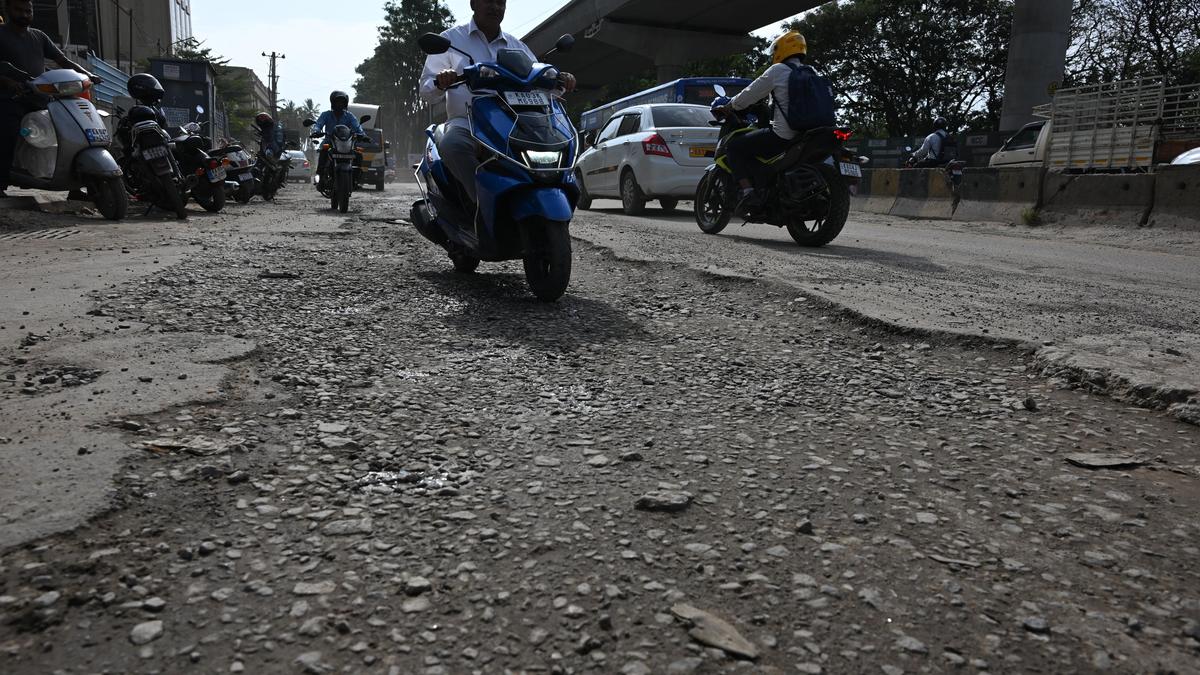
Over the last several months, utility and pipeline excavation by BWSSB (Bangalore Water Supply and Sewerage Board) across Bengaluru has left roads in shambles. Vehicles parked on broken footpaths, uneven road tops, and a dozen potholes on every street have been the by-product of this ‘utility’ project that seems unending.Read more |This AI-driven platform is taking Bengaluru’s garbage complaints public Like most of us, 33-year-old Gaurav Sen has had his share of driving on pothole-ridden roads, and on one such ride, the software engineer decided to do something about it. The founder of AIEngg, an upskilling platform for software engineers, Gaurav put his expertise in system design and AI to use and created an app. Aptly named Pothole Reporter, it is aimed at automatically detecting potholes a vehicle drives over. The Android beta version launched on Google Play’s testing track on September 21 with about 200 testers, and is now available to the public. Unlike most platforms that simply detect an issue, Pothole Reporter ensures the complaint reaches the authorities | Photo Credit: Special Arrangement Read more | Foreigner’s viral video prompts GBA to repair roadExplaining its workings, Gaurav says the app photographs the road, either one photo at a time or continuously in ‘Drive’ mode. Unlike most platforms that simply detect an issue, Pothole Reporter ensures the complaint reaches the authorities.“A vision model checks each frame for potholes. The app then maps the location to the responsible municipal body and matches the pothole against publicly available road contracts to identify a likely contractor,” he says, adding, “While building the complaint flow, I thought finding the tender number would be helpful to the commissioner. It took two more days to dig up data on tenders through publicly accessible records.” Gaurav Sen (second from left) with officials at Greater Bengaluru Authority Read more | Footpath woes at Sanjaynagar as white-topping underwayGaurav built the app in a day using OpenAI’s Codex for coding and OpenAI vision models for pothole detection. “The basics worked in an hour and a complete model was created in about six hours. The code was published on GitHub on August 18, and it has been updated over 200 times since,” he says, adding, “I then used open-source pothole datasets to evaluate the effectiveness of the app. It is designed to detect potholes with high confidence scores only. So some potholes may be missed, but the chance of a pothole report being false is low.”Gaurav adds that an in-house detection model is in progress to reduce running costs, and since these AI tools handle the technical heavy lifting, anyone can build a similar app without prior coding experience. Motorists manoeuvre through potholes at Srinivasapura Cross, Banashankari 6th Stage | Photo Credit: MURALI KUMAR K Elaborating further, Gaurav says that the app forwards the complaint details, including location, an image of the pothole, its dimensions, and the relevant tender number, to the concerned municipal commissioner via email.“The relevant authority is expected to pick up on this and resolves the complaint. This is the biggest blocker right now,” he shares. Since August, the app has recorded 100 complaints that have been shared with the commissioners of the South, North and Central city corporations.“The Integrated Command and Control Centre (ICCC) asked for a demo, and we met on August 24. On September 9, I took part in the Greater Bengaluru Authority citizen consultation on Sahaaya 3.0, the civic grievance portal, and requested Application Programming Interface (API) access to Sahaaya,” explains Gaurav, whose recommendations include a pothole detection app that pushes complaints to Sahaaya through an API. “Currently there is no API so the app can only draft an email. Direct integration with Sahaaya is the next step.” The app photographs the road, either one photo at a time or continuously in ‘Drive’ mode | Photo Credit: Special Arrangement In July this year, a similar AI-powered app, NammaKasa, was created by Jyothish VM to help citizens report garbage blackspots in their localities. Now, Gaurav is looking at joining hands with Jyothish to merge the two platforms.“Potholes and garbage are both civic complaints. They need the same things: a photo, a location, the right authority, and a record of whether it was fixed. We have discussed combining the two into a single record and observability platform for civic complaints, so citizens and officials can see every complaint on one map and track its status,” he shares, explaining that roping in representatives from other States is also on the cards.“So far, I have received requests from West Bengal, Andhra Pradesh, and Bihar to use the app in their respective States. Pothole Reporter now works across India, however, its integration with State systems would make a real-world impact.” A pothole on Magadi Main Road in Bengaluru | Photo Credit: SUDHAKARA JAIN In the coming years, Gaurav is hopeful that such initiatives take off across India. “Government buses and garbage trucks already drive every road in the city every day. Instead of waiting for citizens to complain, complaints should flow directly into government grievance systems, and every repair should be linked back to the contract that paid for the road.” Pothole Reporter is now available on Google Play
This Bengaluru engineer has built an AI-powered app to report potholes
Full Article
Original Source
Read the full article at Thehindu →KhanList aggregates and links to publicly available news content. We do not host full articles from third-party sources. Always verify important information with original sources.