
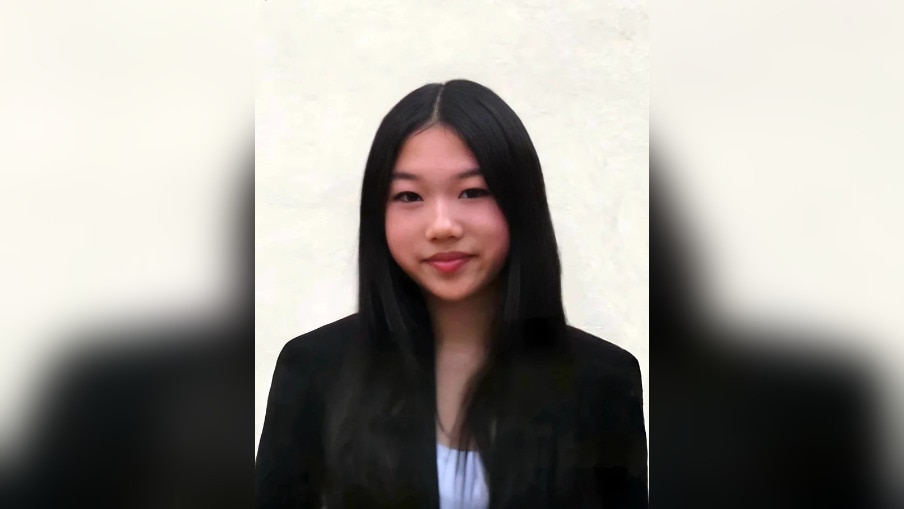
A question about the air students breathe led 16-year-old Kelly Liu to investigate pollution around schools in San Jose. By combining AI mapping with low-cost sensors, she is helping communities identify local pollution patterns and push for better air-quality monitoring and protection.How this 16-year-old San Jose student is using AI to find what pollution monitors miss (Image: www.actionfornature.org)At 16, a question about polluted air grew into an effort to show what students breathe every day. Kelly Liu from San Jose, California, began looking at what official monitoring systems missed around individual schools. Using AI mapping and low-cost sensors, she helped bring air-quality data closer to students, particularly in underserved communities.Official monitoring stations can show broad air-quality trends across the South Bay, but they do not always capture what is happening outside individual schools, especially those near busy roads, industrial sites and other sources of pollution.Kelly wanted to know what those numbers were leaving out. But she was looking for more than better maps. She wanted to give communities evidence to ask why some students face greater exposure to pollution than others. What began as a student project grew into a wider policy conversation about air quality around schools.LOOKING CLOSER AT THE AIR STUDENTS BREATHEAir pollution can change dramatically from one neighbourhood to another. A school next to a busy highway may face a very different pollution burden from one in a quieter residential area. Traffic, construction, industrial activity, weather and a building's ventilation can all influence the air students encounter during the school day.Yet traditional monitoring networks are not designed to measure conditions at every school. Their stations can be expensive and widely spaced, meaning one monitor may provide useful regional information without capturing what is happening at a particular campus. That gap became the problem Kelly wanted to investigate. Instead of accepting the available data as the whole picture, she looked for ways to make pollution visible at a much more local level.USING AI TO FIND THE PATTERNSKelly used AI to analyse and visualise large amounts of environmental and geographic information. By examining air-quality records alongside factors such as school locations, roads and traffic patterns, she could identify areas that might warrant closer attention.The technology was not meant to replace scientific monitoring. Its value was in helping process information and reveal patterns that could be difficult to identify manually.Maps also gave the issue a different kind of power. A countywide pollution statistic can be difficult for a parent or student to connect to everyday life. A map showing how pollution may vary between neighbourhoods and schools is much easier to understand.But Kelly knew a map could only go so far. If she wanted to understand the conditions students were actually experiencing, she needed measurements on the ground.TAKING MONITORING INTO UNDERSERVED SCHOOLSThat led Kelly to low-cost pollution sensors, which she helped bring to schools in underserved communities. The sensors collect local air-quality data, revealing changes linked to traffic, construction, wildfire smoke and other pollution events.For schools, the data can answer practical questions: Is indoor air cleaner than outdoor air? Is filtration working? Does ventilation need improvement?For Kelly, it was also about equality of information. Communities facing greater pollution often have fewer resources to measure and document it. The sensors gave them local evidence they could use to push for healthier learning environments.WHEN DATA TURNED INTO ADVOCACYKelly's project did not stop when the data was collected. She helped communicate the findings and connect them to a broader conversation about how schools can protect students from unhealthy air.The discussion included stronger filtration, improved ventilation, monitoring and clearer responses when outdoor air quality deteriorates. But the data also raised a more fundamental question: should a student's access to clean air depend on the neighbourhood where they go to school?That question helped move the conversation beyond individual campuses, towards a broader countywide approach to school air quality.Such an approach could create more consistent expectations for monitoring and air-quality protection while helping direct resources towards schools facing greater environmental risks.WHY SCHOOL AIR MATTERSThe issue is particularly important for children, whose developing lungs can be more vulnerable to air pollution. Fine particulate matter can penetrate deep into the respiratory system and worsen conditions such as asthma.Schools can reduce exposure through better filtration, ventilation and monitoring, but they need reliable data to know when conditions change.That is where Kelly's approach offers a practical model: combine broad data with local measurements and use the findings to guide action.FROM STUDENT PROJECT TO POLICY CONVERSATIONWhat makes Kelly's story stand out is not simply that she used AI at 16. It is that she connected technology to a problem affecting real communities. A map can identify a potential pollution hotspot. A sensor can provide local evidence. But information becomes powerful when people can use it to ask institutions for change.Kelly's environmental work earned recognition from Action for Nature as an Eco-Hero, highlighting the initiative behind her project.Her experience also illustrates a changing role for young people in environmental action. They are not simply waiting for scientists, governments or institutions to solve problems. They can gather evidence, build tools and bring their findings into public discussions.THE NEXT CHALLENGETurning advocacy into lasting change requires more than data. Sensors need to be maintained and interpreted carefully, particularly because low-cost devices have limitations. Schools also need funding and technical support to improve filtration and ventilation.Pollution readings can fluctuate, and a single measurement does not necessarily establish a long-term health risk. Families and schools therefore need clear guidance about what the data means and what action they should take.That makes sustained monitoring and practical investment as important as the initial research.Kelly's work began with a question. It has become a larger push for something every student deserves: clean air at school.- EndsPublished By: Apoorva AnandPublished On: Sep 13, 2026 12:41 IST
This 16-year-old US teen is using AI to map the dirty air students breathe
Full Article
Original Source
Read the full article at Indiatoday →KhanList aggregates and links to publicly available news content. We do not host full articles from third-party sources. Always verify important information with original sources.