
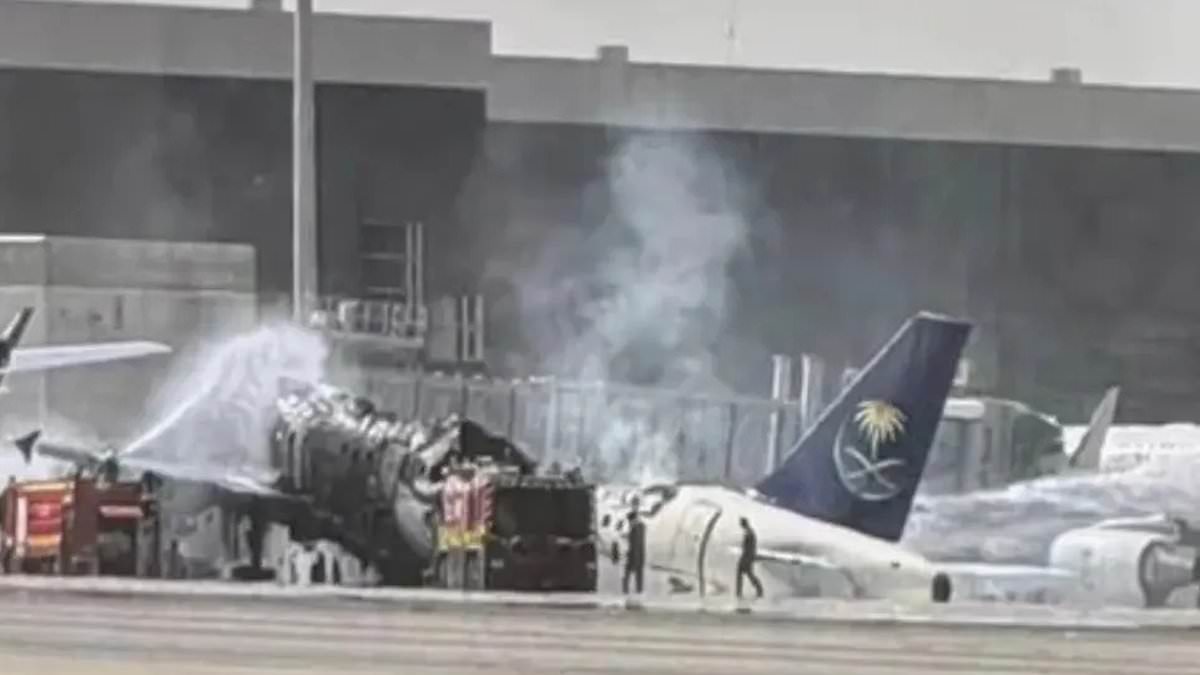
We can't say the weekend strikes on King Khalid Airport were a wake-up call. We were already fully aware of the threat posed by the Houthis.But we should be worried at the brazen nature of these attacks on Saudi Arabia's civilian-filled main airport.I was in that very airport this summer. I walked its vast, arched and uniformly shiny corridors, thronged with families. I understand just what a blow to the Saudis this is. And how dangerous things now are.Inevitably, it means further escalation, a further widening of the US-Iran conflict. The kingdom has already vowed a major response; US President Donald Trump is weighing up whether to join in.But each escalation merely prepares the ground for the next one. And suddenly we are looking at another regional war.In my reporting on conflicts across the world, I've met my fair share of jihadists, Islamists, Putinists, warlords and assorted psychopaths.And believe me, the putrid Houthis – who, among other things, have brought child slavery back to Yemen – are among the most barbarous terror groups operating today.Their slogan, the Sarkha, reads simply: 'God is great, Death to America, Death to Israel, A Curse on the Jews, Victory to Islam.' Pictures showed the damage at Saudi Arabia's King Khalid airport after a strike by the Iran-backed HouthisOn Sunday, the Houthis warned people not to use Saudi airports and airspace. They want to cripple Saudi Arabia's ability to function normally and force the kingdom to end its military campaign and blockade of Houthi-controlled Yemen.It was in 2015 that de facto ruler Mohammed bin Salman, then defence minister, launched a war against the Houthis, partly to establish himself as the kingdom's new strongman. Instead, he got humiliated.Despite years of airstrikes and a devastating blockade, he failed to dislodge them, and they only grew more powerful.Saudi Arabia is the world's largest crude oil exporter. Last year its military budget exceeded $83billion (£63billion), more than France or Israel. Yet the Houthis' subliterate mountain militia can wreak havoc.Why? Because Saudi Arabia's strength is also its vulnerability. Its vast oil installations, airports and infrastructure are all a nightmare to defend. The Houthis, meanwhile, are armed with basic but effective Iranian missile and drone technology.The Saudis must defend everything constantly; the Houthis need only hit something once.But there is something still more dangerous at work here. Across the Middle East, geopolitical norms are collapsing. For decades Israel and Iran fought a shadow war, careful to avoid striking each other directly. That taboo has now been shattered – with predictably devastating results.What was once unthinkable has become almost routine. And the tension, the potential for catastrophe, ratchets up relentlessly. Houthi supporters held placards showing the group's leader Abdul Malik al-Houthi last weekThe Saudis and Israelis are key Western allies. Both are key targets of Iran and its proxies. It is our duty to stand by them against unambiguous forces of terror. But the consequences extend far beyond the region.The Houthis control much of Yemen's Red Sea coast, allowing them to threaten the Bab al-Mandeb Strait, gateway to the Suez Canal through which billions of dollars of trade normally pass each day.Their attacks have already forced ships to divert thousands of miles around Africa, adding up to two weeks to journeys and driving up freight and insurance costs.The result? Higher prices for imported goods, pressure on energy supplies and, ultimately, more expensive fuel, food and household essentials for British consumers.This is the grim logic of modern warfare. A wealthy, technologically-advanced state can spend billions on defence yet fail adequately to defend itself against a militia whose weapons cost a fraction of the price.And a group of fanatics in Yemen's mountains can threaten not just the richest kingdom in the Arab world but also the economic security of millions who have barely heard of them.
These subliterate fanatics threaten the richest Arab kingdom - and the economic security of all in the West: DAVID PATRIKARAKOS
Full Article
Original Source
Read the full article at Dailymail →KhanList aggregates and links to publicly available news content. We do not host full articles from third-party sources. Always verify important information with original sources.