
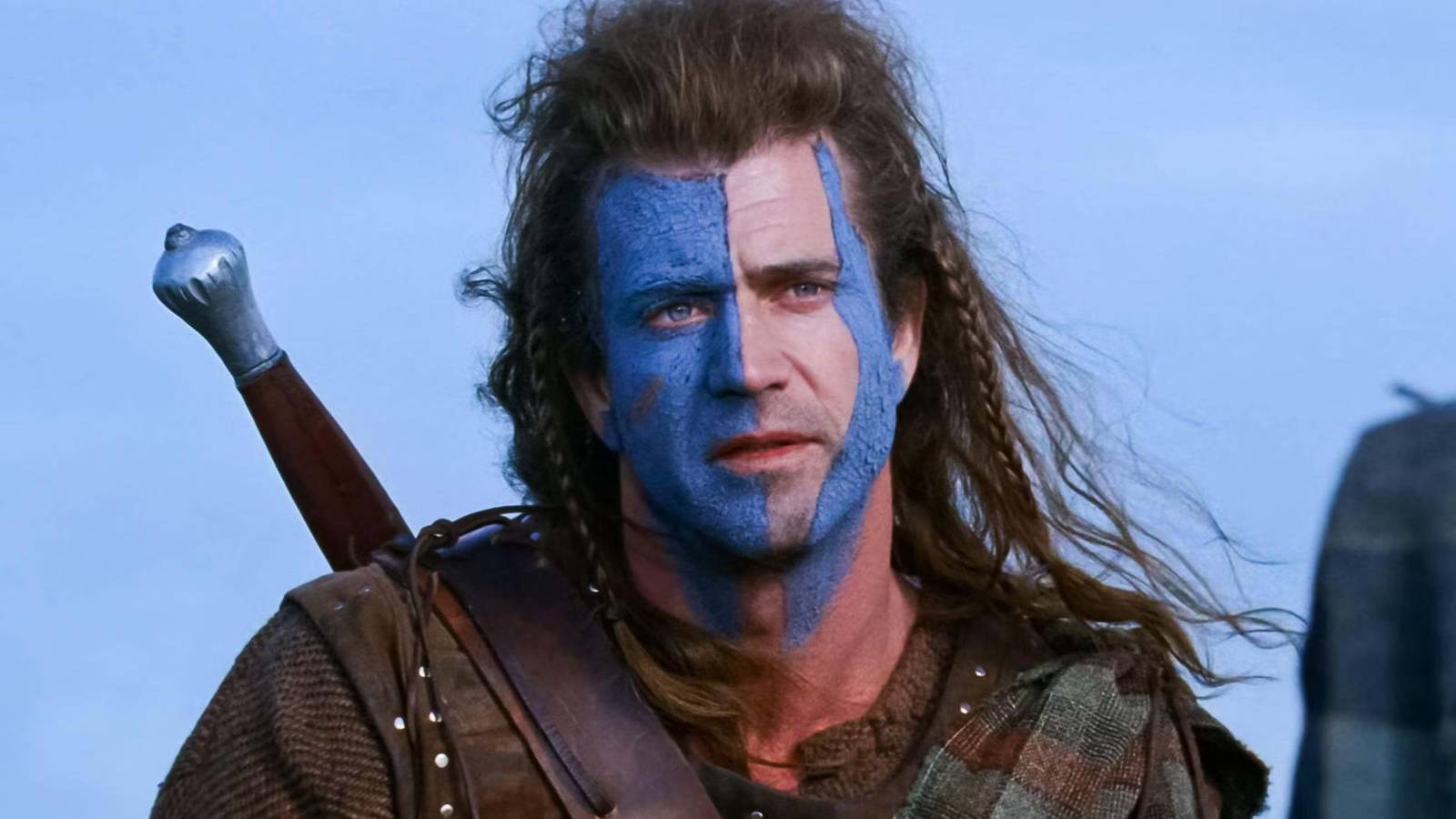
Image via Paramount Pictures Published Sep 18, 2026, 7:05 PM EDT Jeremy has more than 2800 published articles on Collider to his name, and has been writing for the site since February 2022. He's an omnivore when it comes to his movie-watching diet, so will gladly watch and write about almost anything, from old Godzilla films to gangster flicks to samurai movies to classic musicals to the French New Wave to the MCU... well, maybe not the Disney+ shows. His favorite directors include Martin Scorsese, Sergio Leone, Akira Kurosawa, Quentin Tarantino, Werner Herzog, John Woo, Bob Fosse, Fritz Lang, Guillermo del Toro, and Yoji Yamada. He's also very proud of the fact that he's seen every single Nicolas Cage movie released before 2022, even though doing so often felt like a tremendous waste of time. He's plagued by the question of whether or not The Room is genuinely terrible or some kind of accidental masterpiece, and has been for more than 12 years (and a similar number of viewings). When he's not writing lists - and the occasional feature article - for Collider, he also likes to upload film reviews to his Letterboxd profile (username: Jeremy Urquhart) and Instagram account. He has achieved his 2025 goal of reading all 13,467 novels written by Stephen King, and plans to spend the next year or two getting through the author's 82,756 short stories and 105,433 novellas. Sign in to your Collider account There’s a long history, in the film industry, of history not really being stuck to. This can prove controversial if the historical event is an already divisive one, or if the event in question happened within living memory for a certain number of viewers, making the misrepresentation of the actual events prove troubling, at least in worst-case scenarios. Care does have to be taken. To some extent, there was care with the following movies, though some more than others. A few more or less charged through what many would call historical accuracy, giving it the finger and not caring, but still delivering an engaging movie. Basically, if some kind of movie was based on something that happened, it wasn’t hugely historically accurate, but then the movie itself ended up being pretty great, there’s a chance it'll show up in this ranking. 8 'Gladiator' (2000) Gladiator taking place so long ago probably isn't an excuse everyone’s going to be okay with, but it’s something. There is some history recorded from that era, almost 2000 years ago, but obviously not as much as with more recent historical periods. And then there’s the matter of Gladiator having a fictionalized protagonist in the form of Maximus, with the film having him interact with a fair few historical figures. That being said, those historical figures don’t always do what they were said to do in real life, and the circumstances of some of their deaths are quite different, too. Gladiator does attempt to get around all this, though, thanks to that fictional character being at the center of so much of the film’s action, making the inaccuracies easier to handle (for most people, hopefully… where Gladiator II goes, on the other hand, is a whole other matter entirely). Image via Sony Pictures Releasing The drama in The Social Network is of an undeniably exciting variety, especially considering so much of the movie is people sitting around – or sometimes walking around – and talking quite fast. It’s what you'd expect, from an Aaron Sorkin script, but he was on his A-game here, and the dialogue is glorious. So glorious, in fact, that you're forgiving of the fact that it’s almost impossible that any of the conversations depicted went down as eloquently as they did. That’s if some of the events here happened at all, which The Social Network… you know, it’s not really a historical or biographical film in the traditional sense. It’s about Facebook, and to some extent, about the people who created it, but then the story gets reworked into something bolder and more tragic in the traditional sense (admittedly without having things break from reality by ending the whole thing like an actual Shakespearean tragedy; something, like, Hamlet-style). 6 'JFK' (1991) Image via Warner Bros. 1991’s JFK isn't shy about being a conspiracy thriller, and so you can kind of take much of it with a grain of salt, or an interesting exercise in painting an alternative narrative. If you're on board with what it’s laying down, though, then hey, that’s an option, too. There are various ways to approach this kind of film, and that approach will probably determine how much you either like or dislike JFK. Unlike with some of the examples here, the assassination of John F. Kennedy was quite recent, at least in the overall scheme of things. There are many photos and other pieces of evidence from the day in question, but JFK is more about saying, “What if they can’t be trusted?” And then the way doubt is cast on some things feels more than a little far-fetched, but such is Oliver Stone and his bombastic style. At least he makes JFK quite riveting to watch throughout, and that’s very much appreciated, when the runtime ends up exceeding three hours. 5 'Titanic' (1997) Image via Paramount Pictures The approach Gladiator took was sort of taken by Titanic three years earlier. And, what do you know? Both won Best Picture. There was also a “historical” movie released two years before Titanic that was a heavy-hitter at the Academy Awards, and played things even faster and looser with history, but more on that one shortly. The comparison to Gladiator is being made here because Titanic has its two main characters be fictional, plus a fair few other individuals involved, and then their story is wrapped up with the real-life tragedy of the Titanic, and a decent number of people from history who played important roles on that fateful night. James Cameron gets certain details right, and knows others aren’t as important, but the main thing is that the fictional stuff works, the historical value is there (to some extent), and things are mostly respectful to the actual night. Emphasis on the “mostly.” 4 'Ip Man' (2008) Image via Mandarin Films So, Ip Man was a real person, and some of his life and teachings are reflected throughout the series that bears his name. But the Ip Man series shouldn’t be taken as a strictly biographical or historical one, especially when you get to the sequels. The breaking from reality does allow for some excellent martial arts sequences, though, especially in the rather extravagant Ip Man 2. And then Bruce Lee becomes a supporting character in Ip Man 4, and though Ip Man and Bruce Lee did know each other (the former training the latter), Ip Man 4 does some fan fiction-esque stuff with Bruce Lee. But it’s fun, you know? As for Ip Man (2008), it doesn’t stray as far from the bounds of history, but does at least a little, so it’s going here as something of a stand-in for the series overall. 3 'Braveheart' (1995) Image via Paramount Pictures Perhaps the most obligatory pick, when you're talking about “historical” movies that aren’t all that accurate, Braveheart is about someone who did technically exist, and he was involved with the conflict depicted in the movie. There are some other historical figures who show up, but Braveheart really plays around with what these people did, and what they meant to everyone else in the movie, not to mention the broader conflict overall. Other people die at times not recorded in history, and then there’s the admittedly impressive set piece that depicts the Battle of Stirling Bridge, but without the bridge. William Wallace is the central character, and he, uh, "meets" Isabella of France, though she’s significantly aged up compared to her real-life counterpart. Other people die at times not recorded in history, and then there’s the admittedly impressive set piece that depicts the Battle of Stirling Bridge, but without the bridge. This is only scratching the surface, but at the end of the day, this movie is still exciting, entertaining, and quite stirring at times, so if you approach it as historical fiction (rather than purely historical), it’s a winner. 2 'Amadeus' (1984) Image via Warner Bros./ Courtesy: Everett Collection Okay, now there’s been mentions of Gladiator, Titanic, Braveheart, and Amadeus as Best Picture winners with one-word titles that all play around with historical accuracy, in one way or another. Amadeus perhaps does so with the best of excuses, because it’s not going for a direct biopic sort of thing about Wolfgang Amadeus Mozart, and instead functions more like a movie about Antonio Salieri being obsessed with – and jealous of – Mozart’s musical gifts. Salieri gets to narrate things from his point of view, so that can excuse some of the fictionalized aspects here. In technical terms, though, Amadeus does succeed in feeling almost like it was filmed during the period depicted, as it’s hard to fault on that front. There’s also the way it uses some real-life people to explore some remarkably interesting ideas that help ensure the “inaccuracies,” if they can even be called such, are hand-waveable. 1 'Goodfellas' (1990) Image via Warner Bros. If you want a slightly more accurate take on the story of Henry Hill, there is always the excellent 1985 book Wiseguy, which was the basis for Goodfellas. Goodfellas streamlined things a bit and had certain interactions play out quite differently, but then again, the film’s from Hill’s perspective, and much of the book is as well, so that could cast doubt on historical accuracy to begin with. Taken another way, though, it’s Henry Hill’s story, and his point of view, so getting a little more playful – or maybe even a little funnier (like, how?) – might well be okay. The basics are represented in Goodfellas, or at least the basics as far as anyone not involved with the mob can really know, and the rest is just style. What style, though, since Martin Scorsese directed this beast of a film at the arguable height of his powers. Goodfellas Release Date September 19, 1990 Runtime 145 minutes
These 8 Movies Aren’t Historically Accurate, but They Are Great
Full Article
Original Source
Read the full article at Collider →KhanList aggregates and links to publicly available news content. We do not host full articles from third-party sources. Always verify important information with original sources.