
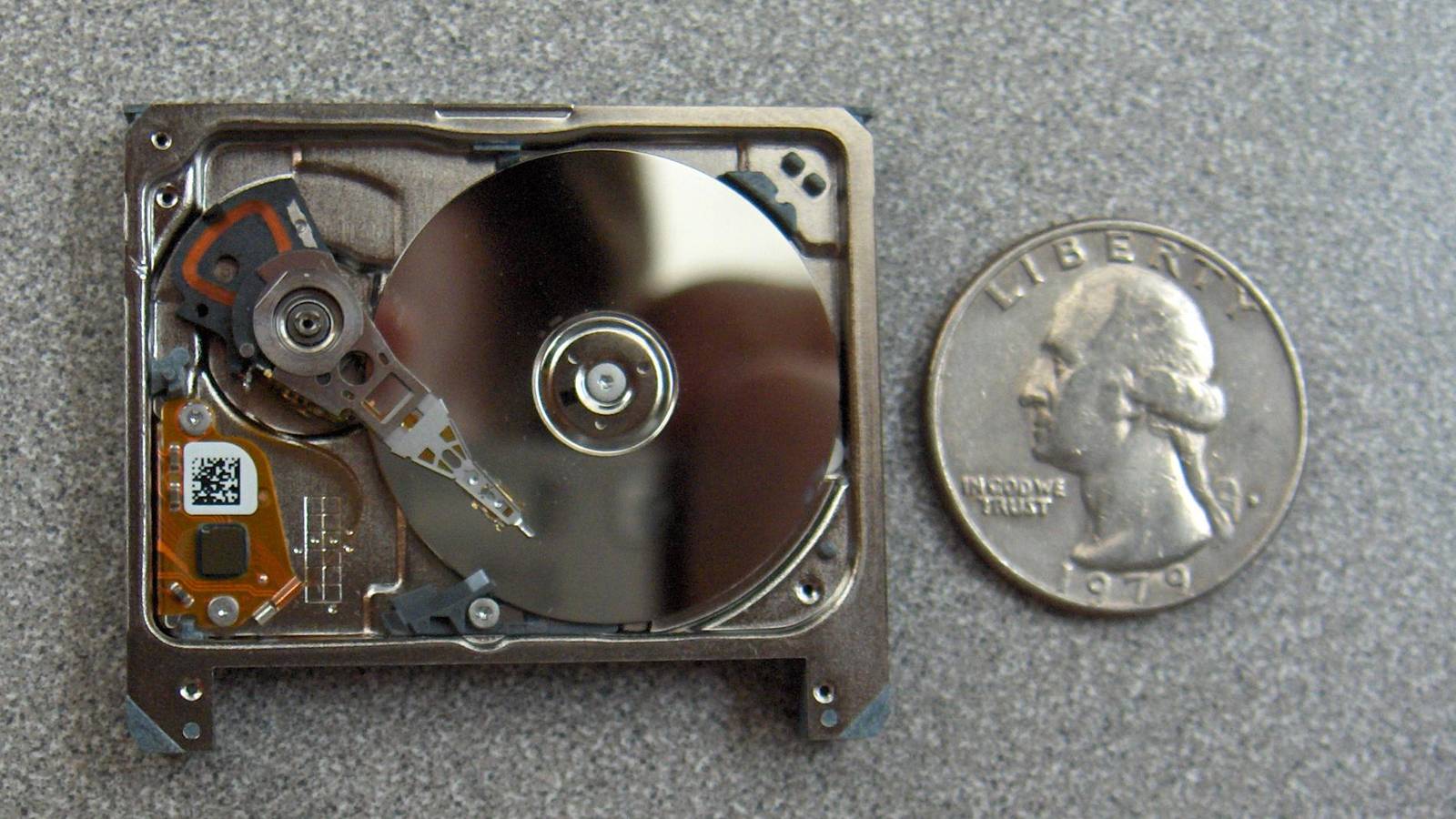
Published Oct 4, 2026, 3:30 PM EDT Ever since he got his first smartphone, the legendary Nokia 6600, back in 2005, Goran became obsessed with technology. This obsession had only gotten worse after he received his first gaming PC a couple of months later. He fell in love with video games in the early '90s, shortly after embarking on his gaming journey with the Sega Master System II and SNES. Since then, he has built dozens of PCs, played thousands of games, and authored hundreds of articles about PC hardware, gaming hardware, and video games. He knows everything there is to know about the PC gaming and PC hardware space, and while his console gaming knowledge isn't as comprehensive, he considers himself a console veteran. Goran has almost a decade of experience writing about tech and video games for numerous web publications including TechSpot, TechPowerUp, and EsportsHeadlines. He has been writing for How-To Geek since December 2022. When he isn't gaming or deciding which component of his PC to upgrade next, you can find him strolling around Novi Sad while listening to music and contemplating what to play next. Nowadays, we're using just a handful of data storage media. Flash memory is arguably king, found in SSDs, memory cards, and the storage chips of countless devices all across the world. HDDs are still very important; they aren't as common in the consumer market as they used to be, but they're still the most widely used storage medium in data centers and homelabs. Lastly, there are Blu-ray discs and CDs, which aren't as popular as they were a decade ago but are still used to store movies, games, and music. On the other hand, there are dozens of storage formats that have appeared over the decades, thrown their hats into the ring, and ultimately lost for one reason or another. Many made lofty promises, and while some actually managed to deliver on them, they still faded into oblivion. The technology behind them is striking, but the harsh truth is that you can't succeed in the market just by offering the most impressive product out there. Microdrive A miniature hard drive that arrived just in time to be replaced by flash memory Credit: Linus Tech Tips/YouTube In the 1990s, IBM decided to shrink the hard drive, and it succeeded in impressive fashion. The Microdrive was so tiny it looked like a toy, but it was a fully functional HDD with a platter barely larger than a quarter. While the initial models couldn't boast particularly large capacities, later ones managed to store up to 8GB of data on their tiny platters. The Microdrive found its way into the iPod mini, which was a big hit. But Apple moved on from the Microdrive to flash, which powered the iPod nano, released in 2005. The Microdrive also ended up in the Nokia N91, a music smartphone from 2006 that packed a 4GB version of the miniature HDD. But phones soon moved to flash, too, with the Sony Ericsson W950, which came out the same year, also packing 4GB of storage, but in the form of flash memory. The world moved to flash just as the Microdrive found success, and two decades later, flash is still the most popular storage technology around, while the tiny HDD has long been forgotten. IBM 3850 Mass Storage System "Honeycombs" that stored hundreds of gigabytes in the 1970s were too complex for their own good Credit: ineedths.com Magnetic tape is still used in many data centers for archival and backup storage, and the IBM 3850 Mass Storage System (MSS) used the same technology. The catch is that IBM's solution was developed in the 1960s and arrived on the market in the 1970s, so each tape cartridge could store only 50MB of data. But the elevator pitch of the "honeycomb" storage system was its capacity; some honeycomb-shaped arrays held thousands of cartridges that could store hundreds of gigabytes of data, which was massive for the time. With that many cartridges to juggle, 3850 MSSs used a robotic arm called an accessor that would take cartridges and feed them into a reader and writer device, which could process multiple tapes at once. The system was powerful, but it was also very complex, especially compared to hard drives. MSSs were also much slower than hard drives, which were getting faster, smaller, and cheaper, while 3850 MSSs kept their gargantuan size, high complexity, and high cost. Ultimately, the technology turned out to be a dead end, and IBM sunsetted it in 1986. Sony HiFD Sony made a floppy for the 21st century, but HiFD was dead on arrival Sony had big plans for its 200MB floppy disk, dubbed HiFD (High Capacity Floppy Disk). It was supposed to kill the floppy and "become the floppy disk of the 21st century," according to Takayasu Hirano, VP of Sony Electronics' recording media and energy group. Sony developed HiFD with Fujifilm, and the companies announced it in 1997. A major advantage of HiFD compared to other "floppy killers" of the time was full backward compatibility with regular 3.5-inch floppies. But just as the drive was about to arrive on the market, technical problems pushed the launch from early 1998 to late 1998. Worse still, once HiFD hit the shelves, it was available only in extremely limited quantities. To add insult to injury, less than a month after its debut, Sony recalled HiFD drives due to a read/write head misalignment issue that plagued every single unit. HiFD's second coming was a year later, but by that time, the 250MB version of the Zip drive was already out and about, most of Sony's partners had opted out of producing HiFD drives, and the CD-RW was taking over the market thanks to its low price and 650MB of capacity. Sony discontinued HiFD by early 2001, and while it was arguably the most impressive successor to the 3.5-inch floppy, it ended up a resounding failure. Bubble memory A hard drive competitor from the 1970s that couldn't keep up with spinning disks Andrew Bobeck, an engineer at Bell Labs, began developing bubble memory in 1967. The technology used magnetic material in the form of a thin film that would hold small, roughly round magnetized areas called "bubbles." Each bubble was able to store a single bit of data, and the medium used included chips stored inside small modules made of metal. The project was deemed promising, and bubble memory was supposed to replace core memory, a type of random-access memory used in computers between the 1950s and 1970s, and eventually even hard drives. Texas Instruments created the first commercial bubble memory module in the late 1970s, sporting a whopping 92-kilobit capacity. Intel broke the 1-megabit barrier in 1979, but once again, hard drives rained on a promising storage medium's parade. HDDs were cheaper and faster and offered much larger capacities, making bubble memory yet another dead-end storage tech that died off by the end of the 1980s. InPhase Tapestry 300GB holographic discs were impressive, but they never made it to market Credit: InPhase Technologies / PCMag.com In 1996, we got the DVD (Digital Versatile Disc), and in the 2000s, we were supposed to get the Holographic Versatile Disc (HVD). HVD was abandoned due to a lack of funding, but holographic storage had other avenues, one of which was Tapestry, developed by InPhase Technologies, a startup that spun out of Bell Labs in 2000. InPhase Technologies promised holographic discs that would be able to hold 300GB of data with max transfer rates of 20 MBps, but that was just the beginning. The ultimate goal was producing discs with a capacity of 1.6TB, which would be unheard of for an optical disc even today. But as was the case with every other holographic storage medium before it, InPhase Tapestry discs were extremely complex to create. The original launch moved from 2006 to 2008, and InPhase actually managed to build its holo disc, which had 300GB of storage space but was set to cost $180. The drive required to read and write to the discs was going to sport a ludicrous $18,000 price tag. The kicker was that Tapestry never made it to market, which ultimately led to InPhase's demise. The company ran out of money and filed for bankruptcy in 2011. DataPlay optical discs Quarter-sized optical discs were a great idea, but the execution left a lot to be desired In a world dominated by CDs for storing music and flash memory cards as removable storage in many gadgets, DataPlay tried to topple both with tiny, postage stamp-sized optical discs that would be used for storing music, but also as removable storage in various gadgets. The promise was to cram 500MB of data onto the miniature disc, with the original asking price set at between $5 and $10 for a single disc and between $200 and $300 for the DiskGo, a device that would transfer data from memory cards to DataPlay discs. The technology was the star of CES 2001, and it launched in 2002. At first, DataPlay looked like a sure bet, especially because the discs used a complex DRM (digital rights management) system, which the music industry's big names loved. But between the rising popularity of the iPod and its rivals, the high cost of the players, the obnoxious DRM, and the widespread use of CDs, DataPlay optical discs died off soon after launch. When it comes to data storage, a lot of stars have to align for a product to become successful Data storage is a cutthroat game where only a few survive. A slew of factors has to align in your favor for you to succeed, and even then, a nascent technology that's better suited to the mass market can undo decades of work in just a few years. The result is that the modern world uses just a handful of storage media, while mountains of others have been consigned to the dustbin of history, no matter how revolutionary or impressive they were.
These 6 storage technologies promised everything, then disappeared without a trace
Full Article
Original Source
Read the full article at Howtogeek →KhanList aggregates and links to publicly available news content. We do not host full articles from third-party sources. Always verify important information with original sources.