
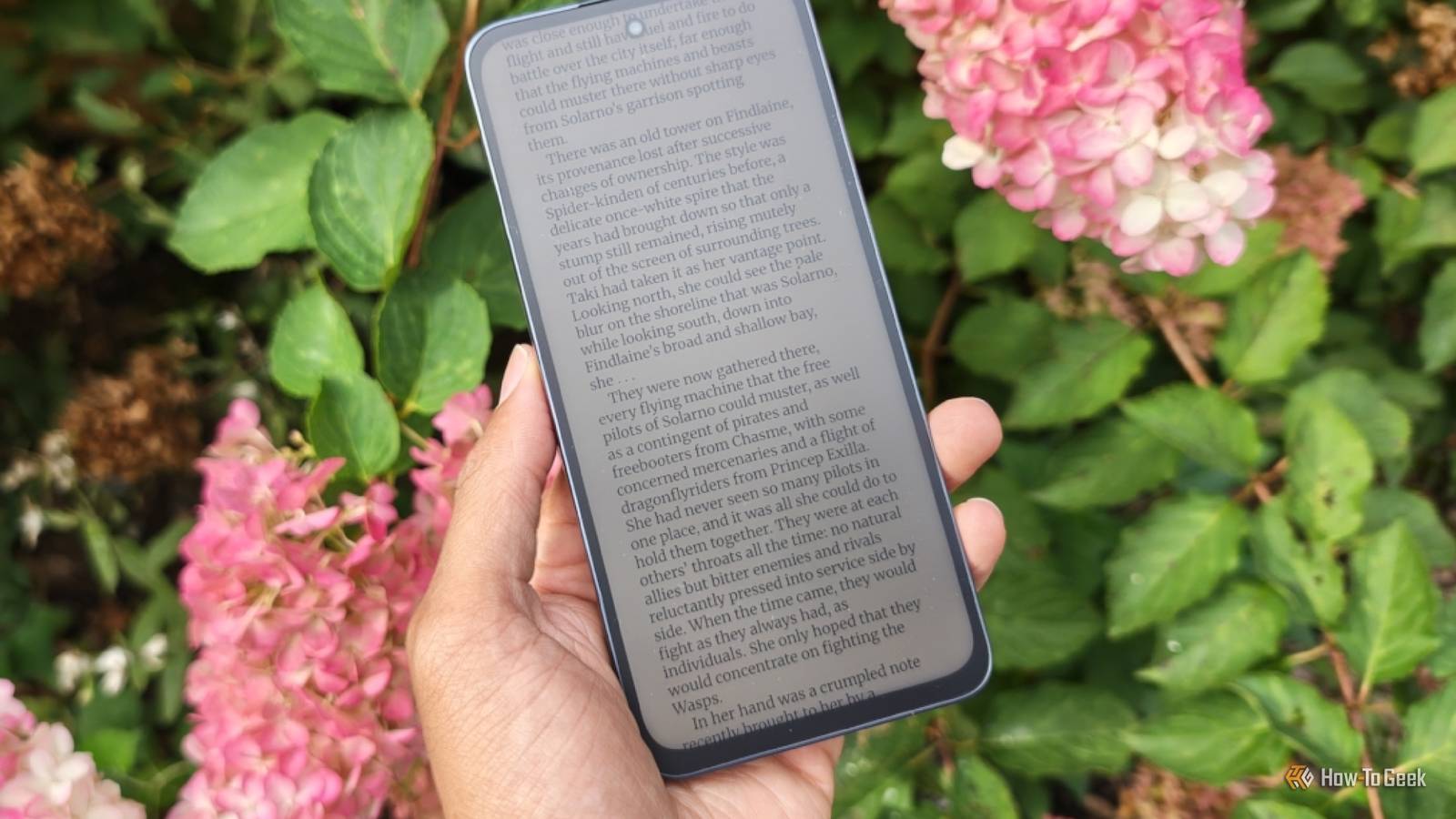
Published Oct 10, 2026, 9:00 AM EDT Ismar is a Senior Author at How-To Geek. He previously worked as a writer, editor, and general manager at a content agency before joining the team in 2023. He began his writing career in 2021 after completing a BA in English Language and Literature. Beyond How-To Geek, Ismar has contributed to Red Stag Fulfillment and Authority Hacker. He has also worked on various SEO projects to help clients improve their search visibility. Ismar has been around Windows PCs since the age of three, so friends and family naturally chose him as the resident tech support. His projects often involve tinkering, such as disassembling mechanical keyboards and gaming mice to mod his beloved gear. He also enjoys pushing hardware to the max through overclocking while staying on a reasonable budget. An avid gamer, Ismar has logged thousands of hours across various genres, including first-person shooters, RPGs, racing games, and roguelites. When he is not at his desk, he is probably exploring other people’s phones to discover their quirks and features or experimenting with the latest AI tools. In his free time, Ismar enjoys spending time with his wife, working out at the gym, playing guitar and bass, cooking gourmet meals, and traveling. Above all else, he’s a proud cat owner. In the early days of Android, it seemed like every other week we'd see a completely brand-new phone from an established tech giant. Everyone was taking a stab at it. But as Android matured, a select handful of brands became the go-to choices for most buyers, namely Samsung, Google Pixel, and Motorola, while almost every other brand disappeared from the discourse. Well, as it turns out, many of those brands you think disappeared over the years are actually still making phones today, and some of them are surprisingly good. The TV brand TCL makes Android phones with displays made to look like paper A screen that doesn't look like a screen Credit: Bertel King / How-To Geek TCL is well-known for its affordable TVs that millions of people buy on a whim during a Black Friday sale every year, but did you know that the brand also makes phones? TCL first launched a smartphone under its own brand in 2019 with the TCL Plex. Many thought TCL was very late to the market, as more established Android brands like LG were already showing major signs of struggle. Weirdly enough, TCL never stopped selling phones, which means there's still enough demand for the brand to keep making and selling new ones. And I think I know why. TCL has released several models this year, but by far the most interesting is the NXTPAPER 70 Pro. NXTPAPER is TCL's brand name for its proprietary matte LCD display technology, which is designed to look and feel like paper. While it might seem weird to see a modern Android phone with a display that isn't OLED, NXTPAPER is surprisingly great for people who want a more comfortable viewing experience. TCL also makes NXTPAPER tablets that offer an e-reader-like experience, but for those who want a smartphone form factor with a fully functional Android operating system underneath, this is a unique choice. Sony's Xperia phones are still around for people who want something different Sony still makes room for the headphone jack Credit: Sony Sony is a massive conglomerate that makes everything from TVs and high-end headphones to the PlayStation. For a very long time, the brand had a strong smartphone division under the Xperia name, which actually traces its roots back to the joint venture between Sony and Ericsson. Given Sony's history with Walkman portable audio players and its camera sensors, it had a unique combination to offer with Xperia phones. The brand always had the best on-board audio processing, and the cameras were always solid, even in budget models. Personally, I always liked Xperia phones for their cool blocky design with sharp corners that Samsung was using not too long ago with the Galaxy S24 Ultra. Although Sony no longer releases its latest Xperia phones in the US, the brand still sells some surprisingly good midrange and flagship phones across Europe and Asia, with limited availability in other markets. The brand has proudly retained the microSD card slot and the 3.5mm headphone jack and turned it into a key selling point of its (awfully named) flagship, the Sony Xperia 1 VIII. HTC still makes Android phones, just not the ones you remember A far cry from the days of the HTC One Credit: Joe Fedewa / How-To Geek HTC was one of the biggest and most important Android brands in the early and mid-2010s. The HTC Evo 4G was one of Sprint's best-selling and most significant phones in 2010, while the Droid Incredible was another popular Verizon alternative. During that era, HTC released numerous other models that were especially popular among power users and businesspeople. Before the iPhone 6 defined an era of smartphone design with its unibody aluminum body and antenna cutouts, the HTC One M7 and its successor, the One M8, had already embraced a similar design and sold millions of units. Plus, they had those awesome stereo front-facing speakers that were unmatched for gaming and content consumption. As the years went on, HTC continued making pretty decent phones, with a big focus on the midrange. Unfortunately, it just couldn't keep up with Samsung and Apple, while competition from Chinese brands squeezed it out of the market. Despite all that, HTC surprisingly hasn't quit the Android market just yet. While the brand stopped releasing phones in the US in 2018 with the HTC U12+, it still sells phones internationally under the budget Wildfire branding. The latest model is the Wildfire E7 Plus, which has a 720p display, a MediaTek Helio G99 SoC, and 8GB of RAM. HTC hasn't announced any phone releases for 2026 so far. Needless to say, these Wildfire phones are a far cry from the heights of the One M8, which goes to show just how much the brand has fallen from its glory days. Lenovo still makes Android phones, and I don't just mean Motorola Lenovo's Legion gaming phones disappeared, then came back Before Lenovo bought Motorola in 2014, the brand known for its laptops had a healthy selection of midrange Android phones. After the acquisition, Motorola became Lenovo's main smartphone brand in the US, but Lenovo never permanently stopped selling Android phones under its own name. To be more specific, Lenovo also sold Android phones outside the US under its Legion sub-brand, which is also Lenovo's brand name for its gaming laptops. There's also a near-endless sea of Lenovo Android tablets, but that's off-topic. The crazy part about the Legion phone's story is that Lenovo shut the line down in 2023, only to revive it this year with the Legion Y70 (2026), right as we're in the middle of a RAM shortage that's forcing other brands to scramble. It's exclusive to China, but because of its incredible specs (144Hz 2K screen, Snapdragon 8 Gen 5 SoC, up to 16GB of RAM, and an 8,000mAh battery) and roughly $480 starting price, some people choose to import it and live with any potential downsides that come with it. The Android phone market is more diverse than you think Many Android brands have come and gone over the years. Some, like Sony and HTC, used to be dominant forces but have now largely retreated to international markets, while brands like TCL and Lenovo never had a massive presence in the US to begin with. Whatever their story, it's interesting to see these brands still making and selling phones today, often with wildly different approaches to smartphone design and philosophy.
These 4 Android phone brands you forgot about are still making phones
Full Article
Original Source
Read the full article at Howtogeek →KhanList aggregates and links to publicly available news content. We do not host full articles from third-party sources. Always verify important information with original sources.