
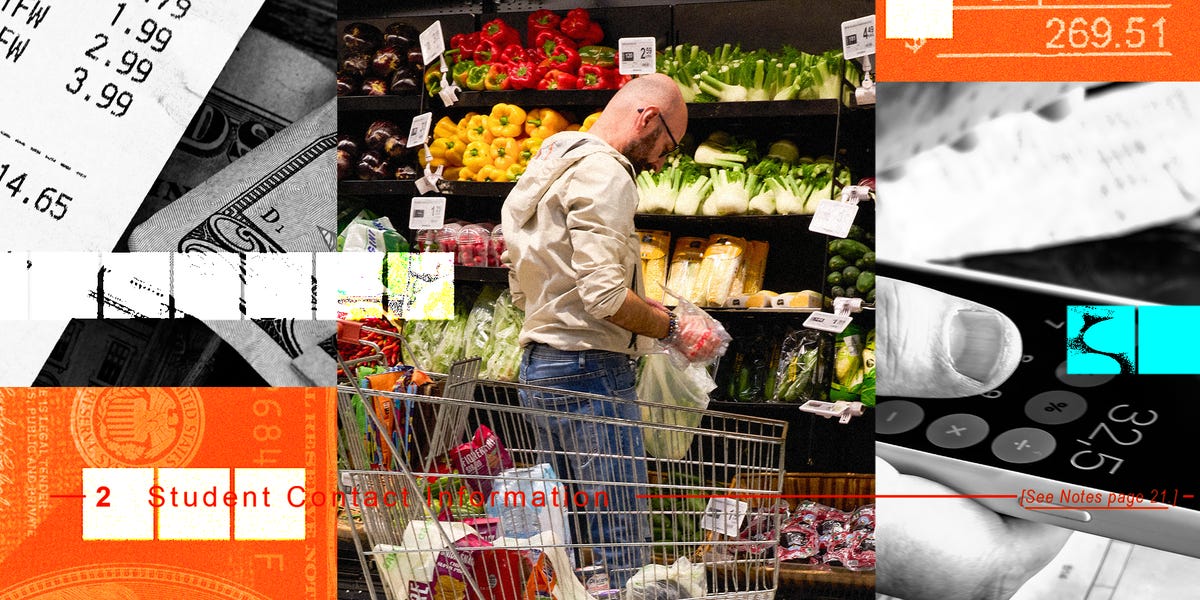
Student-loan borrowers are cutting back on home purchases and groceries to afford higher monthly payments. Matteo Della Torre/Getty Images; Alyssa Powell/BI Their surging student-loan payments are pushing them to slash their budgets and delay life milestones Student-loan borrowers are cutting back on home purchases and groceries to afford higher monthly payments. Matteo Della Torre/Getty Images; Alyssa Powell/BI Cristian Barcenas is getting ready to cut out date nights, food delivery, and Starbucks.He graduated from the University of California, Fresno, in 2013 with a student-loan balance of about $65,000. Barcenas took out additional loans to pursue a master's degree, but left early to care for his father, who had cancer. His balance now stands at $127,000.Barcenas, who works full time in sales in California, was making $105 monthly payments under the Biden-era SAVE repayment plan. President Donald Trump eliminated SAVE, and in November, Barcenas' payments are expected to spike to $815 per month."When I saw how much the payment is expected to be, I freaked out for a whole week," the 40-year-old said. "I, under no circumstances, want to default."Barcenas and his wife combed through all their expenses over the past three months. He said it was "jaw-dropping" to see that they spent over $300 on Starbucks and $600 on grocery deliveries in that time.The couple has started grocery shopping more carefully and in person, and Barcenas has stopped using Uber for rides. They've also cut their date nights down to once a month to free up more money for student-loan payments.Beginning in July, more than 7 million borrowers received notices to transition off the SAVE plan, and many of them are gearing up for higher payments. More than 1,000 borrowers have told Business Insider over the past year that they're worried about factoring a higher bill into their budgets and are considering taking on second jobs or digging into retirement savings to make it work.The Trump administration has said that its student-loan changes are intended to simplify a complex repayment system, curb excessive borrowing, and compel colleges to lower tuition. Barcenas said he thinks the changes will lead borrowers to "want to hold onto what they have even more.""There's going to be a lot of fear around spending because they know that they have this obligation that they can't really get out of, and that's going to be prioritized over everything else," he said. Delaying life milestones for student-loan paymentsRey Sosa expects his student-loan payments to surge from $50 a month to more than $700. The 32-year-old urban planner is paying off a $101,000 balance, largely from his master's degree in urban planning, and while he's still on forbearance, he's configuring his budget to make it work."I based my entire life around that payment coming back at some point," Sosa said. "The amount shocked me at first, and while I have a budget for it, it does take away from saving for home, saving for kids, family, because that is what we have to scale back right now."The Department of Education has recommended that borrowers enroll in its new Repayment Assistance Plan, intended to be the most affordable income-driven repayment plan. A recent report from the Center for American Progress, a left-leaning think tank, said that borrowers moving from the SAVE plan to RAP could see their student-loan bills increase by $2,163 annually on average.Sara Partridge, associate director of higher education at CAP and a coauthor of the report, said that the payment increases come "at a time when there is high inflation, stagnating wages, and people are generally feeling financially strained," making it more difficult to budget. Amy Webb, a 60-year-old borrower, said she's feeling that strain. She has a $178,000 balance that she took out for her son's education as a single parent and is concerned about higher monthly payments. She's unable to purchase a new car, she refinanced her house, and she's considering selling it and moving out of Virginia to a state with a lower cost of living."I don't know how long I can do this," Webb said. "I wish the government would help." Sosa hopes to achieve Public Service Loan Forgiveness, which forgives student debt for government and nonprofit workers after 10 years. But with about six years of payments left, he anticipates pushing back big purchases like a first home."I understand that we have to repay our loans," Sosa said. "That's not what I'm upset about. What I wish is that there was more consideration into the cost of living. The world just got more expensive after school."Have a story to share about student loans? Contact this reporter at asheffey@businessinsider.com. Student Debt Spiral Student Debt Student Loans More Most popular Business Insider tells the stories you want to know about the world of business, technology, and finance Business Insider tells the stories you want to know about the world of business, technology, and finance Business Insider tells the stories you want to know about the world of business, technology, and finance Business Insider tells the stories you want to know about the world of business, technology, and finance Business Insider tells the stories you want to know about the world of business, technology, and finance Business Insider tells the stories you want to know about the world of business, technology, and finance Ayelet Sheffey is a senior reporter at Business Insider covering education and student loans. She has appeared on shows including C-SPAN, CBS News, NPR, and SiriusXM to discuss her student-loan coverage, including her investigation on private student-loan lending.She graduated from American University in 2020 with a bachelor's degree in journalism. You can reach her via email at asheffey@businessinsider.com or message her securely on Signal at asheffey.97. You can also find her on LinkedIn, and on Reddit at the username u/Ayelet_Sheffey_BI.
Their surging student-loan payments are pushing them to slash their budgets and delay life milestones
Full Article
Original Source
Read the full article at Businessinsider →KhanList aggregates and links to publicly available news content. We do not host full articles from third-party sources. Always verify important information with original sources.