
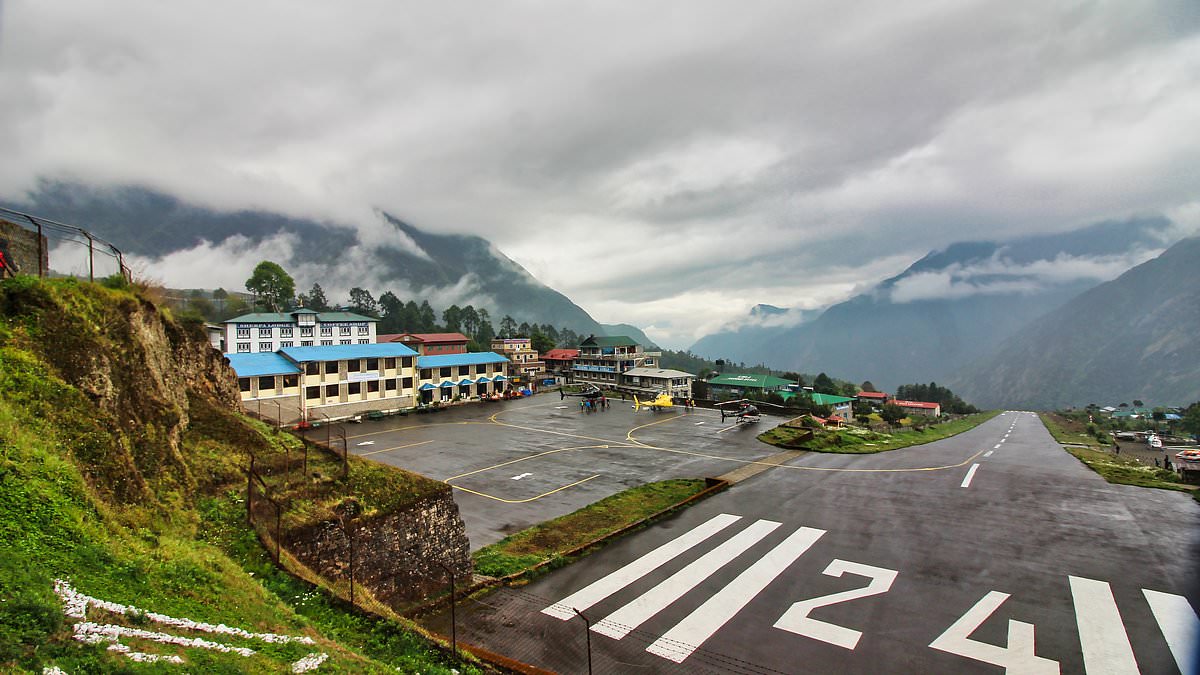
It's all fun and games jetting off abroad on holiday – until the word no passenger ever wants to hear is uttered: emergency.Whether it's a technical problem with the plane or a medical issue on board, having an aircraft make an unplanned landing is something all holidaymakers want to avoid.In most cases, the plane will land at an ordinary airport and resolve the situation – much like the recent Delta Air Lines flight, which made an emergency landing on August 13 at London Heathrow. The aircraft was due to make a 10.5-hour journey from Paris-Charles de Gaulle to Seattle-Tacoma International Airport, but just 40 minutes into the trip, a mechanical issue was reported by crew members regarding the cabin's bathroom facilities. After landing, it went on to continue the voyage and finally landed in Seattle at 2.35am on August 14 – totalling nearly 20 hours in journey time.Despite the lengthy flight and delay, there are still far worse circumstances the passengers could have found themselves in if they were forced to land elsewhere.From war zones to the middle of the ocean – here are some of the worst places on Earth for an emergency to unfold.Mountainous areas Mountainous areas, like Tenzing-Hillary Airport in Lukla, Nepal (pictured), can create challenging conditions for emergency landingsThe landscape can make unplanned landings difficult too, such as areas with high peaks and mountains. David Martin, managing director at aerospace tooling supplier Heamar told the Daily Mail: 'Mountains bring their own set of challenges. There may be very few large, flat areas where an aircraft could land, while high terrain, unpredictable weather and poor visibility can restrict a pilot's options even further.'He highlighted Tenzing-Hillary Airport in Lukla, Nepal as 'a striking example of how challenging geography can be'. 'It sits high in the Himalayas, surrounded by steep terrain, with a runway just 527 metres long,' Mr Martin added.According to the expert, the Civil Aviation Authority of Nepal notes the hub's narrow valley and surrounding mountains leave 'limited room for aircraft to manoeuvre and can make a go-around extremely difficult once an aircraft is on short final'.However, it doesn't mean the airport is 'inherently unsafe', said Mr Martin. Indeed, there are procedures in place that 'are specifically designed around these challenging conditions'. He added: 'Ultimately, the places you would least want an emergency to develop are those where several challenges collide: difficult terrain, severe weather, limited diversion airports, and a long distance from emergency services. 'The fewer options available to a pilot, the more challenging the situation can become.'War zones Making an unplanned diversion to countries currently at conflict with others can be difficult tooMaking an emergency landing in a country that is currently embroiled in active conflict with others is a tricky situation. Last year, an Air China flight from London Heathrow to Beijing diverted to Nizhnevartovsk in Siberia, Russia after experiencing issues with its engine. Simon Calder wrote in the Independent at the time how the location is 'not a welcoming environment for a diverted plane'.The crew and passengers reportedly had to stay on board the aircraft for 11 hours while a replacement plane was sent to the hub to continue the journey. Typically, passengers in such situations are allowed to disembark and wait in the airport or even a hotel.Current Foreign Office advice for Russia reads: 'There is an increased risk of British nationals being detained in Russia, including if the Russian authorities suspect you of engaging in or supporting activities against Russian law, even if activities took place outside Russia. 'Russia has a track record of targeting foreign nationals and holding them in detention as leverage over other countries. FCDO's ability to assist you in these circumstances is extremely limited.'Politically complicated countriesAlthough the UK has maintained a formal diplomatic relationship with North Korea, making an emergency landing there could prove tricky. At the moment, the UK Foreign Office warns against all but essential travel to the country and says: 'While daily life in the capital city, Pyongyang, may appear calm, the security situation in North Korea can change quickly with no advance warning about possible actions by the authorities.'It follows a totalitarian regime ruled by the Kim dynasty, and the government has even previously threatened to shoot down planes in its airspace, The Telegraph reports. Fortunately, South Korea is a more likely spot for a diversion to take place given its location, compared to Pyongyang airport which is further inland. The ocean Emergency landings in the sea are rare due to commercial flights being carefully planned to be near airports for diversionsBeing forced to make an emergency landing in the middle of the vast ocean is less than ideal. 'Ditching' is the term used when a plane has to make an emergency landing in the water with no runway reachable, according to Pilot Institute. This can be caused by issues such as engine failure or fuel shortage, when a 'Mayday' call is sent from the pilot.The Pacific Ocean, for example, has fewer diversion airports available.However, being forced to land in the ocean is quite rare. Captain Steve revealed in a TikTok posted on @CaptainSteeeve: 'We train for that all the time.'When flying over the Atlantic, pilots follow 'tracks' that keep aircraft safely separated from one another.Captain Steve explained: 'You're never more than two hours at most from a suitable alternate.'Mr Martin echoed this and said: 'Commercial flights are carefully planned so that, if an emergency develops, pilots have suitable airports they can divert to. Modern twin-engine aircraft also operate under strict ETOPS rules, which determine how long an aircraft can be from a suitable diversion airport if one engine fails.'So being hundreds of miles out at sea doesn't necessarily mean there's nowhere to land. The challenge is that the further away the nearest suitable airport is, the longer the aircraft may need to keep flying before it can get safely on the ground.'
The worst places on Earth for a flight emergency: From war zones to vast oceans with nowhere to land
Full Article
Original Source
Read the full article at Dailymail →KhanList aggregates and links to publicly available news content. We do not host full articles from third-party sources. Always verify important information with original sources.