
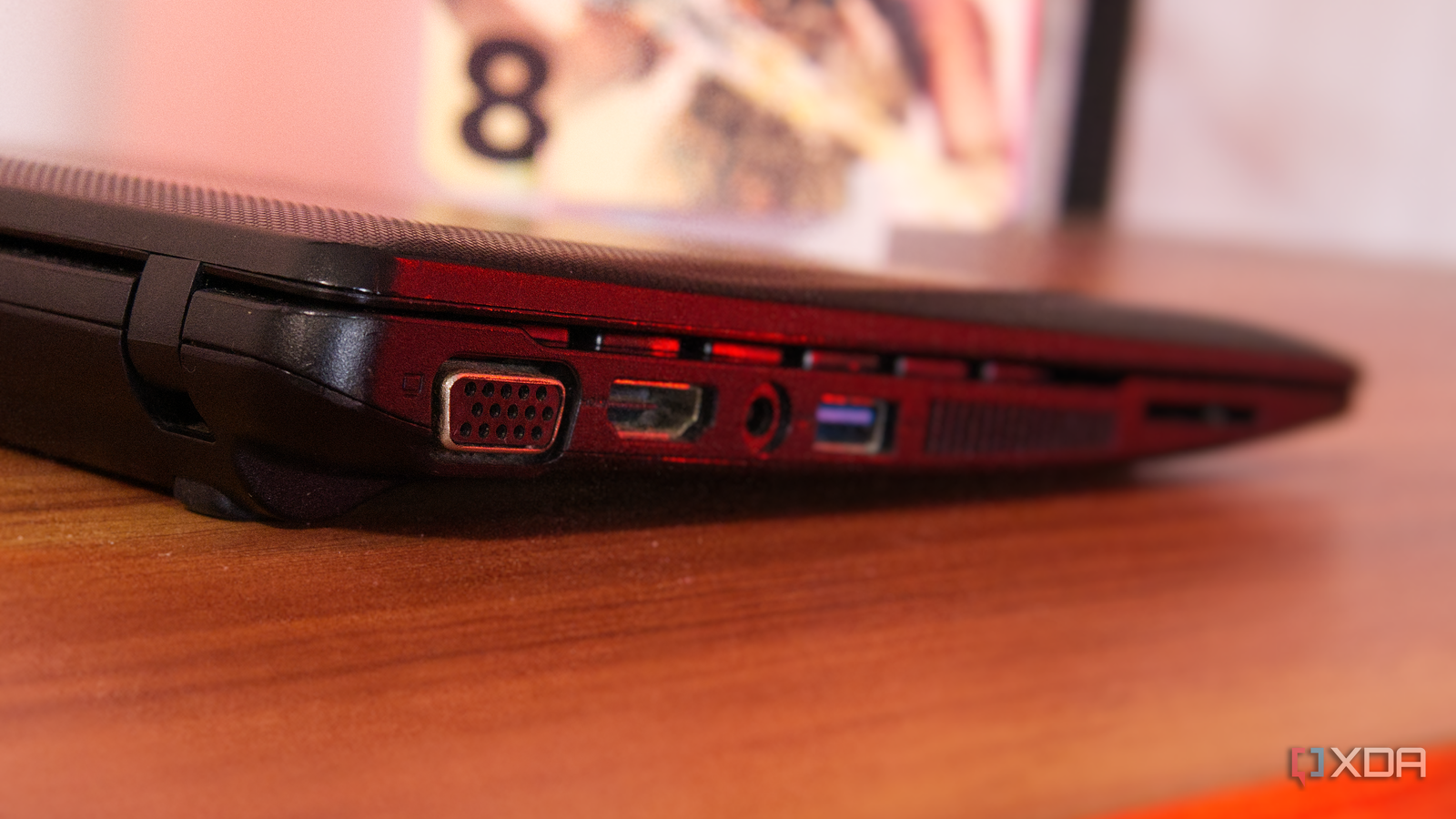
Published Aug 30, 2026, 4:30 PM EDT After a 7-year corporate stint, Tanveer found his love for writing and tech too much to resist. An MBA in Marketing and the owner of a PC building business, he writes on PC hardware, technology, and Windows. When not scouring the web for ideas, he can be found building PCs, watching anime, or playing Smash Karts on his RTX 3080 (sigh). Many of you may never have used anything other than HDMI or DP on your computers, but some of us still remember the days of the humble VGA port. A 15-pin analog connector, VGA was launched in 1987 to replace older display standards like CGA and EGA. While connectors like DVI and HDMI all but phased out VGA around a decade ago, it's still alive in certain environments and even on some modern motherboards. The arrival of newer technology doesn't necessarily mean that the older ports disappear completely. Adoption is often gradual, and many systems retain the older connectors for convenience and cost savings. That's exactly the story of the VGA connector. VGA was king until gaming displays forced it out It was the de facto standard for a decade Like many other PC standards we have used for decades, the Visual Graphics Array (VGA) connector was introduced by IBM alongside its PS/2 systems back in 1987. It used a D-subminiature connector with 15 pins arranged in three rows of five pins each. It transmitted analog display signals, unlike the digital formats we use today with HDMI and DP. Becoming a universal standard by the end of the 80s, it remained so for a decade before we went digital with DVI around 1999–2000. VGA supported 1080p resolution and 16-bit color depth after some technological improvements. I fondly remember the struggle of screwing in the blue VGA cable on my gaming PC for six years before upgrading to a flat TN display around 2006. Being an analog signal, VGA was prone to noise and distortion at higher resolutions. It worked fine for the 1024 x 768 resolution most people were using on their CRT displays before 1366 x 768 took over on flat monitors in the early-2010s, later giving way to 1080p in the mid-2010s. VGA had hit its technical limits by then, and DVI and HDMI were fast replacing it on gaming displays. Gamers needed higher resolutions, refresh rates, adaptive sync, multiple displays, HDR, and cleaner digital signals. This necessitated the rapid transition to the HDMI and, later, the DP connector. However, this didn't erase VGA from existence everywhere. It became obsolete, but not extinct It still powers tens of millions of devices Credit: Wikimedia Commons While gamers and other PC users had left VGA in the past, it remained a fixture for various other kinds of users. Enterprises, educational institutes, hospitals, and industrial installations rely on VGA to this day. The installed base is enormous, and replacing it with something else entails a huge cost in terms of new PCs, displays, and projectors, installation time and labor costs, and disposal of old hardware. Besides, why would they replace it if the upside is slim anyway? Users in these setups need simplicity and reliability, not high-end features or cutting-edge resolutions. As long as desktops, projectors, medical equipment, and industrial machines can keep working on VGA, the motivation to phase it out doesn't arise. The hardware lifecycle in companies and institutions is way longer than people think. VGA has been obsolete for years, but that doesn't mean it stopped functioning the way it used to. Most enterprise installations don't need anything more than a 1080p analog signal, and when needed, a cheap adapter can ensure compatibility with modern digital inputs. Even some modern motherboards ship with the VGA port to ensure backwards compatibility with old display equipment. VGA reached its natural end on consumer systems, but lived on elsewhere When games demanded higher specs from consumer displays, something had to replace the analog VGA connector. DVI, HDMI, and DP answered the call, and it was the end of VGA on gaming PCs. Millions of other users, however, continued to use VGA on office PCs, projectors, medical devices, and other industrial systems.
The VGA port refuses to die in 2026, and the reason has nothing to do with nostalgia
Full Article
Original Source
Read the full article at Xda-developers →KhanList aggregates and links to publicly available news content. We do not host full articles from third-party sources. Always verify important information with original sources.