
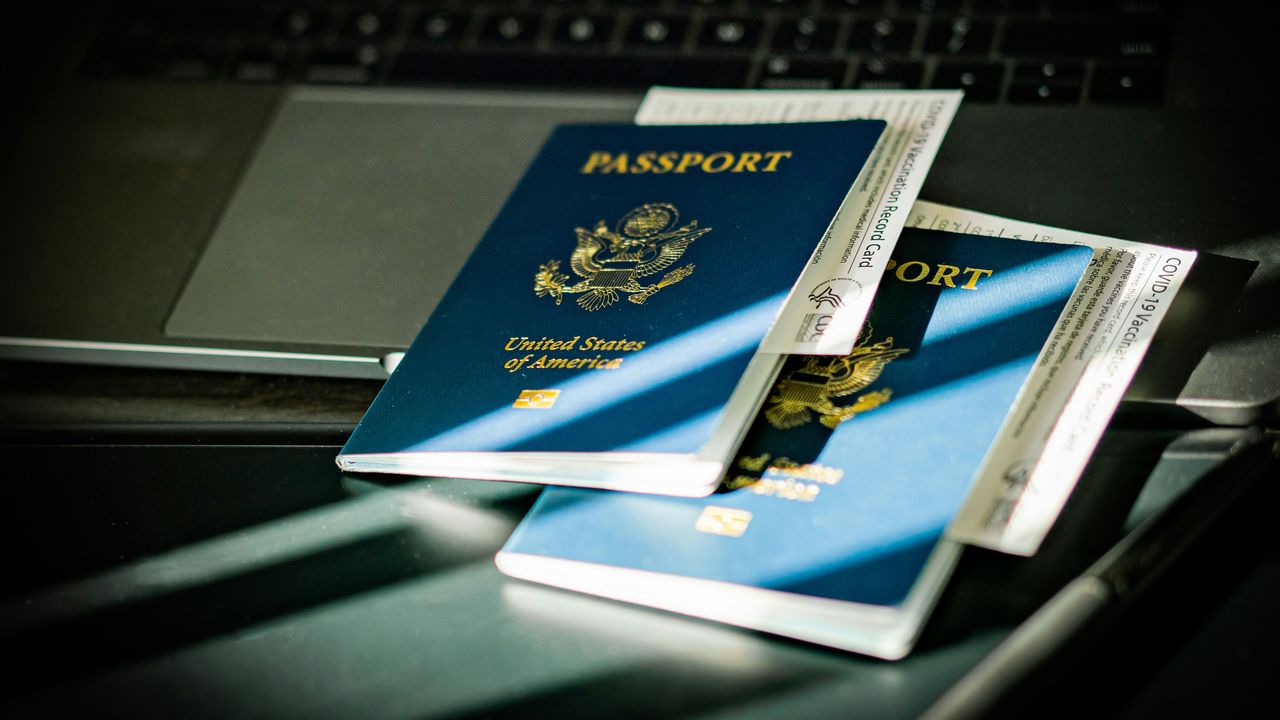
Getting a US passport will soon no longer require a trip to your local Walgreens for a fluorescent-lit headshot.Starting in 2027, Americans will be able to apply for their first passport entirely online through a new federal portal designed to put government information, forms, and services in one place. Secretary of State Marco Rubio announced the changes on September 29, summing up the new digitized process as: “No printing forms, no drugstore hostage photo, no appointment, no line, no middleman.”The new portal is expected to let first-time US passport applicants complete the entire process online, including the ability to take your passport photo at home, pay the required fees, and then track the application through to an estimated delivery date.But the changes don’t stop there. Beginning in 2028, the State Department plans to release a new passport design with a larger Great Seal on the cover, an eagle motif that appears to move as the pages are flipped, and a new 38-page format that will replace the current 26- and 50-page options.Taken together, the changes will reshape both how many Americans apply for a passport and what the document itself looks like. Here’s everything travelers need to know.First-time passport applications are going onlineThe State Department has allowed eligible Americans to renew their passports online since September 2024, but first-time applicants have remained tied to a much more traditional process. They generally need to fill out Form DS-11 and appear in person at an authorized passport acceptance facility, such as a post office, library, or clerk of court.America.gov is attempting to transition much of that process online. During the September 29 unveiling, officials demonstrated an application that starts with Login.gov and allows users to move through the passport process in one place, including filling out the application, submitting a photograph, paying the required fees, and eventually tracking the passport as it moves through processing.One of the more noticeable changes will be the photo. Rather than having to get passport pictures taken elsewhere, applicants will be able to take their own with a phone or upload an existing digital image.That doesn’t mean any image in your camera roll will work. Passport-photo requirements will still apply, including rules governing the background, lighting, positioning, and age of the image, and digitally altered or filtered photos are not allowed. Still, Rubio joked during the demonstration that people could take as many photos as necessary before settling on one they liked.The new system is also supposed to offer a clearer sense of when the document will arrive. Rubio said applicants will receive an estimated delivery date, and an America.gov preview shows a dashboard where users can track both the status of an application and its expected arrival.The rollout, however, will be phased. Rubio said the goal is for the “vast majority of Americans” to be able to apply online for a passport book or passport card by the end of 2027, which suggests that not every applicant or application type will necessarily be eligible from day one. The State Department has not yet released the full rules for who will qualify for the new online process or whether some first-time applicants will still need to verify their identity in person.Travelers also shouldn’t head to America.gov expecting to apply immediately. The site is live, but many of its transactional tools are still forthcoming; passport applications, form completion, and more detailed tracking are among the services expected to be added during 2027.GettySão Tomé and PríncipeThe tropical West African island nation of São Tomé and Príncipe lays claim to the world's fastest citizenship-by-investment program, averaging a two-month approval process. Additionally, the application is entirely remote, with no residency or language requirements. On the whole, the program is also one of the most affordable of its kind. There is a minimum contribution of $95,000 to start, composed of a $90,000 donation to the country's National Transformation fund and a $5,000 submission fee. For a family of two to four members, the donation fee increases to $95,000, and each subsequent dependent beyond that requires an additional $5,000. The $5,000 submission fee applies for each individual profile. Other requirements include being at least 18 years of age and in good health, having a clean criminal record and passing due diligence checks, and proving a valid source of income. Applicants holding three or more citizenships will also be rendered ineligible.The document itself is getting a redesign, tooOnce the application process changes, the passport itself won’t be far behind. The State Department plans to begin issuing a redesigned version in 2028, updating both the exterior and the pages for stamps and visas.The familiar blue cover will remain, but the Great Seal will become larger and more prominent, with “United States of America” repositioned above it. Inside, the design will incorporate an eagle motif that changes from page to page, creating the effect of the bird flying when the passport is flipped through quickly.There’s also a practical change that frequent international travelers will want to note. The State Department currently issues passport books in 26- and 50-page versions, but the redesign will replace those choices with a single 38-page book.For most passport holders, that will mean more space rather than less. Roughly 92% of applicants currently receive the 26-page version, according to the State Department, so the standard passport will effectively grow by a dozen pages. Travelers who regularly opt for the larger 50-page book, however, will lose that option, which could mean renewing more frequently if visas and entry stamps fill the pages before the passport itself expires.The redesign is expected to roll out as existing passport stock is replaced, meaning travelers may see both versions in circulation for years. Travelers with a valid passport won’t need to replace it just because the design has changed.What to know if you’re applying for a US passport nowFor now, the passport process remains largely the same. Anyone applying for a first passport should continue using the existing in-person system until the State Department formally launches online first-time applications, while eligible adults who need to renew can already do so digitally.Travelers with upcoming international trips also shouldn’t wait for America.gov’s new features or the redesigned book: Both are still at least months away, and current passports will remain valid through their normal expiration dates.The first America.gov passport tools are expected to arrive in 2027, with broader access planned by the end of that year; the redesigned passport follows in 2028. Until then, the most useful rule remains the old one: Check your passport’s expiration date well before you book—or at least well before you need to be at the airport.Currently, America.gov works a bit like a government-specific search engine: You can type in questions about things like passports, Social Security, Medicare, or changing your address and get an answer pulled from official federal sources, with links back to the original information. The site calls the technology behind that feature “Super Intelligence,” or “SI”—the administration’s term for AI—which is meant to understand what you’re asking and pull together an answer without making you dig through multiple agency websites. Later in 2026, the White House says the portal will start handling some transactions directly, including passport renewals and Medicare enrollment, with more services expected to follow.
The US Passport Application System Is Going Online in 2027—And the Document Will Look Different, Too
Full Article
Original Source
Read the full article at Cntraveler →KhanList aggregates and links to publicly available news content. We do not host full articles from third-party sources. Always verify important information with original sources.