
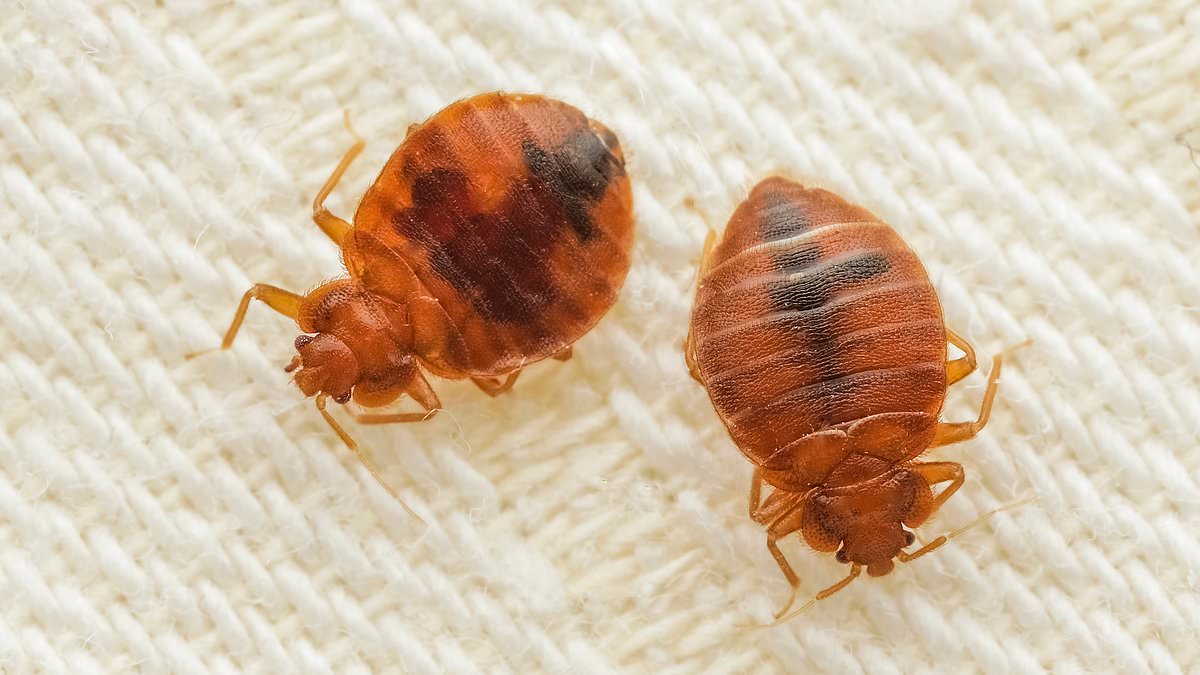
From public transport to hotel stays and even in the comfort of your own home, it has seemingly never been harder to avoid bloodsucking bedbugs. Cases of the reddish-brown, wingless insects are at an all-time high, with new research led by bed monitoring company Valpa uncovering an increase of between 20 and 25 per cent across big European cities.According to Martim Gois, co-founder and chief executive of the company, Europe is 'at peak bedbug' - with an unprecedented 'surge' in numbers observed in hotel rooms, the Times reports. This summer, 31-year-old Hannah Stephenson woke up with more than 100 bed bug bites after one night in a Cambridge Travelodge and discovered blood spots and bedbugs in her bedding. The tiny insects can hide in mattress seams, bed frames and upholstered furniture and are often transported into homes through luggage, clothing alongside second-hand clothes.According to Hannah Shore, Head of Sleep Science at MattressOnline, bed bugs can quickly monopolise if they are left untreated in 'soft furnishings' such as beds and bedding, carpets and curtains.She told the Daily Mail: 'Bed bugs are most commonly found in beds due to the easy access to food (blood), but during the day, they walk around in search of food, which may take them further afield. 'They often attach themselves to suitcases or climb into suitcases, meaning you then take them home with you and, if left untreated, they start a new colony there.'From how often you should really change your bedding to managing your mattress, read on to discover how best to avoid bed bugs during the 'peak' season... Cases of the reddish-brown, wingless insects are at an all-time high, with new research led by bed monitoring company Valpa uncovering an increase of between 20 and 25 per cent across big European cities1. Be aware of the early signs - including smells and stainsAccording to Sharon Robson, leading bed retailer at MattressOnline, the best way to overcome bed bugs is to be aware of the telltale signs of an infestation. She explained: 'Firstly, be wary of sweet, musty smells, which are a sign of a very large infestation. 'Keep an eye out for black or rust-coloured stains on bedding and mattresses. Lastly, look for empty, brown shells or flat, oval brown shapes, which may be the bugs themselves.'Meanwhile, Luke Arnel-Cameron, founder of Yass Clean, explained that catching bed bugs is particularly difficult as they are 'small, excellent at hiding and can easily go unnoticed until an infestation becomes established'. 'Your bedroom is where you want to feel most comfortable, so knowing what to look for and taking a few preventative steps can make a real difference,' he said. He noted that checking for bed bugs 'regularly' can help you spot an infestation in its early stages. 'Bed bugs tend to hide in small, dark crevices, making mattress seams, headboards, bed frame joints and screw holes some of the key places to inspect,' he said.'Look out for live insects, tiny pale eggs, shed skins and small dark spotting on the fabric or surrounding surfaces. Checking these areas regularly can help you identify a potential problem early.'2. Avoid storing items under the bed While clutter itself cannot cause a bed bug infestation, carpeted surfaces in particular offer plenty of cover for bedbugs to hide.Luke notes that it can become 'easy for the space underneath a bed to become a storage area for bags, boxes and spare bedding, but keeping it tidy makes it easier to inspect and clean'.He added: 'Avoid leaving piles of clothing or bedding on the floor, and vacuum around the bed frame and skirting boards regularly. 'While clutter itself doesn't cause bed bugs, reducing hiding places can make signs of an infestation easier to spot.'Meanwhile, Lynsey Crombie, the UK's No 1 home expert and also known as the 'Queen of Clean', advised keeping your suitcase downstaits after travelling. 'This keeps your luggage away from bedding, carpets and upholstered furniture while you inspect and empty it. 'A hard floor is also easier to check and clean afterwards. It isn’t a barrier that bedbugs cannot cross, but it makes a much more sensible unpacking area than your bed.'If you know your accommodation had bedbugs, inspect and contain your luggage before bringing it indoors.'3. Vacuum your mattress to give bedbugs fewer places to hideLynsey advises vacuuming your mattress 'every other week' as an additional precaution to avoid bedbugs. She added: 'A fully zipped, bedbug-proof mattress encasement can reduce hiding places and make signs easier to spot. It is different from a standard mattress protector, which may leave the sides and underside exposed.'Choose one designed specifically for bedbugs, with a secure zip, and check regularly for tears. Remember that it protects the mattress: it does not stop bedbugs hiding elsewhere in the bed frame or room.'Luke, meanwhile, noted: 'Pay particular attention to the seams, piping, buttons and crevices around the bed frame, as these are places where bed bugs can hide.'If you do suspect bed bugs, use the vacuum carefully and seal and dispose of its contents immediately in an outdoor bin.''Contact a professional pest control service rather than relying on cleaning alone to tackle the problem.'Hannah said: 'Vacuum your mattress and base, ensuring to take extra care around the hard-to-reach places such as the seams; you may also want to scrub in these areas to remove any bugs and eggs.'4. Try the credit card trick and check yourself for bites If you find yourself noticing an unwelcome visitor while sat on a packed train or in the corner of your bedroom, Sharon suggests using a credit card and phone torch to get to the bottom of things. She explained: 'A credit card acts as a handy probing tool to get into these tight spaces like mattress piping, corners of the bedframe, and any cracks. 'Gently press the card and scrape along creases to check for bugs and eggs.'Hannah added: 'Bed bugs are tiny in size, so finding them might be difficult. Be sure to look in hard-to-reach places such as mattress piping and tight corners of the bed frame. 'Also check yourself for any bites. They are similar to other bug bites and will be on areas of skin that were exposed throughout the night. 'Often these bites are in a line or a cluster and may perhaps have a little blood on them. You can treat these as you would do any normal insect bite.'5. Change your sheets once a week While changing your sheets regularly won't necessarily get rid of bed bugs altogether, Luke revealed that it can help you spot them early on. He added: ' ’d recommend changing your sheets around once a week as a general rule for keeping your bed fresh and hygienic. 'Although, it’s worth knowing that bed bugs aren’t a sign of poor hygiene, and changing your sheets more frequently won’t necessarily stop them from appearing.'Use changing your bedding as an opportunity to inspect your mattress seams, bed frame and headboard for any signs of bed bugs, such as small dark spots, shed skins or live insects. 'If you suspect an infestation, wash and dry bedding on the hottest settings permitted by the care label.'6. Be cautious when buying second-hand clothes Luke noted that buying clothes from a charity shop or inheriting clothes from friends or family can increase the risk of bed bugs roaming free. 'Second hand clothing can occasionally carry bed bugs, but the risk is relatively low and it shouldn’t put people off shopping sustainably,' he said. 'Bed bugs can hide in clothing folds, pockets and seams, so it’s sensible to check garments carefully before putting them away.'As an extra precaution, wash the clothes before wearing them where the care label allows, and use a hot tumble dryer if the fabric can tolerate it. 'If you’re concerned that an item may be infested, keep it separate from other clothing until you can treat it appropriately. Simply washing at a low temperature may not kill bed bugs or their eggs, so heat treatment is particularly important.'7. Use high heat and steam to kill any live bugs or eggs If you are at all concerned you have come into contact with bedbugs, Luke advises using heat to 'kill any live bugs or eggs'.Bed bugs typically struggle to survive in warmer temperatures as they cannot regulate their body temperature, while also drying out the insects which stops their proteins and enzymes from functioning.'You should clean your clothes on a hot wash cycle and dry on a high heat for 30 to 60 minutes,' Luke said.'This is especially important if you have recently travelled, as all clothing should go straight from your luggage into the washing machine to avoid further spread.'Lynsey, meanwhile, advises 'steaming carefully' to help treat bedbugs. 'Steam can help treat seams and fabric areas on a suitable soft-shell suitcase, provided the material and manufacturer’s instructions allow it,' she said.'However, the equipment and technique matter. Steam needs to reach the bugs where they are hiding, and a forceful jet can scatter them. A quick pass with a handheld steamer should not be treated as proof that a case is clear.'8. Invest in hard-shell suitcases while travelling While it may be tempting to buy the trendiest suitcase on the market, Sharon advised thinking carefully about the type of bag you are bringing to a hotel. She warned: 'Soft-sided luggage provides plenty of hiding spots for bedbugs, which means you may unknowingly increase your chances of bringing them back from your trip. 'Bedbugs grip onto rough or porous surfaces, while hard-shell luggage has smooth, solid surfaces, making it difficult for them to cling to. 'With the bonus of being easier to inspect and disinfect, it may be worth investing in if you're worried about the spread of these unwanted bedmates.'Lynsey added that suitcases should also require the same care as clothes if you fear bedbugs could have come close to your belongings. 'An empty suitcase isn’t necessarily a clean suitcase. Use a vacuum’s crevice attachment to work carefully around the lining, pockets, seams, zips and corners,' she said.'These small spaces can provide hiding places, so a quick sweep across the middle won’t cover everything. Afterwards, seal the vacuum bag or collected contents in a plastic bag and put it in an outside bin. Clean the vacuum according to its instructions.'For a hard-shell case, clean the shell with a suitable product, remembering that the lining and zip still need attention. Wipe the wheels and handles as part of your usual travel clean, but don’t mistake a disinfectant wipe for a bedbug treatment.'9. Don't neglect the laundry basket or unworn clothesContrary to popular belief, bed bugs extend far beyond just the confines of your bedroom - with Lynsey therefore recommending a frequent check of your laundry basket and wardrobe.She added: 'That unworn top may look perfectly clean, but wearing something isn’t what exposes it to bedbugs. Items stored inside affected luggage can carry them, too.'Check shoes, bags and other belongings as well, paying attention to seams and folds. If you suspect exposure, keep items in sealed plastic bags until you can treat them, and empty them directly into the machine rather than sorting them on the bedroom floor.'Don’t forget the laundry container. Bedbugs and eggs can hide in hampers, so these need attention alongside their contents. Clear plastic containers with close-fitting lids can be easier to inspect and clean than fabric baskets. 'If you suspect bedbugs, use sealed bags or containers to move laundry to the machine, and follow the recommended heat treatment.'
The ultimate guide to avoiding bed bugs this Autumn as Europe hits 'peak' infestation rates: Experts reveal how often you should REALLY wash your sheets and hoover your mattress
Full Article
Original Source
Read the full article at Dailymail →KhanList aggregates and links to publicly available news content. We do not host full articles from third-party sources. Always verify important information with original sources.