
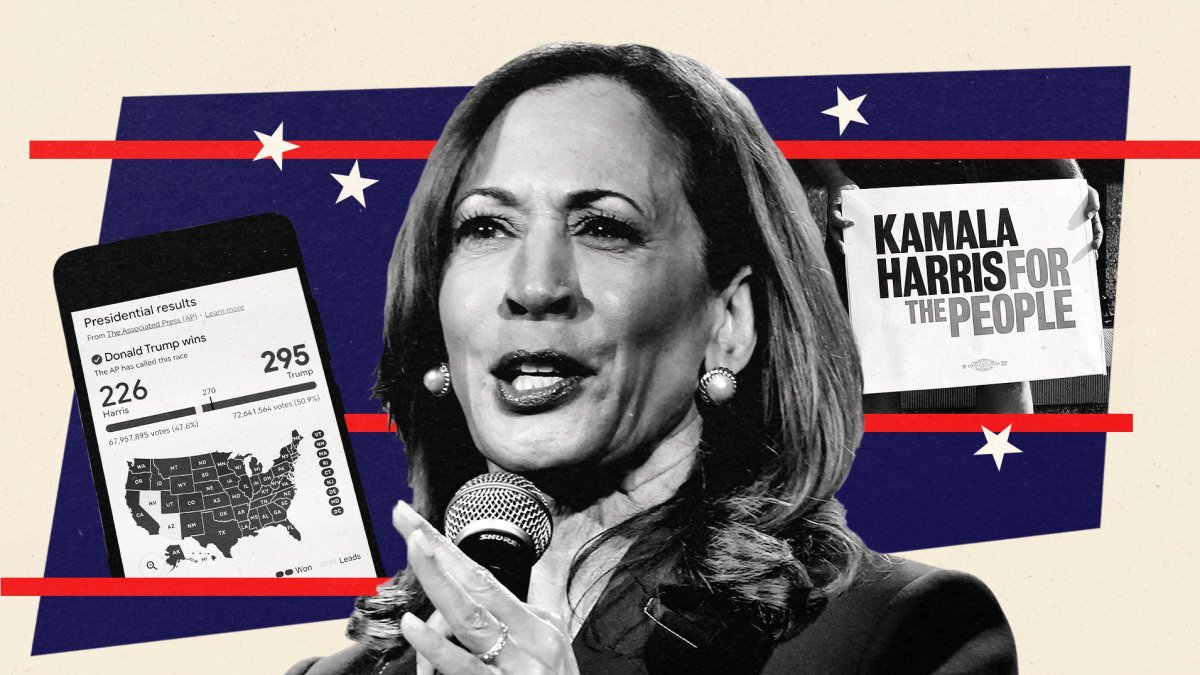
British American journalist and contributor to the Noosphere platform for independent journalists Welcome to Power Players, The i Paper’s opinion series in which our writers and experts take an in-depth look at the key figures in American politics as the US reshapes itself and the world. • The ‘swamp creature’ eclipsing JD Vance in the race to succeed Trump• Netanyahu’s to blame for his American nightmare – and it spells his doom• The Democrat who has finally worked out how to beat Trump Kamala Harris sure looks like she’s running for US President. The polls (volatile as they are right now) have the former vice-president and 2024 presidential nominee as the Democratic front runner. There she was in late September on the stump in a crucial 2028 primary state, Michigan, campaigning for a Senate hopeful in a must-win 2026 race. “I have not decided if I’m going to run again,” Harris declared in Detroit, adding: “I do sincerely believe ’28 won’t matter until we get through ’26. When you focus on the thing over there, you trip on the thing right here.” The road to becoming the Democratic presidential nominee – again – is full of trip hazards for Harris. While she may be campaigning in Michigan, Georgia and Nevada this fall, she’s not universally welcome on the stump. It’s now less than five weeks until the midterm elections, which will decide which party controls Congress. Democratic candidates from Alaska to Kansas have shied away from being seen with Harris, fearing voters in those Republican-leaning states will see the former vice-president as too left wing.And therein lies the problem with Harris’s putative 2028 candidacy. Where’s the evidence that she can win votes across the US? She’s already tried and failed to win the Presidency once – why would 2028 be any different? Harris’s supporters say she was campaigning with one arm tied behind her back in 2024. President Joe Biden’s decision to drop out of the race weeks after his abysmal debate performance gave her only 107 days to campaign for the White House. Harris fans say she couldn’t distance herself from Biden on the campaign trail because she was the incumbent vice-president and had to remain loyal to the administration’s agenda. Anything else would have been inauthentic. This time, so the theory goes, Harris can run as herself. But who is she, and what does she really believe? The answers remain unclear. Harris’s appearance with Senate candidate Abdul El-Sayed in Detroit gave political analysts much to chew on. For many, it looked like an attempt to build bridges within the Democratic coalition. After a divisive primary in which Black voters seemed to favour El-Sayed’s opponent, there was Harris, the first Black woman ever to be a major party presidential nominee, trying to persuade her strongest constituency to swing behind a man who needs their votes. Appearing with El-Sayed, who is an outspoken critic of Israel and has called the war in Gaza a genocide against the Palestinians, was important for Harris. Gaza and the Biden administration’s support for Israel was a divisive issue in the 2024 election and contributed to Harris’s loss in Michigan, which has a sizeable Arab-American population. If Harris runs again, she will need to court those voters who feel she did nothing stop Benjamin Netanyahu’s bombing of Gaza when she was in office. And if she wishes to be a kingmaker whose endorsement is critical in the 2026 race, she has some explaining to do on Gaza. The new Democratic primary calendar favours a third Harris run for the White House (remember she ran against Biden in 2020) – at least in theory. The order in which states vote shapes the primaries enormously. It’s no longer the predominantly white states of Iowa and New Hampshire at the front of the queue. South Carolina votes first in 2028 – historically, Black voters have made up a large part of the Democratic primary electorate in that state, and its choice of Biden in 2020 marked a turning point in that primary. Even so, David Plouffe, Harris’s 2024 senior adviser, was honest about the hurdles she would face. “Her strongest day will be her first day in the campaign,” Plouffe told Pod Save America, predicting that her support would likely erode as the race developed. Plouffe also predicted that the kind of candidates who do well nationwide in 2026 – when voters are sour on the economy and looking for change – will influence the shape of the 2028 presidential primary. An Axios report recently found that a number of ex-Kamala Harris aides believe she ultimately won’t run for the White House in 2028, arguing she is a rational actor who is simply trying to maintain her influence within the party. The report added that donors still sore about her 2024 loss may not wish to open their wallets again. Then there’s the media environment of today, already so different to 2024. Candidates now must be able to do everything from lengthy podcasts to live local TV slots while creating their own daily content in which they appear in touch with voters’ concerns. Look at James Talarico in Texas, and Abdul El-Sayed in Michigan. This new world may not be Harris’s forte. As a steely lawyer she was formidable in her debate appearance against Donald Trump, but despite attempts to schedule an interview, she never sat down with podcaster Joe Rogan for one of those chatty freewheeling appearances that are now the currency of the political realm. She came of age in an era in which public appearances were tightly scripted. For now, Harris is drawing attention as she appears to test the waters for a 2028 run – and she, more than anyone, is only too aware of the pitfalls that may lie ahead.
The surprising frontrunner to lead the Trump resistance (again)
Full Article
Original Source
Read the full article at Inews →KhanList aggregates and links to publicly available news content. We do not host full articles from third-party sources. Always verify important information with original sources.