
One of the key legacies of the nearly 12-year-old Labor government in Victoria has been a massive investment in infrastructure. The Suburban Rail Loop has been a prominent project in this debate. So why is it so controversial? The rail loop is an example of a long-term problem in Victoria: prioritising ad-hoc infrastructure projects over coordinated planning. When it was first elected in 2014, the Andrews Labor government promised to create 10,000 construction jobs by building the Melbourne Metro Tunnel, and Western Distributor (which would link the Westgate Freeway with the Port of Melbourne), and removing 50 level crossings. It later added the Monash and Tullamarine Freeway widenings and the North East Link to that list. But there was no overarching integrated land-use and transport plan that explained the need for these projects or how they related to each other. Infrastructure is a long-term investment with high up-front costs, so it requires careful planning to avoid misallocating public money. Infrastructure plans should follow well-prepared long-term metropolitan plans, based on deliberative and transparent analysis of alternative future scenarios. They also need strong public input. The rail loop has not had any of this in a meaningful way. And now it is set to play a significant role in the Victorian state election in November. Such is the political sensitivity of the issue that new Premier Ben Carroll has announced $2 billion in savings on the project by cutting back on some of the associated infrastructure. Victoria’s big – and expensive – build None of the infrastructure projects developed after 2014 followed an integrated metropolitan transport and land-use plan for Melbourne. In 2021 the Victorian auditor-general rang the alarm bell by saying: The absence of a transport plan as required by the [Transport Integration] Act, during a decade of unprecedented investment in transport infrastructure, creates risks of missed opportunities to sequence and optimise the benefits of these investments to best meet Victoria’s transport needs. The Victorian government embarked on its Big Build program of infrastructure development without a coherent planning framework. It is as if projects were just “dropped in” to the city. Deliberative long-term planning was eclipsed by the political theatre of bold action with its wardrobe of hard hats and hi-vis. The Suburban Rail Loop is a 90-kilometre tunnel proposed to run through Melbourne’s south eastern, northern and western middle suburbs, including the airport. The project was announced through a preliminary “strategic assessment” just three months before the 2018 Victorian election that the Labor government was widely anticipated to win. The cost was estimated to be between $30 to $50 billion over several decades. Melbourne’s existing rail network concentrates on bringing people from the suburbs into the city centre. The rail loop was designed to allow people to travel across and between the middle suburbs without having to pass through its centre. New commercial precincts would be created at rail loop stations to support suburban employment access and shift traffic away from the central business district. Billions of dollars, but no real plan The rail loop was initiated outside conventional public service processes by Development Victoria, which sits “at arm’s length” from the relevant minister. Neither the Department of Transport or Infrastructure Victoria were consulted on the initial development of the rail loop. The economic business case for the rail loop was produced in 2021, after its endorsement in the 2018 election. That assessment promoted the rail loop as “realising Plan Melbourne” despite that plan not having proposed the rail loop or any proposal to link middle suburban activity centres with rail public transport. There has never been a clear rationale for an orbital rail project or the choice of bored tunnel heavy rail over other possible solutions. The business case did not consider whether alternatives such as bus network improvements, tram expansions or smaller scale rail interventions might have provided better accessibility and urban outcomes. It is also hugely expensive. The 2021 business case estimated Suburban Rail Loop East (stage 1) would cost up to $34.5 billion and would be completed by 2035. Infrastructure Australia has noted construction cost inflation has likely weakened the rail loop economic case. The Carroll government now estimates the cost (with proposed savings) to be $33.3 billion, with a further $1 billion in savings to be found through a technical review. But problems remain. Even if an orbital rail tunnel was merited, alternative rail networks should have been considered. Elevated rail is up to one third the cost of bored tunnels and has been successfully implemented in comparable cities such as Vancouver and Montreal. Melbourne has extensive elevated rail experience following the level crossing removals. Bored tunnels are also highly carbon intensive. The rail loop environmental effects statement found the carbon dioxide emissions savings from car travel shifting to the rail loop was just 0.1% of the total construction emissions. This implies the project is a net greenhouse emitter, absent offsetting or mitigation. Analysis by researchers at the University of Melbourne suggested an “alternative network” of high frequency bus and rapid transit services could have provided greater metropolitan accessibility gains, at $25 billion cost versus the $35 billion estimated for Suburban Rail Loop East. What should the new premier do? The change of premier offers a moment to review the rail loop planning, design and cost. Victoria’s largest ever infrastructure project should not have been developed as a “super secret project”. A rail loop review should consider the need for wider public transparency in infrastructure planning. We need a transport plan for Melbourne that starts with clear publicly established objectives about how future urban travel should be undertaken, and analysis of current trends. This should be followed by analysis of a wide range of options to achieve those objectives. Improved technical planning needs to be accompanied by transparent public scrutiny. This should include a parliamentary inquiry for all projects over $1 billion before any construction contract is signed. Greater scrutiny means greater cost, but that is miniscule compared to the cost of potential large-scale capital misallocation. This call is not just an academic assessment. A group of civil society organisations have also called for the overall planning failures underpinning Melbourne’s infrastructure boom to be investigated as part of the royal commission into Big Build corruption. It is an unenviable position for a government to have potentially misallocated tens of billions of dollars to poorly selected infrastructure. Whether the rail loop proceeds further or not, we need comprehensive reform of Victoria’s metropolitan and infrastructure planning processes to avoid another debacle as great as the rail loop, and the encompassing scandal of the Big Build, from occurring again.
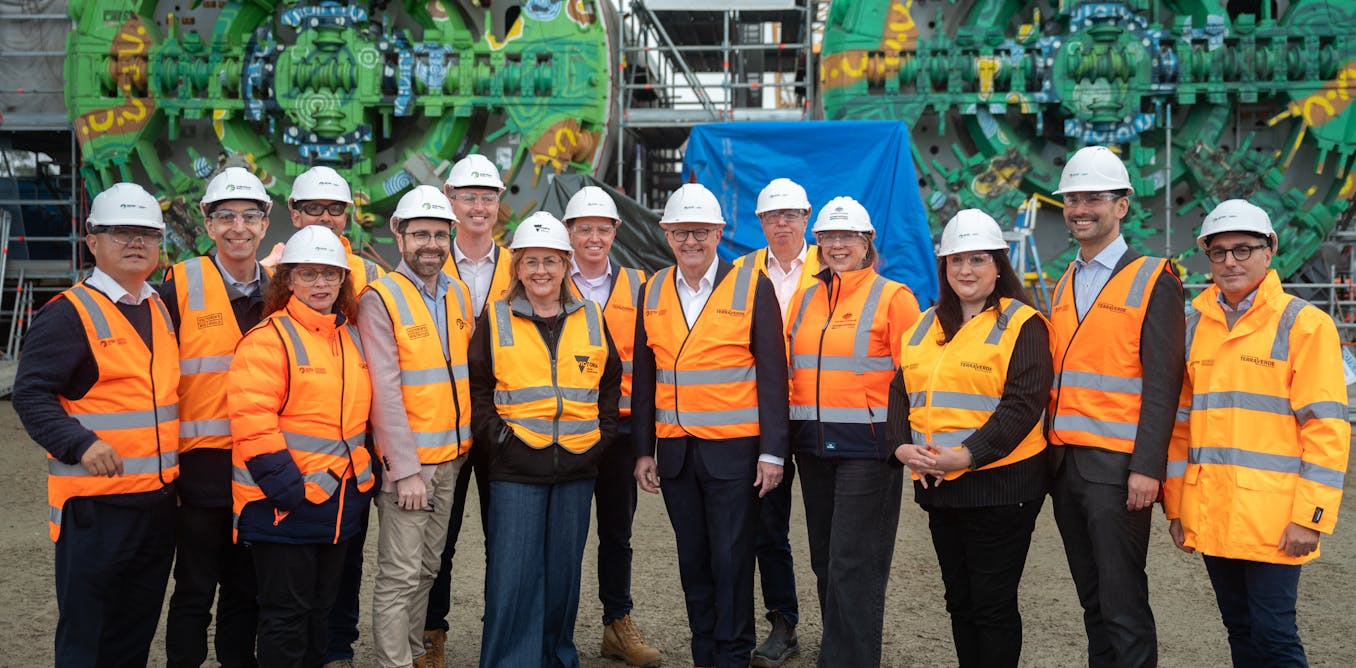
The Suburban Rail Loop will play a major role in the 2026 Victorian election. Why is it so controversial?
Full Article
Original Source
Read the full article at Theconversation →KhanList aggregates and links to publicly available news content. We do not host full articles from third-party sources. Always verify important information with original sources.