
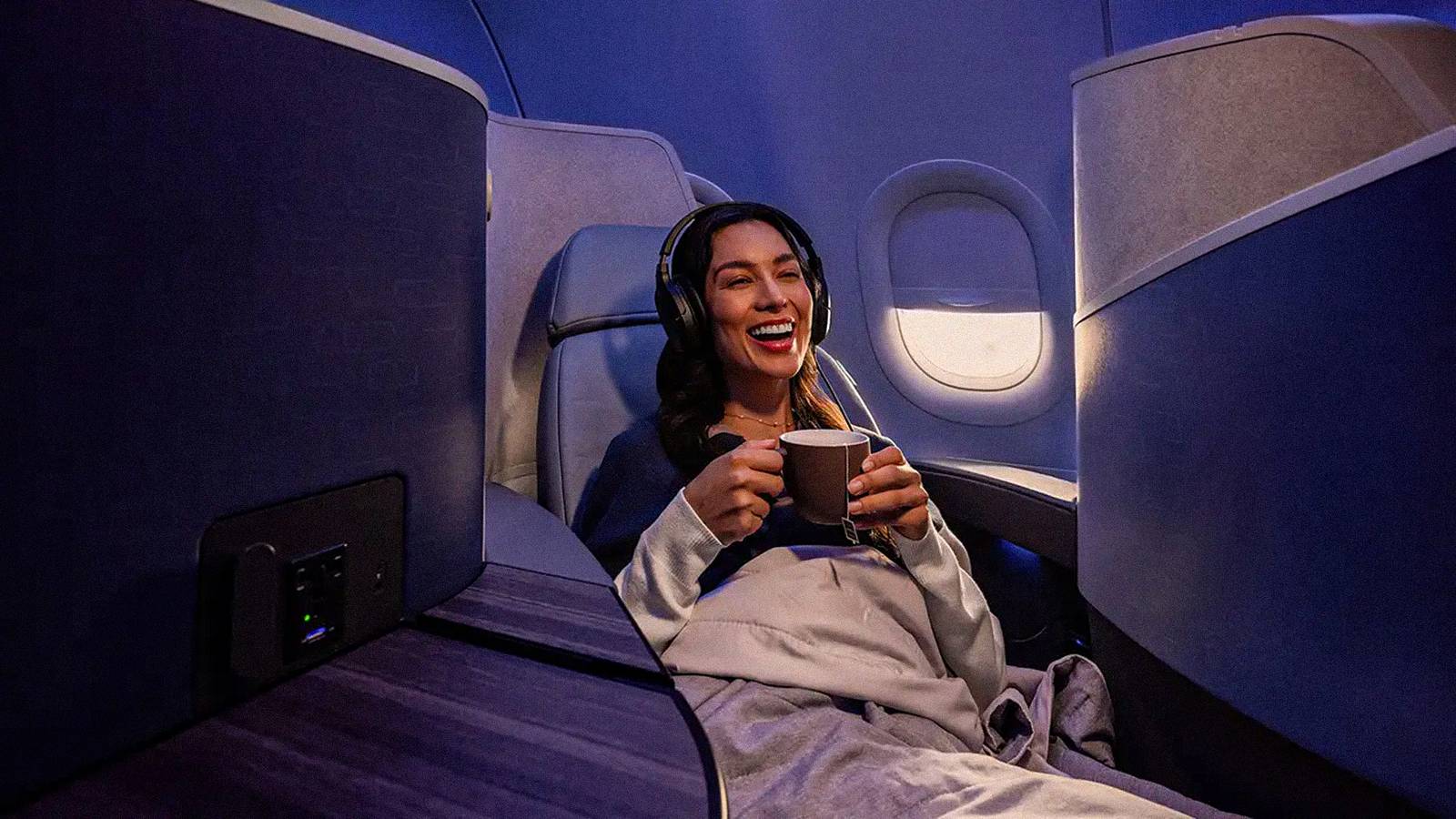
Published Nov 9, 2026, 3:00 PM EST Jack comes to Simple Flying with a lifelong interest in all things aviation. He holds a degree in Aerospace Engineering from Georgia Tech, and is a certified private and remote pilot. Beyond these experiences, Jack previously worked for a corporate flight department where he gained first-hand experience in the world of business aviation. Currently, Jack works in the professional services industry and continues to build his flight hours outside of work. JetBlue Airways and Delta Air Lines both promise a lie-flat seat on the roughly six-hour journey between New York and Los Angeles, but the similarities become less convincing once passengers look beyond the cabin label. JetBlue built Mint around a consistent, suite-focused transcontinental product, while Delta’s Delta One experience depends more heavily on the aircraft assigned to a flight. The difference affects privacy, seat dimensions, dining, and the likelihood of receiving the newest version of the product. The ground experience widens the gap in another direction. Delta has dedicated Delta One Lounges at both John F. Kennedy International Airport (JFK) and Los Angeles International Airport (LAX), with restaurant-style dining and wellness facilities. JetBlue’s BlueHouse lounges provide a newer, more approachable alternative, but they are smaller and have different access rules. Mint can be less expensive than Delta One, although fares fluctuate substantially by date, demand, and departure time. In 2026, choosing between them is less about identifying one universal winner and more about deciding whether a consistent onboard suite or a stronger premium airport experience matters most. Mint Offers More Consistent Privacy Across Its Aircraft Credit: JetBlue Airways, Simple Flying JetBlue introduced Mint on June 15, 2014, with its first service between JFK and LAX. At launch, four of its 16 business-class seats were private suites, an unusual feature on a domestic route. On the Airbus A321neo and Airbus A321LR aircraft equipped with Mint, every seat is a private suite with direct aisle access. The front-row Mint Studios add a guest seat, table, storage, and a 22-inch (55 cm) screen. The A321neo has 16 Mint places, including two Studios, while the A321LR has a larger Mint cabin. JetBlue Mint Cabin Airbus A321neo Airbus A321LR Mint 16 24 Even More 42 24 Economy 102 90 Older A321 Classic aircraft retain a mixed cabin, with four private suites and 12 open seats arranged in pairs. Those seats still convert into beds, but lack the privacy of the newer suites. Passengers should check the aircraft and seat map before booking. Delta One has a more pronounced aircraft divide. Its true suites with full-height sliding doors are found on the Airbus A350 and Airbus A330-900neo. However, the JFK-LAX route is commonly operated by Boeing 767-400ER aircraft, whose Delta One seats recline into flat beds but do not have doors. A Delta One booking, therefore, does not guarantee an enclosed suite, and an aircraft substitution can change the experience. Delta’s 767 Delta One Seat Is Old But Wide Credit: Robert Buchel | Shutterstock The Boeing 767-400ER is a capable transcontinental aircraft, but its Delta One cabin reflects an older generation of premium seating. Delta lists 34 business class seats on the type, each measuring 20 inches (50.8 centimeters) wide and converting into a 77-inch (195.6 centimeters) lie-flat bed. The cabin is less private than the enclosed suites on Delta’s newer Airbus widebodies. One Mile at a Time's review of Delta’s JFK-LAX 767-400ER describes the seat as comfortable enough for a coast-to-coast flight, but notes that the cabin feels dated and comparatively tight. The lack of a privacy door is not the only difference: the seat is narrower and the sleeping surface shorter than on Delta’s A330-900neo. The compromises matter more to travelers hoping to sleep than to those flying during the day. Mint’s newer A321neo and A321LR suites are designed specifically around the single-passenger space. JetBlue advertises fully lie-flat beds, Tuft & Needle foam cushioning, large touchscreen entertainment, dedicated storage, and wireless charging on the newer aircraft. Mint also includes free high-speed WiFi, while its front-row Studios add room to work or share the space with a companion. That consistency gives JetBlue an advantage for passengers who value privacy more than cabin size. The A321 remains a narrowbody, while Delta’s 767 provides a wider aircraft environment without necessarily offering a more advanced seat. The most meaningful comparison is therefore between the exact aircraft and seat, not the airlines’ premium brand names. Dining And Entertainment Options Give Each A Distinctive Identity Credit: Delta Air Lines JetBlue has used food and entertainment to differentiate Mint since its introduction. The airline’s original transcontinental service featured small-plate dining, while its current menu has partnerships with New York restaurants Crown Shy and Birdee. The menus began appearing on select domestic and transatlantic flights on July 31, 2026. Mint passengers can also order cocktails prepared onboard, with a wine list curated in partnership with New York retailer Parcelle. The dining format gives passengers more control over when and how they eat. JetBlue also offers an express evening meal service, called Savor & Sleep, on US coast-to-coast departures after 8:00 PM. That option is useful for travelers who would rather settle into bed than spend a large part of the flight waiting for a traditional meal service. Availability depends on the flight and menu rotation. Delta One takes a more traditional premium dining approach, with chef-curated meals, premium wines, and a service sequence built around the longer-haul business-class experience. Delta adds Missoni bedding and amenity kits, hot towels, entertainment, and free Delta Sync WiFi for SkyMiles members. Delta also offers meal pre-orders until 18 hours before departure, the shortest window of the big three legacy carriers in the US. JetBlue’s small plates feel contemporary, while Delta offers a more traditional premium dining and bedding package. Travelers who prioritize sleep may find the timing of meal service more relevant than the menu itself. Those who prefer a full meal and a broad wine selection may lean toward Delta, although the specific flight and catering can influence the result. Delta Has The Stronger Dedicated Lounge Experience Credit: Delta Air Lines Delta’s clearest advantage appears before departure. The airline operates Delta One Lounges at JFK and LAX, allowing eligible passengers to use dedicated premium facilities rather than relying on a standard Sky Club. The JFK location features a brasserie with table service, a market and bakery, an outdoor terrace, shower suites, and wellness facilities. LAX also has dining, nap pods, and massage chairs. Access is tied to a same-day Delta One ticket, subject to the airline’s fare rules. Delta’s newer Basic Business fare will lose Delta One Lounge access for travel beginning January 19, 2027, so customers buying the lowest premium fare need to check eligibility rather than assume the cabin name guarantees entry. For standard Delta One passengers, the lounge extends the premium experience beyond the aircraft. JetBlue’s BlueHouse is a significant development for an airline that previously had no proprietary lounge network. Its first location opened at JFK Terminal 5 on December 18, 2025, and its Boston Logan location followed in 2026. They offer local food and drinks, work areas, quiet seating, and a game room in a residential-style setting. Mint and Mint Flex customers traveling coast to coast can access BlueHouse at JFK and Boston, while other access is available to selected loyalty members and eligible cardholders. Guest fees and capacity limits apply. BlueHouse strengthens JetBlue’s ground offering, but Delta’s lounges provide more extensive dining and wellness facilities at both ends of the route. Delta therefore has the stronger airport experience, particularly for passengers who arrive early or value a full meal before boarding. Price, Schedule, And Aircraft Choice Can Decide The Trip Credit: Ritu Manoj Jethani | Shutterstock Mint has historically been positioned as a lower-priced alternative to business class at the legacy carriers. JetBlue can undercut Delta by hundreds of dollars on some dates, but claiming Mint is consistently 15% to 25% cheaper would be misleading. Premium fares move with demand, inventory, departure time, and booking window, and Delta may occasionally price competitively when it has more seats to sell. JetBlue and Delta both operate multiple daily JFK-LAX flights, but departure times, aircraft rotations, and operational changes can affect the choice. Travelers with fixed commitments may prioritize arrival time over seat design, and should recheck aircraft assignments because substitutions remain possible. For most passengers, Mint is the stronger value when its newer aircraft are scheduled, and the fare is meaningfully lower. Delta One is more attractive when the fare difference is modest, the passenger values the dedicated lounges, or the flight offers a newer suite-equipped aircraft. The decision is between specific departures, layouts, and ground benefits, not merely airline brands. The Next Premium Battle Will Be Won Before Boarding JetBlue’s strongest selling point is the consistency of its newer Mint suites, while Delta’s advantage lies in the broader premium experience surrounding the flight. Delta’s 767-400ER remains a weaker match for Mint’s newest narrowbody suites, even though the airline offers more developed lounges at JFK and LAX. As Delta expands its updated Delta One experience and JetBlue grows BlueHouse, the competitive balance could shift. Delta has also begun introducing an enhanced Delta One experience on international departures from Los Angeles, with a broader rollout planned for early 2027. The airline has not said that every domestic 767 will receive the same cabin treatment, so passengers should not assume the new experience will immediately reach JFK-LAX. If Delta eventually brings newer suites to more transcontinental flying, its onboard disadvantage could narrow, leaving lounges and fare levels as the sharper points of comparison. For travelers, the most reliable strategy in 2026 is to compare aircraft, seat maps, lounge eligibility, and total fare rather than buying by cabin name alone. Airlines are investing in premium products across the airport and aircraft, but the value of those investments depends on which services a particular ticket actually includes. The next stage of competition will likely involve making that entire journey more consistent, from check-in to arrival, instead of relying on a premium label to do the selling.
The Striking Differences Between JetBlue Mint & Delta One Transcontinental In 2026
Full Article
Original Source
Read the full article at Simpleflying →KhanList aggregates and links to publicly available news content. We do not host full articles from third-party sources. Always verify important information with original sources.