
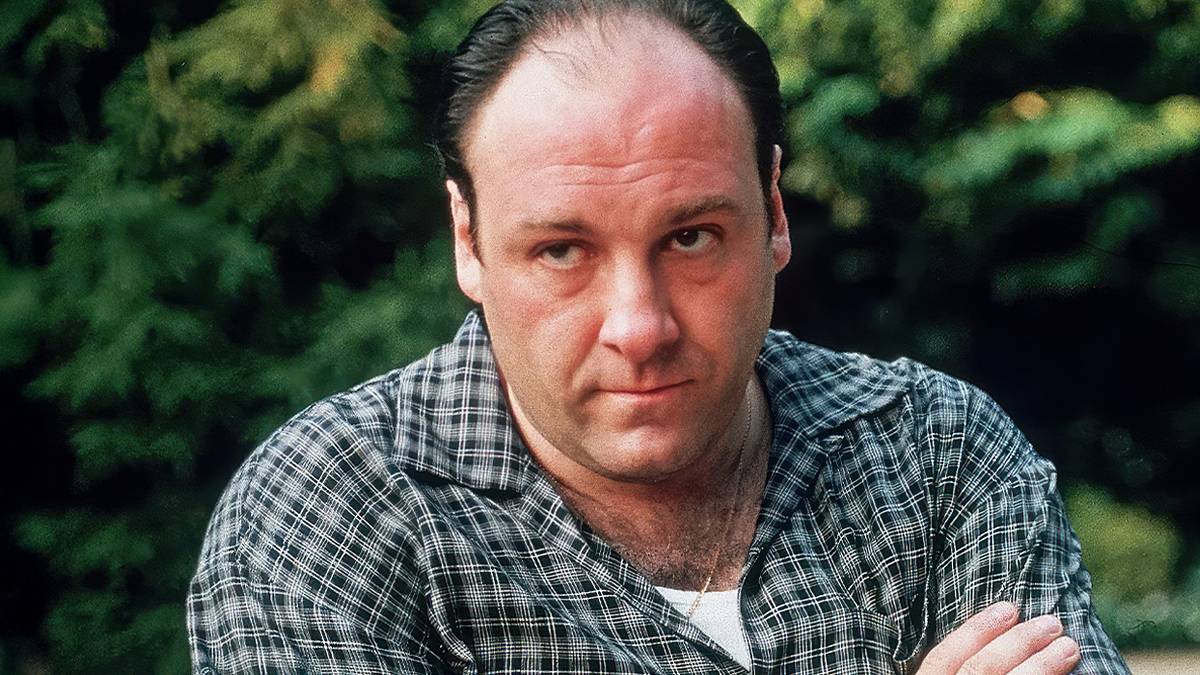
Image via HBO Published Oct 2, 2026, 11:01 PM EDT Shawn Van Horn is a Senior Author for Collider. He's watched way too many slasher movies over the decades, which makes him an aficionado on all things Halloween and Friday the 13th. Don't ask him to choose between Michael Myers and Jason Voorhees because he can't do it. He grew up in the 90s, when Seinfeld, Everybody Loves Raymond, and TGIF were his life, and still watches them religiously to this day. Larry David is his spirit animal. His love for entertainment spreads to the written word as well. He has written two novels and is neck deep in the querying trenches. He is also a short story maker upper and poet with a dozen publishing credits to his name. He lives in small town Ohio, where he likes to watch professional wrestling and movies. Sign in to your Collider account The very first episode of David Chase's The Sopranos has Tony Soprano (James Gandolfini) obsessed with a family of ducks living in his swimming pool. This singular moment immediately tells the viewer that this isn't going to be your run-of-the-mill mob show, but instead, something much deeper. When Tony is persuaded into speaking with a therapist, he sees Dr. Jennifer Melfi (Lorraine Bracco), telling her about the ducks and his fears about when they flew away and out of his life during his son, A.J.'s (Robert Iler), birthday party. Tony says, "I'm afraid I'm gonna lose my family like I lost the ducks." This fear and the pool are revisited in the most frightening way near the very end of The Sopranos when A.J. attempts to take his own life in that very spot. It's a heartbreaking scene, but Tony's reaction is his greatest moment in the entire series. Tony and A.J. Have a Contentious Relationship in 'The Sopranos' Tony Soprano and his son, Anthony John Soprano Jr. (A.J.), are both strikingly similar and incredibly different. Tony is a man who most people respect, and if they don't, they fear him; he exudes power and influence, a natural leader in every sense. The polar opposite is A.J., who is spoiled, lazy, and just wants to mope around the house and play video games. With zero goals or motivation for his life, he's the opposite of his older sister, Meadow (Jamie-Lynn Sigler), the book-smart overachiever with goals and aspirations. While Tony and A.J. don't seem to have anything in common at all, both men are riddled with anxiety; the only difference, though, is that Tony hides it while A.J. wears it on his sleeve, much to his father's disgust. Collider Exclusive · Villain Personality Quiz Which Criminal Mastermind Would Be Your Nemesis? Lecter · Joker · Moriarty · Chigurh Four of the finest criminal minds ever put on screen. One of them would look at you and see something worth their time. Eight questions decide which one comes for you, why they picked you, and what they would want when they arrived. 🍷Lecter 🃏Joker ♟️Moriarty 🪙Chigurh MEET YOUR NEMESIS → 01 What would a criminal mastermind notice about you first? Great villains choose their opponents carefully. Something about you got their attention. AMy manners, and everything I am careful not to say. BThat I still believe people are basically decent. CThat I am clever, and quietly enjoy proving it. DThat I handle things myself, and always have. NEXT QUESTION → 02 How do they make first contact? The introduction tells you everything about what is coming next. AA polite letter. Beautiful handwriting. Quietly wrong. BSomething on fire, with a message left beside it. CA puzzle, left where only I would look. DNo contact. Just the aftermath, and a coin. NEXT QUESTION → 03 What do you actually believe about right and wrong? Every nemesis is really an argument about the thing you believe most. AThere are lines. Mine are private and absolute. BRules are the only thing keeping us from being animals. CMorality is a system, and systems can be solved. DThings happen. Most of it was never up to me. NEXT QUESTION → 04 What finally gets under your skin? Everybody has a pressure point. Finding yours is the whole plan. ABeing seen clearly by somebody I cannot read. BWatching good people do something ugly. CLosing to someone who was simply better prepared. DHaving no move left that changes anything. NEXT QUESTION → 05 They have made their move. How do you fight back? This is the part of the film where the audience finds out who you are. ACarefully, and never where they expect to be touched. BLoudly. I would rather lose than play their game. CWith a better plan. I can out-think this. DDirectly, once, with whatever is closest to hand. NEXT QUESTION → 06 What would they use against you? A good villain never brings a weapon you have not already handed them. AMy privacy. I have kept far too much to myself. BMy conscience. I will not cross the line they want. CMy ego. I cannot resist a worthy opponent. DMy certainty that I can handle it alone. NEXT QUESTION → 07 What do they actually want from you? The money is never the point. Something else always is. ATo understand me better than anyone ever has. BTo prove I am no better than they are. CTo finally be beaten by someone worth the trouble. DNothing at all. I stepped into the wrong path. NEXT QUESTION → 08 How does it end between the two of you? Eight questions in, this is the one that decides who comes for you. AA conversation I will be replaying for years. BA choice forced on me that has no clean answer. COne final move, and the better mind wins. DA coin in the air, and nothing I can say. REVEAL MY NEMESIS → The Case File Is Complete Your Nemesis Is…Four criminal masterminds. One of them was always going to be yours. Here is who comes for you, why they picked you out of everyone available, and what they want from the encounter. Hannibal LecterYour nemesis does not want to beat you. He wants to know you completely, and he is patient enough to wait for it. The frightening part is how good the conversation is. Lecter is the most dangerous kind of opponent: the one who finds you interesting. He never raises his voice, because he has never needed to. You keep a great deal to yourself and you are careful about what you show. That reserve is exactly the door he would knock on. The films understood something other thrillers missed. The horror is not the violence. It is being perfectly understood by the wrong person. He would be unfailingly polite about all of it. That is the worst part. The JokerYour nemesis is not after money, territory or revenge. He is after a demonstration, and you are the person he has chosen to prove his point on. The Joker only picks opponents who believe in something. Your decency is not a defence against him. It is the entire reason he showed up. He has no plan you can predict and nothing you can take away, which removes every tool you would normally reach for. His whole argument is that you are one bad day away from being him, and you would spend the rest of your life proving him wrong. He would call it a magic trick. You would call it the worst night of your life. MoriartyYour nemesis respects you, which sounds flattering until you work out what it means. He chose you because nobody else was worth his time. Moriarty is the original criminal mastermind, the template every later one borrows from: a mind the equal of the hero's, pointed the wrong way. You enjoy being the cleverest person in the room. He is counting on exactly that, and he has already built the room. This is the rare nemesis who would be genuinely disappointed if you lost badly. He needs the game to be worth playing. It ends the way these things always end. Two people, one problem, and only one way down. Anton ChigurhYour nemesis has no personal interest in you whatsoever, and that is precisely what makes him unsurvivable. You are not a rival. You are a stop on the way. Chigurh does not negotiate, gloat or explain. He arrives, he asks one question, and the answer was decided long before you opened your mouth. You trust yourself to handle things. He is the one problem in the world that has no interest in how capable you are. No Country for Old Men rewrote the screen villain by removing the thing audiences quietly rely on: the sense that talking might work. Call it. He will wait. ↻ RETAKE THE QUIZ Tony has certainly snapped at A.J. more than once over the course of the series as a result of this. When A.J. gets expelled from school and talks back to his father, Tony slaps him hard across the face, and when he curses out his mother, Carmela (Edie Falco), Tony puts a hand around his throat. Sick of his teenage son being lazy, he tries to set him up with a construction job. "I just want to see you good. You're my son, and I love you," Tony tells him. When A.J. gets annoyed and disrespects him, though, Tony smashes the windshield of A.J.'s car (which he paid for). Tony loves A.J., but he also doesn't fully understand him, even admitting to Dr. Melfi that he hates him. Tony wants a son who commands respect like he does and has ambition like Meadow does. A.J. Has a Breakdown After a Break-Up With His Girlfriend Image via HBO A.J. might be one of The Sopranos' most annoying characters, because in a series filled with strong, charismatic people, A.J. pales in comparison, often playing the victim instead of taking control. This, however, is also what makes him one of the show's best characters, because he feels far more realistic. He's a teenage boy, one who has not only had his father's emotional issues passed down to him, but who has to live in a family associated with the mafia. A.J. has always had a bit of a darker side to him throughout the series. When his grandmother dies, he hears her ghost, and at his confirmation, he says that there is no God. With so much on his mind, he loses himself in the numbness of TV, video games, and hanging out with his friends who only want to have a good time. The facade finally comes crashing down in his relationship with Bianca Selgado (Dania Ramirez). A.J. adores his girlfriend and even proposes to her, but when she breaks it off, his mental health immediately plummets. He quits his job and talks about suicide, leading to his worried mother getting him into therapy. Tony opens up about the situation to Dr. Melfi, blaming himself for A.J. inheriting his "rotten fucking putrid genes." A.J. only continues to spiral, even attacking another kid, but he seems to take a turn for the better when he starts taking medication and going back to college. Tony Soprano Comes to A.J.'s Rescue When He Attempts Suicide in "The Second Coming" In the third-to-last episode of The Sopranos, "The Second Coming," all the progress that A.J. has made falls away. After reading Yeats' "The Second Coming," he decides to kill himself in the family pool. We see him sitting on the edge of the diving board, holding a cinder block in his lap that's tied to his legs. He stares off into the distance, a single tear falling down his face as he works up the courage to put a plastic bag over his head and chuck the block into the water, which pulls him under. People die on The Sopranos in practically every episode, and we have every right to believe that these are his last moments, but A.J. quickly regrets his decision, fighting to stay afloat while he screams for help. "The Second Coming" shows how painful and drawn-out suicide can be, spotlighting how its victims might want to take the decision back the moment that they make it. Luckily for A.J., Tony gets home at the right time and hears his son's calls for help. When he sees what is happening, his annoyance immediately falls away, and he leaps into the pool without a second thought. Despite the struggle of freeing A.J. from the cinder block, Tony's finally able to pull his son out of the water. A.J. bawls uncontrollably while Tony shakes him and screams, "What's wrong with you?" but that only makes A.J. cry even harder. Seeing how emotionally destroyed he is, Tony's tone changes, and he softly asks if his son is okay before putting his head in his lap and stroking his wet hair as he, too, cries and calls him his baby. This is one of The Sopranos' most serious moments, and it extends to when A.J. is being wheeled away to a psychiatric hospital with Carmela there. Tony Soprano is far from a saint. He has made a lot of mistakes, and he's done a lot of bad. But in "The Second Coming," we see that underneath those flaws, Tony is still just a man and a father; he'll risk his life for the ones he loves most and is capable of letting his tough exterior down. Saving A.J. and crying along with him is heartbreaking, but it's also Tony Soprano at his absolute finest. Release Date 1999 - 2007-00-00 Network HBO Showrunner David Chase Directors Tim Van Patten, John Patterson, Alan Taylor, Jack Bender, Steve Buscemi, Daniel Attias, David Chase, Andy Wolk, Danny Leiner, David Nutter, James Hayman, Lee Tamahori, Lorraine Senna, Matthew Penn, Mike Figgis, Nick Gomez, Peter Bogdanovich, Phil Abraham, Rodrigo García Writers Michael Imperioli, Jason Cahill, Lawrence Konner, David Flebotte, James Manos, Jr., Salvatore Stabile, Toni Kalem, Mark Saraceni, Nick Santora Creator(s) David Chase
'The Sopranos' Best Tony Moment Comes From a Near-Perfect Season 6 Episode
Full Article
Original Source
Read the full article at Collider →KhanList aggregates and links to publicly available news content. We do not host full articles from third-party sources. Always verify important information with original sources.