
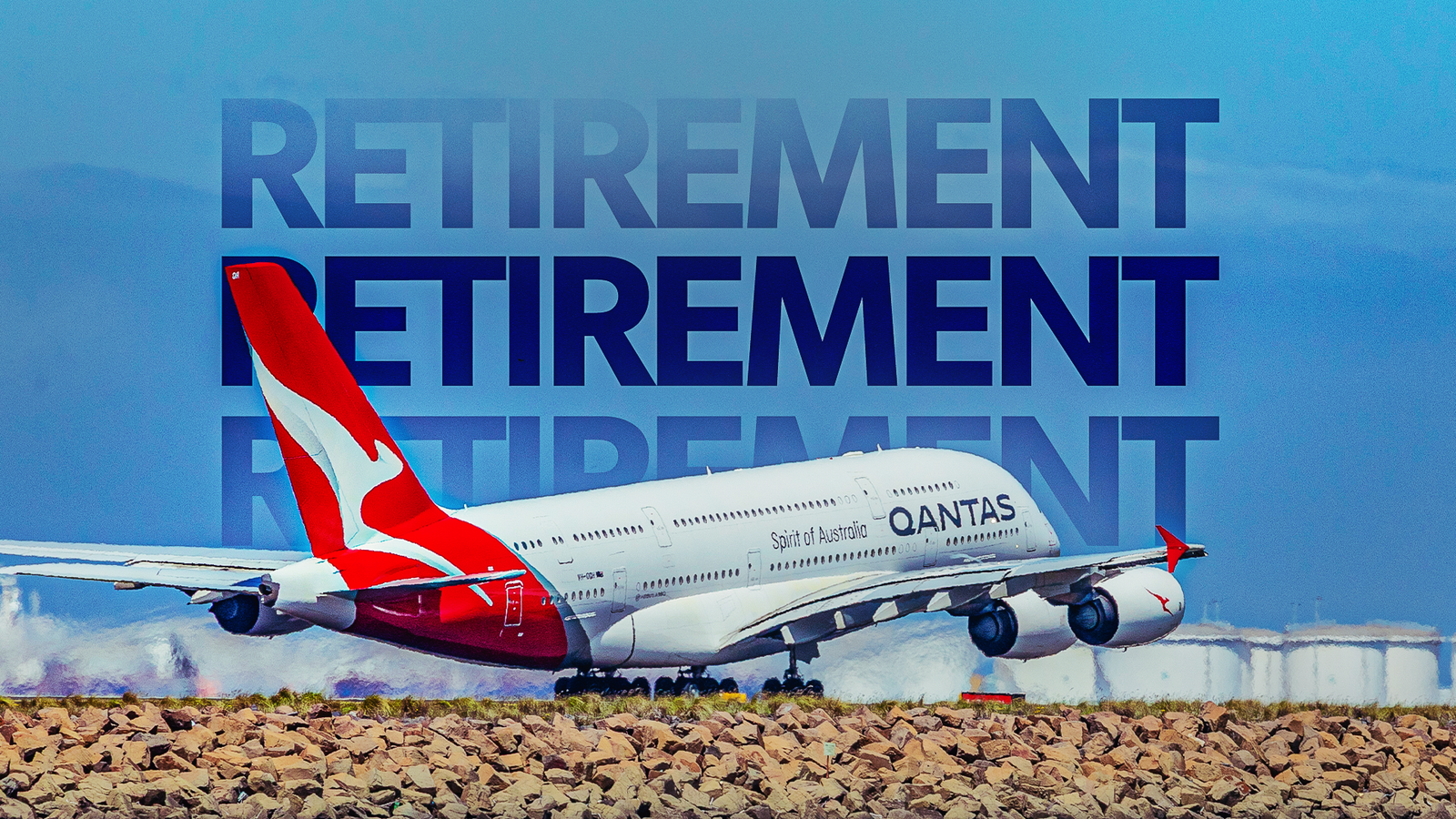
Published Sep 21, 2026, 7:00 PM EDT Aaron is an aviation enthusiast and world traveler with a deep interest in aerospace history and technology. He has traveled around the world numerous times, often incorporating visits to aviation museums and historic aircraft collections into his journeys. A native of New Zealand, he is an expert in aviation and maintains a broad interest in a variety of other subjects. In 2022, Qantas took the decision to start reactivating its stored fleet of Airbus A380 Superjumbos. It eventually reactivated 10 of its former fleet of 12 aircraft, with the last aircraft returning to service in late 2025. But now it has announced it will bring forward their retirement from the previously announced early 2030s to start phasing them out in 2028. This appears to be driven by confidence that its replacement A350-1000ULRs will start arriving in 2027 and by higher fuel prices in 2026. The A380 is one of the most loved airliners by passengers, but one of the least loved by the airlines that operate it (Emirates and British Airways excepted). The aircraft remains exceptionally exposed to higher fuel prices and downturns in the aviation market. Its post-COVID-19 recovery has been largely driven by a need for capacity amid higher demand for flying and delays in replacement aircraft due to engine supply-chain issues, Boeing 777-9 certification delays, etc. Here is what to know about Qantas' plans to retire its Superjumbos. Qantas' Fleet Of A380s Credit: Ceri Breeze l Shutterstock The Australian flag carrier, Qantas, purchased a total of 10 Airbus A380s, including for its famous route from Sydney to London via Singapore. These aircraft were delivered between 2008 and December, with the fleet now having an average age of 17 years. The youngest aircraft is 15.4 years old, while the oldest is now 18.6 years old. The Superjumbos currently support seven weekly flights from Sydney to Singapore and then seven weekly flights connecting from Singapore to London. They are operating seven weekly flights to Dallas and six weekly flights to Los Angeles. The type's other route is the four weekly flights to Johannesburg, South Africa. The aircraft's hub is in Sydney. In terms of intended design life, the fleet is now a bit over mid-aged, as Airbus designed the type to serve for around 25 years. But it seems that these aircraft may not reach that. In August, Australian Aviation confirmed that Qantas will start retiring its A380s in two years' time as more next-generation widebodies enter the airline's service. Qantas Announces Early A380 Retirement Credit: Mike Fuchslocher l Shutterstock The Flying Kangaroo had previously said it would retire A380s in the early 2030s, but this would bring that date forward. "The A380 will now be gradually phased out of the fleet from calendar year 2028. The next-generation aircraft replacing it can fly further, and will be able to operate all routes on the airline’s current international network and open up new ones." The airline also said the fleet renewal is expected to significantly improve earnings performance while reducing operational complexity. Qantas expects its operating margin is expected to increase to 10 to 12% from Fiscal 2032. Chief Executive Officer of Qantas International & Freight also noted that the first of the airline's new Airbus A350-1000ULR Sunrise aircraft are now "on the horizon" and that it gives greater confidence in the delivery schedule of its future fleet. He said that as the A380 transitions to the A350 and other aircraft, it will increase the margin on some city pairs. The A350-1000 standard variant has a higher premium density at over 40% compared with the 30% found on the A380. While Qantas didn't say when the last of these aircraft would retire, it did say their retirement will unlock around AUD 300 million ($215 million USD) in net cash flow benefit from Fiscal 2028 to Fiscal 2031. All A380s Return To Service Credit: Robin Guess l Shutterstock The decision to retire the Superjumbos early may come as a surprise, given that it was reported in December 2025 that it had returned its final A380 to commercial service after almost six years in storage. The VH-OQC "Paul McGiness" had been mothballed in 2020 as Qantas placed its whole A380 fleet into storage during the COVID-19 pandemic. The aircraft had been in Abu Dhabi for years, undergoing maintenance and refurbishments. This brought all of Qantas' A380s back into active service. The airline originally ordered twelve examples, of which two aircraft were scrapped. Those two aircraft (VH-OQF and VH-OQE) were cannibalized for parts that are now stored at LAX in the United States and in Sydney, Australia. The last aircraft of the remaining ten-strong fleet to return to service had spent almost 2,000 days outside of Australia. Paradoxically, Qantas has returned all its remaining A380s to service, including with expensive new cabin refreshments, even as it plans to retire them. The phase-out will be gradual, so the newest aircraft to rejoin the fleet, VH-OQC, won't necessarily retire in 2028 after around two years of returned service. It's unclear when the last will retire, but it may have around five years of returned service. Qantas' Fleet Of A350-1000ULRs Credit: Qantas Qantas has ordered 12 examples of the specially modified Airbus A350-10000ULR for its Project Sunrise routes. Airbus is currently building the aircraft, and deliveries of the first examples are expected to commence in April 2027. As ultra-long-haul airliners, these are heavily premium-configured with six first-class suites, 52 business-class seats, 40 premium economy seats, and 140 economy-class seats for a total of 238 seats. Qantas announced plans to fly nonstop from Sydney to London and New York from Australia's East Coast in 2017. As stated, the existing route uses A380s via Singapore. Meanwhile, the current Sydney to New York route is with 787-9s and includes a stop in Auckland. With an advertised range of 9,700 nautical miles, the A350-1000ULRs will be the longest-range commercial airliners in the world able to service these routes nonstop. Qantas' Widebody Fleet Number Of Examples Number On Order Note Airbus A330 28 None To be partially replaced by A350s and 787s Airbus A350-1000 None 12 First delivery in Fiscal 2029 Airbus A350-1000ULR None 12 First delivery in April 2027 Airbus A380 10 None Retirements from 2028 Boeing 787-9 Dreamliner 14 4 Partially replacing A330s Boeing 787-10 Dreamliner None 8 First deliveries in Fiscal 2031 Qantas will start flying nonstop flights between Sydney and London in October 2027, with ticket sales starting in February 2027. The A350-1000ULR may be the harbinger of the A380's impending retirement. While many passengers may prefer the A380, it is a heavy quad-engine aircraft that is also very expensive to operate and is very fuel-inefficient compared with the next-generation twin-engined A350. Qantas' Future Widebody Fleet Credit: Hanka Photography l Shutterstock In addition to the modified extended-range A350-1000ULRs, Qantas has also ordered 12 standard A350-1000s that will start arriving in Fiscal 2029; these will replace older A330-300s. Qantas plans to replace some of its aging A330-200s with 787 Dreamliners. These new-generation aircraft offer around 20–25% in fuel savings compared with older-generation aircraft, depending on mission, configuration, etc. "Switching from a 330 to a 787 lifted contribution margin on that market by 20%. Higher premium density is a big part of that, especially on longer routes where we know the demand is there," the carrier said. "We also know customers prefer the 787." In all, Qantas has 24 A350-1000s and 12 examples of the 787 on order. 14 787s are already in service. Overall, Qantas operates a mainline fleet of 138 aircraft, of which 79 are 737s. However, the Qantas Group is much larger. Its low-cost subsidiary, Jetstar, also operates 97 aircraft: 86 A320 family aircraft and 11 Dreamliners. Its regional brand, QantasLink, operates another 127 aircraft, including 42 DHC-8 Dash 8s, 32 Embraer ERJ-190s, and 10 legacy Fokker 100s. QantasLink was one of the final operators of the 717. Replacement Delays Keeping A380s In Service Credit: Kevin Piechota l Shutterstock. It is possible that a few Emirates A380s will continue operating beyond 2040 as the airline has explicitly said it wants to keep the type flying for as long as possible. It has also stockpiled the components needed to service them. That said, the type is out of service, highly exposed to shocks in the aviation industry, and one of the most affected by fuel spikes. Emirates had said it wanted to grow the number of A380s active in 2026, but the conflict in the Middle East has instead seen the number of active Emirates Superjumbos drop to around 86. Elsewhere, various airlines are planning to rid themselves of their A380s by 2030. By then, most or all of the Qantas A380s may be gone. Other airlines like Qatar Airways and Asiana/Korean Air may retire their fleets before 2030. Their retirements are delayed and are largely contingent on the delivery of new aircraft. British Airways, Singapore Airlines, and Lufthansa have said they will continue operating theirs into the 2030s. Arguably one of the biggest factors keeping the A380 in service with several airlines is the delays in delivering the Boeing 777-9. Just as Qantas can't retire its A380s until A350-1000ULRs arrive, Qatar and Korean Air can't retire theirs until replacement widebodies arrive. In May 2026, the first Lufthansa 777-9 took flight, with reports indicating it was expected to be delivered in 2027. But the type still doesn't have its type certificate, and early production models now require rework.
The Silent 4-Year-Old Qantas Airbus A380 Decision That Predicted The Fleet's Early 2028 Retirement
Full Article
Original Source
Read the full article at Simpleflying →KhanList aggregates and links to publicly available news content. We do not host full articles from third-party sources. Always verify important information with original sources.