
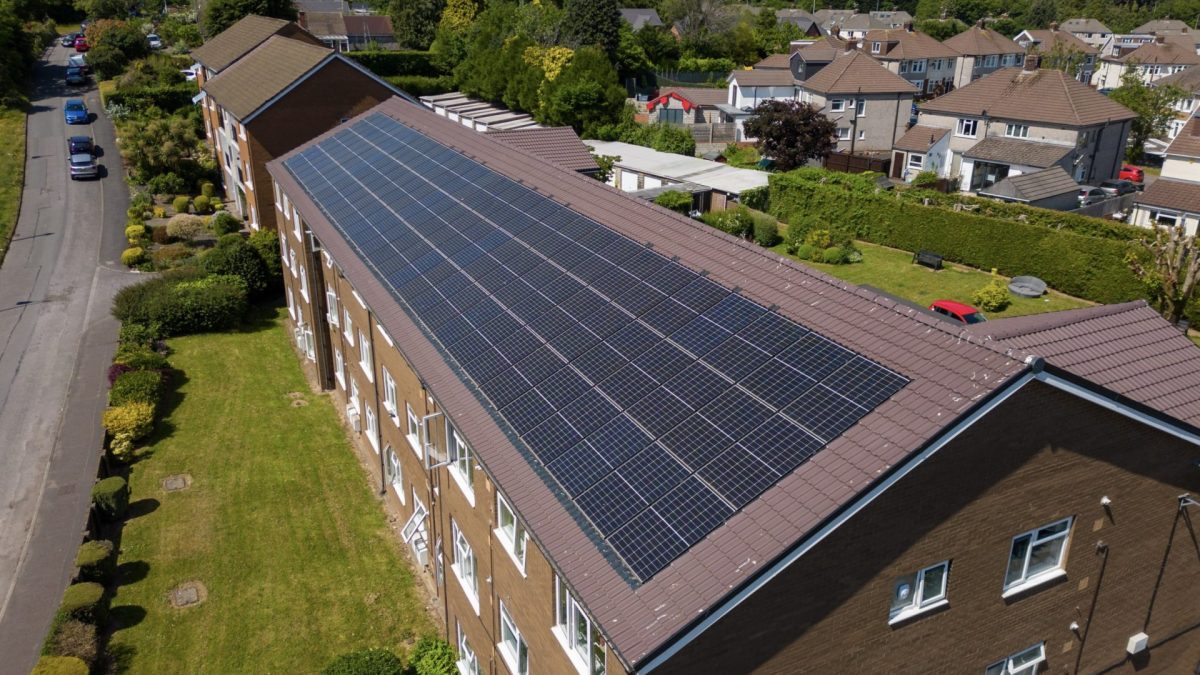
Plug-in solar panels, newly on the market in the UK, offer households a new way to cut down on their energy bills – but they don’t work for everyone. Some housing associations have already banned renters from using the £700 plug-in devices over safety concerns, red tape around planning rules and uncertainty over responsibility if something goes wrong. One manufacturer claims that there is an alternative option – shared solar panels. Jack Taylor, general manager for Europe at Allume Energy, which manufactures shared solar panel and battery systems, claimed that one of his company’s systems – which distributes solar energy and battery storage – could cut each resident’s energy bill by up to £490 a year. The estimated calculation is based on a recording of renters’ savings in Cardiff between July 2025 to June 2026 on a block of 24 flats. But any savings made from shared solar panels will vary depending on the type of building, roof orientation, household consumption and energy tariffs of renters in a block of flats. It is also reliant on housing associations and landlords investing in the shared panels in the first place. Another of Allume’s projects involves energy giant E.ON, with a shared solar system installed for six flats in a block in Stevenage run by Peabody Housing. Solar energy project at Peabody social housing flats in Stevenage (Photo: Rob Battersby/Allume Energy) The system can also send power back to the electricity grid during peak demand times, potentially generating as much as £160 a year in extra income for residents on top of the £490 saved, Taylor said. Justin Dring, an expert at Independent Solar Consultants who advises all types of building owners, said he understands why housing associations may prefer to install these shared panels over allowing individuals to install plug-in kits. “Leaving to individuals [tenants] can get messy, and raises the risk of them buying cheaper kits or mounting stuff that isn’t appropriate for the building,” he added. Gaps in the solution The cost of shared solar projects can vary, depending on building type and how many people will be using the system. Allume’s project on the block of 24 flats in Cardiff cost about £2,800 per flat, it said. The decision to set up these shared panels comes from housing associations, which in turn need the agreement from tenants to install the technology – meaning the process can take some time. Taylor said they do not necessarily need to connect every flat in a building to make a shared system work – so residents can opt out if they wish. Government grants available The Government has estimated that plug-in solar panels can cut bills by up to £110 a year. They are a “simple, affordable way for households to take control of their energy bills and start saving straight away”, a spokesperson said. However, energy minister Martin McCluskey said last month that there were no plans “at the moment” for grants to boost the take-up of the £700 kits. L&Q and Sovereign Network Group, which combined manage around 200,000 homes across England – told The i Paper that they would not allow tenants to use plug-in solar in any form. Sovereign Network Group called for “greater clarity” from the Government on regulations to give housing associations more confidence. The body representing the UK’s largest housing associations, G15, said plug-in solar panel kits “could have real potential” but members were still trying to assess safety and building insurance concerns. Grants are available for solar panels on social housing blocks (Photo: Westend61/Getty) The Government does make grants available to housing associations to boost energy efficiency in their buildings through the Warm Homes: Social Housing Fund, though not all of them have taken it up. A basic cost cap means housing associations have been able to get up to £7,500 per home in a building. According to Allume, it is enough to cover the cost of shared solar installation, where conditions are favourable. An additional £100m top-up to the fund – specifically for solar and battery projects – was announced earlier this year. “More tenants will be asking their landlord about what they can do for them in terms of rooftop solar,” Dring suggested.
The shared solar panels that could save renters £490 a year
Full Article
Original Source
Read the full article at Inews →KhanList aggregates and links to publicly available news content. We do not host full articles from third-party sources. Always verify important information with original sources.